
Armature Wire Guide: Types, Sizes, Prices & Buying Tips
.webp&w=96&q=75)
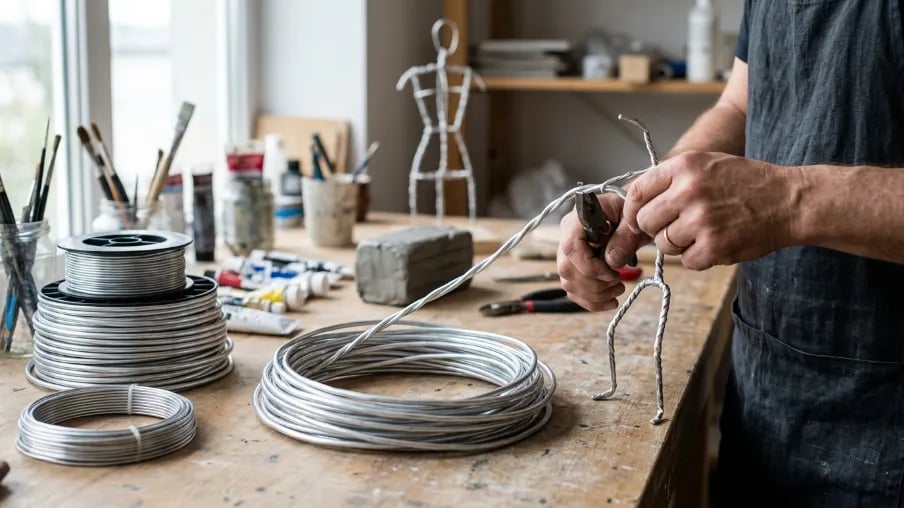
Armature wire is an enamel-coated copper wire used in electric motors and generators to create electromagnetic fields through armature windings. It is also known as magnet wire or armature winding wire and is designed to handle high temperatures, electrical stress, and tight winding spaces. This wire plays a key role in converting electrical energy into mechanical movement.
When an electric motor stops working, the damaged copper coils inside are often the first sign of a winding problem. Those coils are made from armature wire, which carries current and creates the magnetic force needed for motor operation.
I've spent time around workshops in Dhaka where rewinding technicians work with this wire every day, from ceiling fans and water pumps to generators and industrial machines. Through technical projects and engineering solutions provided by companies like Nusaiba Construction & Technology, the importance of selecting the right electrical components becomes clear.
One question appears again and again: which armature wire do I actually need?
The answer depends on several factors, including wire gauge, insulation class, motor size, operating temperature, and application type. Choosing the wrong armature wire can increase heat generation, reduce efficiency, and shorten motor lifespan.
This guide explains how to select the correct armature wire, covering types, gauge sizes, insulation classes, applications, pricing factors, quality checks, and common mistakes during motor rewinding.
Key Takeaways
What it is: Armature wire is enamel-coated copper wire wound into a motor's core to generate its magnetic field. It's also called magnet wire.
Gauge: Match the original wire size. When unsure, unwind the burnt motor, measure the old wire, and count turns before reordering.
Insulation class: Choose based on heat and runtime. Class B (130°C) for light use, Class F (155°C) for general motors and pumps, Class H (180°C) for continuous heavy-duty use.
Price: Driven mainly by copper rates, then purity, gauge, and insulation class. Unusually cheap wire is a red flag.
Buying tip: Choose a supplier who confirms the standard (e.g., IEC 60317) and lets you test a sample first.
Bottom line: Get the gauge and insulation right the first time. It's the cheapest way to avoid a repeat rewind.
What Is Armature Wire?
Armature wire is insulated copper wire wound around the armature core of a motor or generator to create the magnetic field that makes the machine operate. It's also called armature winding wire, motor armature wire, or simply magnet wire. In electrical engineering terms, this coil of wire is technically known as the armature of the machine, the part that actually carries current and generates torque.
The wire itself is solid copper, coated in a thin layer of enamel insulation. That enamel is the key difference between armature wire and ordinary electrical cable. Regular house wiring uses PVC or rubber insulation because it needs to bend around walls and resist moisture. Armature wire needs something completely different: an ultra-thin coating that can survive intense heat while still letting you pack hundreds of turns into a tight space.
This is why armature wire is often grouped under the broader name enamelled armature wire or copper magnet wire. Same idea, different name depending on who you're talking to: an electrician might say "armature copper wire," while a supplier might list it as "enamelled copper winding wire."
Why Does the Right Armature Wire Actually Matter?
Using the wrong gauge or insulation class is the single biggest cause of early motor rewind failure. A motor doesn't care what wire you feed it, until it does. Whether it's a simple DC motor or a more complex induction motor, the winding is doing the same basic job, and I've seen rewinding jobs fail early simply because someone used a gauge slightly too thin, or insulation rated for the wrong temperature. Here's what actually happens when the wire is wrong:
Too thin a gauge: the wire overheats under load, the enamel breaks down, and you get a short between turns.
Wrong insulation class: the motor runs hotter than the wire can handle, especially in pumps and compressors that run for hours without stopping.
Poor-quality copper: more electrical resistance, more heat, more energy wasted, and a shorter motor life.
Getting this right the first time saves you a second rewind, and that's real money and downtime saved. If you're managing a larger building project where motor and pump selection is part of the electrical plan, this is exactly the kind of detail a good construction management team should be tracking from day one. It's one of many small specs covered under our one-stop building solutions.
Armature Wire Gauge: How to Pick the Correct Size?
Gauge measures wire thickness: a lower gauge number means thicker wire that carries more current with less heat, while a higher gauge number means thinner wire that fits more turns but handles less current. Two systems are common in the market: AWG (American Wire Gauge) and SWG (Standard Wire Gauge). Bangladesh's rewinding trade generally uses SWG, though imported wire is often labelled in AWG, so it helps to know both.
Armature wire gauge chart by application
Motor type | Typical gauge (SWG) | Notes |
|---|---|---|
Small fan motors, ceiling fans | 26–30 SWG | Thin wire, high turn count |
Water pump motors, single-phase induction motors | 20–24 SWG | Most common household/commercial range |
Larger three-phase motors and generators | 16–20 SWG or thicker | Higher current, fewer turns per slot |
These are starting points, not final answers. The correct armature wire gauge always depends on the original motor's design: the safest method is to unwind the burnt motor first, count the turns, and measure the old wire's diameter with a micrometer before rewinding. On active job sites, this kind of spec-matching is usually handled during the drawing and design stage, before equipment is even ordered.
Types of Armature Wire and Insulation Classes
Insulation class tells you the maximum temperature the wire's enamel coating can withstand before it breaks down: the higher the class, the hotter and longer the motor can run safely. These classes and constructions are formally defined in international standards such as IEC 60317 for enamelled copper winding wires, and in ANSI/NEMA MW 1000, the equivalent North American magnet wire standard.
Armature wire temperature classes
Class | Max temperature | Best for |
|---|---|---|
Class B | 130°C | Light-duty, low-heat motors |
Class F | 155°C | General-purpose motors and pumps (most common) |
Class H | 180°C | Motors running hot for long periods (industrial pumps, compressors) |
Some heavy-duty specialty wire, defined separately under IEC 60317-26, is rated even higher at Class 200 for demanding industrial applications.
Common insulation coatings
Polyurethane (PEW): solderable without stripping, popular in smaller coils
Polyester (PE): solid all-round protection, common in general motor winding
Polyester-imide with polyamide-imide overcoat: the toughest option, used where the wire is wound tightly and needs high abrasion resistance
If you're rewinding a motor that runs continuously, a borewell pump, for instance, spending a bit more for Class F or H insulation is almost always worth it over the motor's lifetime. For real-estate and commercial builds where pump downtime affects tenants, this is a small spec worth folding into your real-estate construction checklist.
What to Check Before You Buy?
Before buying armature wire, verify standard compliance, copper purity, enamel coverage, resistance rating, and spool winding quality. Here's what each check means in practice:
Standard compliance: Look for wire made to IEC 60317, or the equivalent national standards; NEMA regularly updates its own magnet wire standard to keep pace with manufacturing practice. This tells you the dimensions and insulation thickness have actually been tested.
Conductor purity: Genuine electrolytic copper conducts better and runs cooler than mixed or recycled copper. Industry bodies like the Copper Development Association publish general guidance on copper conductor quality if you want to go deeper.
Enamel coverage: The coating should be smooth and evenly applied, without bare patches or bubbling.
Resistance rating: Every gauge has an expected resistance per unit length; a big deviation usually signals a thinner-than-labelled wire.
Proper spool winding: Wire that's evenly and tightly spooled unwinds cleanly. Loosely or unevenly wound spools tend to tangle and kink during the winding process, which can crack the enamel.
On larger projects, these checks are usually built into the estimation and quantity take-off stage, so material quality is verified before it's ever billed to the client.
Armature Wire Price: What Drives the Cost?
Armature wire price is driven mainly by global copper commodity rates, with purity, gauge, insulation class, and order quantity adjusting the final price up or down. Copper is a globally traded commodity, so local prices move with international rates set on markets like the London Metal Exchange, plus import and processing costs.
On top of the base copper cost, a few things push the price up or down:
Purity and brand reputation: Established manufacturers charge more, but you're paying for consistent quality and fewer failed rewinds.
Gauge: Thinner wire needs more precision to draw, so cost per kilogram can be slightly higher for very fine gauges.
Insulation class: Class H wire costs more than Class B because the coating materials are more advanced.
Order quantity: Buying by the kilogram from a local shop costs more per unit than buying a full spool from a distributor.
If a price looks unusually low, it's worth double-checking the copper purity and insulation quality before committing to a large order; a cheap spool that fails early ends up costing more than a slightly pricier, reliable one. If you're pricing this into a larger project budget, see our pricing plans for how material and service costs are typically structured, or have it sourced directly through our logistics and materials supply team.
Choosing an Armature Wire Manufacturer or Supplier
A reliable armature wire supplier will confirm the manufacturing standard, let you test a sample spool, and offer consistent quality across repeat orders. In Bangladesh, buyers typically source armature wire either from local electrical markets or directly from cable manufacturers who produce super enamelled copper wire domestically, such as Bizli Cable, one of the more established local winding wire brands.
Certification through the Bangladesh Standards and Testing Institution (BSTI) is also worth checking for, since it confirms the product has been tested against national quality benchmarks. A few practical tips when choosing a supplier:
Ask for a sample spool before placing a bulk order and test it on a small rewind.
Request the standard it's manufactured to (IEC 60317 or equivalent) rather than just taking a verbal assurance.
Compare at least two suppliers on both price and consistency, the cheapest option isn't always the one that saves you money over a year of use.
For recurring rewinding work, building a relationship with one reliable supplier tends to pay off more than chasing the lowest price each time.
If you'd rather have this sourced and coordinated for you as part of a larger build, our logistics and materials supply team handles exactly this kind of electrical materials procurement, backed by the same experienced engineers and technicians who manage our site projects.
The Armature Winding Process, Briefly
The armature winding process involves recording the original coil pattern, cleaning and insulating the core, rewinding to the exact original specification, and testing before reassembly. The general steps rewinding technicians follow are:
Record the old winding's turn count, gauge, and pattern before removing anything.
Clean the core completely and check for damage to the slots.
Insulate the slots with proper slot liners before inserting new coils.
Wind the new armature copper wire to match the original turn count and pattern exactly. Manufacturer data sheets, like the magnet wire technical references some suppliers publish, can help confirm the correct build and diameter for a given gauge.
Test insulation resistance and continuity before reassembling the motor.
Skipping step one is the most common mistake, once the old winding is gone, you're guessing. If this rewind is one piece of a bigger site plan, it's worth having it tracked under your project's project management schedule so equipment downtime doesn't stall other work.
A safety note: rewinding and testing armature wire involves working with electrical equipment that can carry dangerous voltage and current. This guide covers material selection and process at a high level; it isn't a substitute for hands-on training or the guidance of a qualified electrician, especially for anything beyond small, low-voltage motors.
FAQs About Armature Wire
What's the difference between armature wire and magnet wire?
Nothing, really. They're the same product. "Magnet wire" is the term used more often in electronics and hobby contexts, while "armature wire" is the term you'll hear in motor repair and rewinding shops.
Can I use a thicker gauge than the original if I don't have the exact size?
A slightly thicker wire (lower gauge number) usually still fits, though it may reduce the number of turns you can fit in the slot, which changes the motor's performance. It's safer to match the original gauge and turn count as closely as possible.
How do I know what gauge my burnt motor used?
Before removing the damaged winding, measure the wire diameter with a micrometer and count the exact number of turns per coil. This is the most reliable way to reorder the correct armature wire gauge.
Does armature wire insulation wear out even without a motor failure?
Yes, over years of heat cycling, enamel insulation gradually becomes brittle, even if the motor never technically fails. This is why very old motors sometimes fail insulation tests even when the copper itself looks fine.
Is more expensive armature wire always better?
Not automatically, but consistent copper purity and proper insulation class do meaningfully extend motor life, especially in motors that run for long hours. For light, occasional-use motors, a mid-range wire is usually enough. If this is part of a bigger fit-out, our construction management team can help weigh that cost against the rest of the project.
Is armature wire the same as the aluminum wire used for sculptures?
No. Sculpture and model-making "armature wire" is typically soft aluminum wire used to build an internal support structure for clay, wax, or stop-motion figures. It isn't insulated and isn't designed to carry electrical current. Electrical armature wire (the subject of this guide) is enamel-coated copper wire built specifically to conduct current and generate a magnetic field inside a motor or generator. The two share a name but are otherwise unrelated products.
Final Thoughts
Armature wire may seem like a small detail until a motor fails. Then it's the only thing that matters. Get the gauge right, match the insulation class to how hard the motor works, and buy from a supplier who can show you the standard their wire is made to. Do that, and your rewound motor should outlast the one that failed in the first place.
If you're planning a rewind and aren't sure which gauge or insulation class fits your motor, it's worth talking to a local rewinding specialist before you buy; a five-minute check can save you an expensive repeat repair. For more guides like this one, visit our blog and articles section, and if electrical materials like this are just one part of a bigger construction or supply need, feel free to contact us; we're happy to help you plan it properly.
.webp&w=256&q=75)