
Property Handover Guide: A Complete Checklist for Buyers (2026)
.webp&w=96&q=75)

Property handover is the formal process of transferring legal possession of a residential or commercial property from the developer or seller to the buyer. It includes a final defect inspection, document verification, utility transfers, and signing the handover certificate. In Bangladesh, property handover is governed by the Real Estate Development and Management Act, 2010, which defines developer responsibilities, buyer rights, and penalties for delayed possession. A proper property handover ensures the property is legally transferred and free from unresolved defects or missing documents.
Key Takeaways
A property handover is only complete once you've inspected the unit, verified documents, and signed a handover certificate, not just received the keys.
Under Section 30 of the Real Estate Development and Management Act, 2010, developers who fail to transfer possession as agreed can face imprisonment of up to two years, a fine of up to Tk 20,00,000, or both.
Always inspect before signing; the handover certificate typically confirms acceptance of the unit's condition as-is.
A standard handover checklist covers structure, plumbing, electrical points, fittings, common areas, and all required documents.
Since May 21, 2017, all real estate developers in Bangladesh have been required to hold REHAB membership under a Ministry of Commerce notification.
A quick note on scope: this guide reflects general practice for residential and commercial handovers in Bangladesh. It also reflects the relevant provisions of the Real Estate Development and Management Act, 2010. However, requirements can still vary by developer, project type, and local authority, such as RAJUK or a city corporation. Therefore, treat this as a working checklist rather than a legal document. Also, confirm project-specific terms against your own sale agreement.
How this guide was put together: this checklist draws on the Real Estate Development and Management Act, 2010. It also draws on standard practices followed by REHAB-member developers.
In addition, it reflects publicly available RAJUK approval requirements and common issues buyers raise during unit inspections. Legal provisions cited here were cross-checked against the published text of the Act. They were also checked against secondary legal commentary current as of 2023–2025.
Even so, readers should confirm details against the latest official text, since amendments can occur. This guide does not draw on a formal survey or dataset. As a result, general industry patterns are flagged with language like "generally" or "in many cases." A specific legal provision is stated plainly instead. Either way, nothing here is presented as a hard statistic.
Scope and assumptions: this guide assumes a standard residential apartment or house handover in an urban, Dhaka-context RAJUK jurisdiction. It also assumes the transaction is between a REHAB-member developer and an individual buyer. It does not cover rural land transfers, government housing schemes, or handovers involving foreign ownership. Those situations carry additional rules outside this guide's scope.
What Is a Property Handover?
Property handover is the official process of transferring ownership, possession, and responsibility for a property from the developer or seller to the buyer. It usually includes a final property inspection, signing the handover certificate, receiving the keys, and completing the required legal documents.
A property handover is the official transition point for a unit. At this stage, possession and responsibility move from the builder or seller to the buyer. The process typically involves a walkthrough inspection, a signed handover certificate, and the exchange of essential legal documents.
In Bangladesh, developers generally provide the sale deed and registration documents within three months of full payment. As a result, the physical handover date and the legal paperwork timeline may not always be the same.
In Bangladesh, this stage often overlaps with apartment handover in high-rise projects. Here, developers under REHAB, or the Real Estate and Housing Association of Bangladesh, hand over units only after approval. RAJUK or a local authority must first confirm the building meets code. For house handover on individually built plots, however, the process is simpler but no less important.
Why Is the Property Handover Process Important?

Property handover is important because it gives buyers a final opportunity to inspect the property, document defects, verify legal and technical compliance, and ensure the developer meets all agreed obligations before possession is transferred. A proper handover helps prevent future disputes, unexpected repair costs, and delays in resolving construction issues.
A structured property handover matters for a simple reason. In most cases, it's the last point where a buyer can formally document defects and hold a developer accountable. Before physical possession changes hands, those claims are easier to make.
This isn't an absolute rule, though, since some agreements extend the defect liability period beyond handover. For example, Bangladesh's Real Estate Development and Management Act, 2010 includes protections for buyers. Section 30 states that a developer who fails to transfer possession as agreed may face imprisonment of up to two years, a fine of up to Tk 20,00,000, or both. However, these legal protections are strongest when the handover terms and property condition are properly documented.
In our experience, buyers who skip a property handover inspection often discover problems only after moving in. A leaking bathroom, low water pressure, poor electrical finishes, or missing fire safety equipment can become costly issues. Identifying and recording these defects during the property handover process makes it much easier to have them corrected before taking possession.
How Does the Property Handover Process Work?
The property handover process generally follows seven steps. These are pre-handover notice, document review, snagging inspection, utility verification, certificate signing, key exchange, and post-handover follow-up on defects. However, the exact sequence can vary depending on whether it is a new build, a resale, or a commercial property handover.
Pre-handover notice – The seller or developer informs you the unit is ready.
Document review – Confirm the sale deed, occupancy certificate, mutation status, and tax receipts are in order.
Snagging inspection – Walk through the property and check for defects.
Utility verification – Confirm gas, electricity, water, and generator connections are working.
Handover certificate signing – Both parties sign to confirm acceptance.
Keys handover process – Physical keys and access cards are exchanged.
Post-handover follow-up – Any noted defects should have a written repair timeline.
If the actual apartment size differs from what was agreed in the contract, Section 9 of the 2010 Act applies. It requires both parties to reconcile the price difference based on the actual area within three months of handover. This protects both buyers and developers when a size discrepancy is identified.
What Is a Snagging Inspection?
A snagging inspection, also called a defect inspection, is a detailed check of finishing work. It covers tiles, paint, plumbing, electrical points, doors, and windows, and it's done to catch construction faults before final acceptance. In construction project handover language, these faults are called "snags." Builders are generally expected to fix them within an agreed period, often 30 to 90 days. However, this timeline should be written into the handover agreement rather than assumed.
Property Handover Checklist
Use this handover inspection checklist during your final walkthrough:
Structural condition: cracks, dampness, ceiling seepage
Electrical points: switches, sockets, circuit breaker labeling
Plumbing: water pressure, drainage, geyser or heater function
Doors and windows: locks, hinges, glass condition
Flooring and tiling: cracks, uneven grouting, loose tiles
Paint and finishing: color match, smoothness, touch-ups needed
Lift and common area access (for apartments)
Parking allocation matches the agreement
Fire safety equipment installed and functional
All keys, remotes, and access cards received
Property Handover Documents You Should Receive
Document | Purpose |
|---|---|
Sale deed / registration papers | Proves legal transfer of ownership |
Updates land records in your name | |
Property handover certificate | Confirms formal acceptance of the unit |
Occupancy/completion certificate | Confirms the building meets approved plans; generally required by RAJUK before legal handover in Dhaka |
Utility bills and connection papers | Needed to transfer accounts to your name |
Warranty documents | Covers structural and fitting defects |
Floor plan and layout approval | Useful for future renovation or resale; see Drawing and Design if you need these professionally reviewed |
Keep both physical and scanned copies of every document. In fact, in my experience, missing even one of these can delay resale or bank loan processing years later.
Common Mistakes During Property Handover
Signing the handover certificate before inspecting the unit
Accepting verbal promises instead of written defect timelines
Not verifying mutation and tax payment status
Skipping a walkthrough during daylight hours (poor lighting hides defects)
Forgetting to check parking, storage, or common area allocations mentioned in the agreement
Not testing all electrical points and appliances before signing off
Expert Tips for a Smooth Handover
Bring a checklist and a phone camera; photograph every defect with a timestamp.
Test water flow in every tap, not just one.
Ask for a written defect liability period in the handover agreement.
If it's a commercial property handover, verify fire exits and load capacity documents separately, since commercial code requirements differ from residential ones. Nusaiba Construction & Technology's Construction Management service can help verify these before handover.
Don't rush. A hurried signature at handover often costs more in repairs later.
What's the Difference Between New Property Handover and Resale Handover?
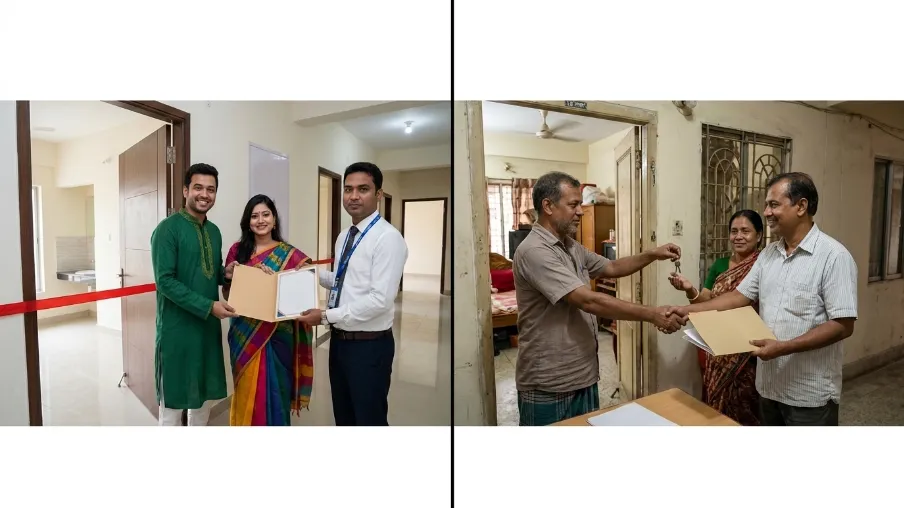
A new property handover usually involves more technical checks, since you're the first occupant. A resale handover, however, focuses more on legal documentation and outstanding dues left by the previous owner. From working on similar transactions, resale buyers should pay extra attention to unpaid utility bills or service charges. In many cases, these transfer with the unit under building association rules.
How Does the Building Handover Process Work for Housing Societies?
For apartment complexes, the building handover process typically happens in two phases. First, developers complete the individual unit handover to buyers. Later, they complete a separate common area handover to the residents' association or management committee.
This second stage covers shared assets like generators, lifts, security systems, and the boundary wall. In addition, developers are generally expected to maintain shared and unit-level assets for up to two years after handover. This repair obligation is tied to buyer protections under the 2010 Act.
An Illustrative Handover Scenario (Hypothetical)
The following is a composite, hypothetical scenario used for illustration only. It does not describe a specific real transaction.
Situation: A buyer is scheduled to receive handover of a new apartment unit. This happens in Dhaka, after final payment.
Problem: During the walkthrough, the buyer notices weak water pressure on the top floor. One bathroom also has visible ceiling seepage. Both issues are easy to miss without a deliberate, room-by-room check.
Approach: Rather than signing the handover certificate immediately, the buyer documents both issues with photos and timestamps. The buyer then requests a written 30-day repair timeline from the developer before final sign-off. This is consistent with the general practice of agreeing snag-fix periods in advance.
Result: The developer agrees in writing to fix the seepage and inspect the water pump within the agreed window. As a result, the buyer signs the handover certificate with the repair commitment attached as an addendum. This is safer than relying on a verbal promise.
Lesson: In most cases, the leverage to get defects fixed is highest before signing. Once the handover certificate is signed without conditions, the buyer's position weakens considerably.
Where Handovers Commonly Go Wrong (Even With a Checklist)
No checklist eliminates every risk. A few limitations are worth knowing:
Hidden defects surface later: Some issues, like waterproofing failures or wiring faults, only show up after a monsoon season or months of use, well past the defect liability period. A thorough walkthrough reduces this risk but doesn't remove it entirely.
Verbal assurances aren't enforceable: If a developer promises a fix "soon" without a written timeline in the handover agreement, that promise generally has little legal weight.
Common area handovers are often delayed: The individual unit handover may happen well before the building's common assets are formally handed to the residents' association, sometimes by months or longer.
Document delays are common in Bangladesh's registration system: Mutation and updated Khatian records can take weeks to months to process, even after handover.
Disputes don't always resolve quickly. Under Section 36 of the 2010 Act, unresolved handover disputes are referred to arbitration under the Arbitration Act, 2001, once informal resolution attempts fail. This process can take considerably longer than the handover itself.
Given these limitations, it's generally worth having a lawyer or licensed surveyor review your specific handover agreement. This matters especially for high-value or commercial property handover. Don't rely only on a general checklist.
Frequently Asked Questions About Property Handover
What is the property handover process?
Property handover is the process of transferring a property's possession from the seller or developer to the buyer. It includes inspection, document verification, and signing the handover certificate.
What documents are required for property handover?
You'll usually need the sale deed, mutation certificate, occupancy certificate, handover certificate, utility documents, and warranty papers. The exact documents depend on the property type.
What is a snagging or defect inspection?
A snagging inspection checks the property for construction defects, such as cracks, leaks, or faulty fittings, before handover so the builder can fix them.
Should I sign the handover certificate before or after inspection?
Sign the property handover certificate only after completing a full inspection. This helps ensure all defects are identified before you accept the property.
How long does a property handover usually take?
A property handover inspection usually takes 1–3 hours. The complete handover process may take several days or weeks, depending on document completion.
What happens if defects are found during handover?
If defects are found, the developer should provide a written repair plan before final handover. Avoid signing the handover certificate until major issues are resolved.
Is property handover different for commercial property?
Yes. Commercial property handover includes additional inspections, such as fire safety systems, utility capacity, and structural compliance for business operations.
What happens if a developer delays the property handover in Bangladesh?
If a developer delays property handover, the buyer may claim compensation under the agreed contract. In serious cases, the Real Estate Development and Management Act, 2010 also provides legal penalties for non-compliance.
Final Thoughts
You now have a complete property handover guide. It covers what to check, what to sign, and what the law actually requires from a developer in Bangladesh. A property handover isn't just paperwork. It's your last checkpoint before living with whatever condition the property is in.
In addition, it's backed by specific legal protections under the Real Estate Development and Management Act, 2010. Taking the time to go through a proper handover inspection checklist can save considerable stress. So can verifying documents and recording defects in writing.
If you're unsure about any part of the process, get help. It's generally worth having a professional inspector or legal advisor review the agreement first. However, with this checklist in hand, you're prepared. You know exactly what to look for and what to ask for at every stage of your handover.
Sources and References
Real Estate Development and Management Act, 2010 (Government of Bangladesh, official text): developer obligations, delay penalties, and buyer compensation provisions (Sections 9, 15, 30, 36)
Real Estate Development and Management Act, 2010 (PDF): Metropolitan Chamber of Commerce and Industry, Dhaka
Ministry of Commerce notification, May 21, 2017: compulsory REHAB membership for real estate developers under Section 13 of the Trade Organisations Ordinance, 1961, referenced in The Financial Express
REHAB (Real Estate and Housing Association of Bangladesh): official site, industry guidelines on developer-buyer handover practices
RAJUK (Rajdhani Unnayan Kartripakkha): building approval and occupancy certificate requirements
Ministry of Land Digital Services: official mutation, khatian, and e-mutation portal
e-Mutation, Bangladesh — UN Public Service Award profile: background on mutation processing timelines and reforms
Legal Issues in Real Estate Projects: Developer vs Landowners in Bangladesh — HG.org: dispute resolution and Arbitration Act, 2001 pathway
.webp&w=256&q=75)