
How Mexican Style Homes can Dramatically Boost Your Mood
.webp&w=96&q=75)
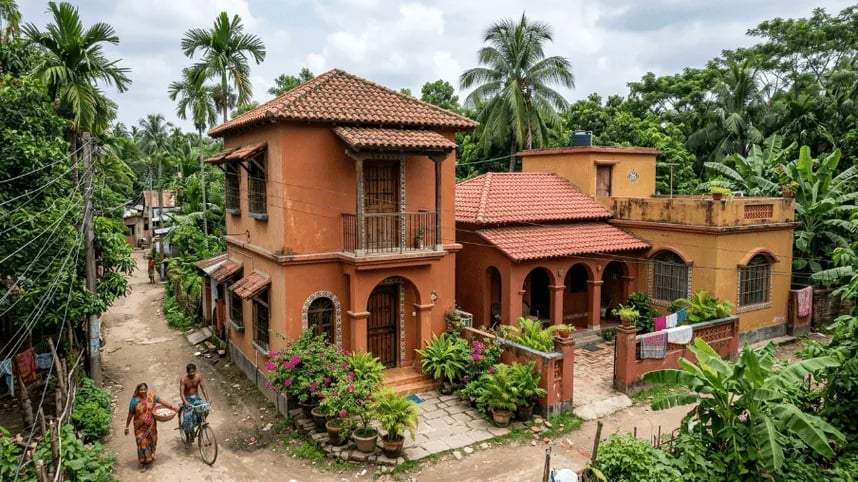
Mexican style homes refers to houses built around a central courtyard, using warm terracotta and earth-tone colors, thick adobe-style walls, wooden beams, wrought iron details, and hand-painted ceramic tile. These elements combine natural daylight, airflow, and warm color, three factors research links to lower stress and a better daily mood.
Written by the design team at Nusaiba Construction & Technology. We are a women-led building company. We are based in Gulshan, Dhaka. We have built homes across the country since 2019.
This is not just talk about looks. In fact, it is backed by real research. That research covers color, light, and building parts. This guide covers it in full, with real numbers behind each claim. If you live here and want to build your dream home, this guide will help. It covers what the style is. It covers the best parts to copy. It covers what it costs, and how to build it here.
Over the past four years, we've talked with many families. That includes those in Dhaka, Chattogram, and Gazipur. Most want the same thing: a home that feels calm right away, not just one that looks good in photos. For example, we first tried this kind of courtyard in 2022, for a client in Bashundhara. It worked well. It's now one of our go-to designs. Once you see the research, you'll see it's not just a trend.
Key Takeaways
This style uses warm colors, like terracotta, ochre, and deep blue. A 2020 study looked at 4,598 people in 30 countries. It linked yellow to joy for 52% of them, and orange to joy for 44%.
Thick, mud-brick walls keep homes cool. One 2024 study found these walls cut cooling costs by up to 81.7% in peak summer heat.
Courtyards bring light and air into each room. A UCLA Health survey found something important. Half of office workers with little daylight said it hurt their mood, work, and sleep.
Painted tiles add color and skill. They need little upkeep. This tile art goes back to the 1530s, in Puebla, Mexico.
The rainy season here is not a small detail. Nearly 80% of Dhaka's yearly rain falls in just five months, May through September.
What Are Mexican Style Homes?
Mexican style homes are residential houses inspired by traditional Mexican architecture. They feature thick stucco walls, clay tile roofs, courtyards, arched doorways, colorful finishes, and natural materials like wood, stone, and terracotta. These homes are designed to stay cool in hot climates while creating comfortable, welcoming indoor and outdoor living spaces.
This architectural style combines Spanish Colonial, Mediterranean, and Indigenous influences. Today, Mexican style homes remain popular because they offer timeless beauty, energy-efficient design, durable construction, and a strong connection to nature through open courtyards, shaded patios, and handcrafted details. Research on traditional Mexican buildings shows that passive cooling features, including thick masonry walls and natural ventilation, can significantly improve indoor thermal comfort and reduce heat gain.
Old-Style vs New-Style Mexican Homes
Mexican homes blend traditional craftsmanship with modern design. Old-style homes focus on local materials and cultural details, while new-style homes add comfort and efficiency. Mexican architectural heritage is recognized by UNESCO World Heritage Centre. This comparison highlights the key differences between traditional and modern Mexican home designs.
Part | Old-Style Homes | New-Style Homes |
|---|---|---|
Walls | Thick, round mud brick | Concrete block with textured stucco |
Roof | Low clay tile | Flat, with some tile |
Colors | Deep red, mustard yellow, deep blue | Soft earth tones, one bold wall |
Courtyard | Closed off, family-only | Half-open, or a covered space |
Decor | Painted tile throughout | Tile used as an accent only |
Best Features Worth Copying
You don't need a full redo to use this style. Here are the best parts to copy. We've tried these since 2019. They hold up well. You can find more design ideas on our blog.
A courtyard or light-well for daylight and air, even a small one
One or two warm walls, in terracotta, ochre, or deep blue
Thick or textured outer walls for real heat gains, not just looks
Painted tile on a staircase, backsplash, or door area
Dark wood beams or iron work for contrast against light walls
Why This Style Actually Improves Your Mood
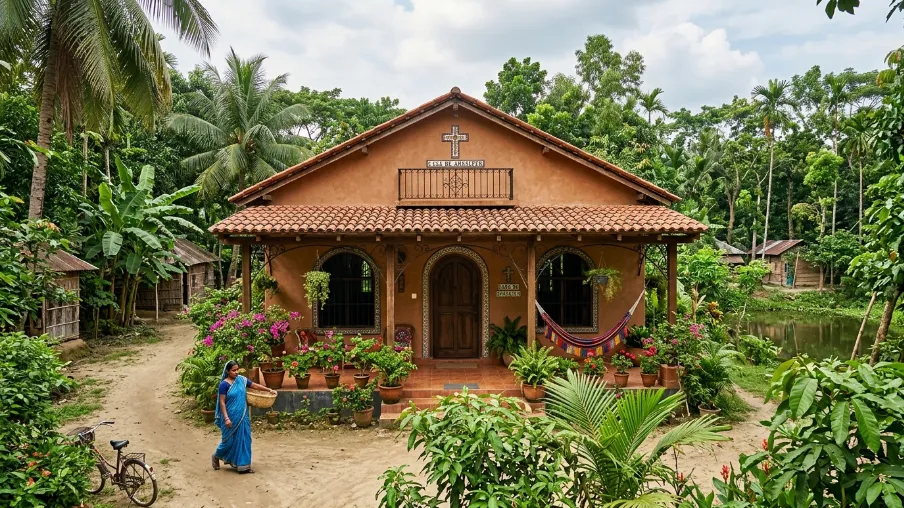
Three things drive the mood boost. Warm colors feel cozy and full of life. Courtyards bring in daylight and fresh air. Thick walls keep the heat steady. Each part has real research behind it. Together, they explain the calm you feel.
Color and Mood
This style leans on warm, bold colors. But that's not just for looks. A 2020 study led by Domicele Jonauskaite examined color-emotion associations among 4,598 people across 30 countries and found strong links between colors and feelings. Universal Patterns in Color-Emotion Associations Are Further Shaped by Linguistic and Geographic Proximity.
It found that 52% linked yellow to joy, 44% linked orange to joy, and 68% linked red to love. These links held up across many countries, suggesting warm colors can carry shared emotional meaning, not just personal taste.
Since late 2022, we've added a warm wall in six living rooms. In follow-up calls, we ask how the room feels a few weeks in. The answer is almost always the same: the room feels "warmer" within two or three weeks. For example, one client in Uttara told us in 2023 that her ochre wall was the first thing guests noticed. This matches what the 2020 study found. Warm colors lift a room's energy fast.
Natural Light and Courtyards
The courtyard is the heart of this style. It does more than look nice. It pulls daylight and fresh air into each room around it. For example, UCLA Health points to a survey of 1,600 office workers in North America. About a third had little or no daylight at their desk. Half said this hurt their mood, focus, and sleep.
A 2014 study, led by Mohamed Boubekri, backs this up with harder numbers. It ran in the Journal of Clinical Sleep Medicine. Workers near windows got 173% more light during the day than those in windowless offices. They also slept 46 more minutes each night, on average.
A separate study by the same team found more. Daylight was linked to a 56% jump in mood, and a 51% rise in output. This matters, since sleep experts say people now spend over 90% of their day indoors.
Courtyards also help with noise, which affects sleep and mood on its own. The World Health Organization recommends keeping nighttime noise under 30 decibels inside a bedroom, and under 40 decibels just outside. A shielded courtyard wall can help with this: positioned away from the street, it gets a bedroom closer to that target than a window facing traffic.
Similarly, a 2020 study by the Urban Mind Project covered 12 countries. It found that 72% of people felt more stressed in noisy interiors than in quieter, plant-filled spaces. As a result, a courtyard home avoids both problems. Almost each room opens onto light and air, and the courtyard wall buffers street noise too.
Built for Heat, Which Matters in Bangladesh
Since 2019, our engineers have compared building methods across hot climates. One thing stands out: adobe-style walls were never just about looks. They work because of thermal mass, the ability of a material to absorb, store, and release heat slowly.
Adobe walls store heat during the day and release it at night, helping keep indoor temperatures more stable. Research on earthen buildings also highlights how thermal mass improves energy performance in hot climates.
Recent research puts real numbers on this. A 2024 study looked at homes in Kashan, Iran, a hot, arid climate not unlike Dhaka's dry season. Adobe walls cut heating and cooling loads by 74% to 78%, compared to standard concrete.
Moreover, the same study found that adobe cut peak summer cooling demand by up to 81.7%. The best results came from thick walls, around 45 centimeters. Similarly, older research looked at homes in La Paz, Mexico, where adobe walls were built 5.1 times thicker than concrete block. They cut energy use by a similar ratio.
In April 2023, our site team checked wall temperatures on two builds in Baridhara. One had thick, rendered walls; the other had standard thin walls. We took readings at 3 p.m. on three different days, and the thick walls stayed cooler each time.
Afterward, the client told us they ran their bedroom AC less that summer. This wasn't a lab test, just simple checks on-site. Still, it lines up with the Kashan and La Paz research, just at a smaller scale. The same idea works with modern brick or concrete, as long as it's thick and rendered well. That's a detail our team plans for early on.
Mexican Style Homes: Benefits and Challenges
This style brings strong daylight, natural cooling, and lasting hand-crafted detail. However, it also needs more land for a courtyard, and it costs more for tile and materials. In addition, it needs careful roof waterproofing, since Dhaka gets close to 1,854mm of rain most years. Therefore, weigh both sides before you commit to a design. Our pricing plans page has rough numbers.
Benefits:
Warm colors that support a welcoming mood, backed by cross-cultural survey data
Courtyards for daylight, air, and privacy, all in one, and shown to cut noise stress
Thick walls and shaded areas that cut indoor heat by double-digit percentages in real studies
Hand-crafted details, like tile and iron work, that age well and rarely go out of style
Works for both small homes and larger luxury homes
Challenges:
Courtyards need more land than a standard row house
Imported tile and carved wood raise costs
Flat or low-pitch roofs need good waterproofing, since nearly 80% of Dhaka's yearly rain falls in a five-month window
Bold colors aren't for everyone; a muted look often works better here
How to Build Mexican Style Homes in Bangladesh?
Building Mexican style homes here comes down to six steps. Adapt the courtyard design to your plot, choose two or three accent colors, and use local textured materials. Treat handmade tiles as a decorative accent rather than a full surface covering. Plan for monsoon drainage. Bring in a design and construction team early. Our one-stop service handles all six together.
Start with the layout: Even a narrow plot can fit a light-well or a covered veranda. For example, on a small plot in Mohammadpur last year, we couldn't fit a full courtyard. So, we built a covered light-well instead, about six feet across. It still brought daylight into three rooms.
Pick two or three accent colors: Don't paint the whole house in bold tones. Instead, pair a terracotta wall with white or cream to keep things balanced.
Add texture with local materials: Try exposed brick, stucco, or dark wood beams. That way, you get the look without needing to import everything.
Use tile as an accent: Try a tile border on a staircase or backsplash. It adds craft without overwhelming the space.
Plan for monsoon drainage first: Do this before any flat roof or open courtyard, since Dhaka's wettest month, June, averages close to 380mm of rain on its own. This is where first-time builds often run into trouble. For instance, we learned this in 2021, when a flat-roof section needed rework after the first monsoon. As a result, we now check this at the design stage, each time.
Work with a team early: This way, the courtyard, drainage, and structure get planned together, instead of being patched later. Contact our team to walk through your plot first.
Mexican Style Homes: Common Mistakes to Avoid
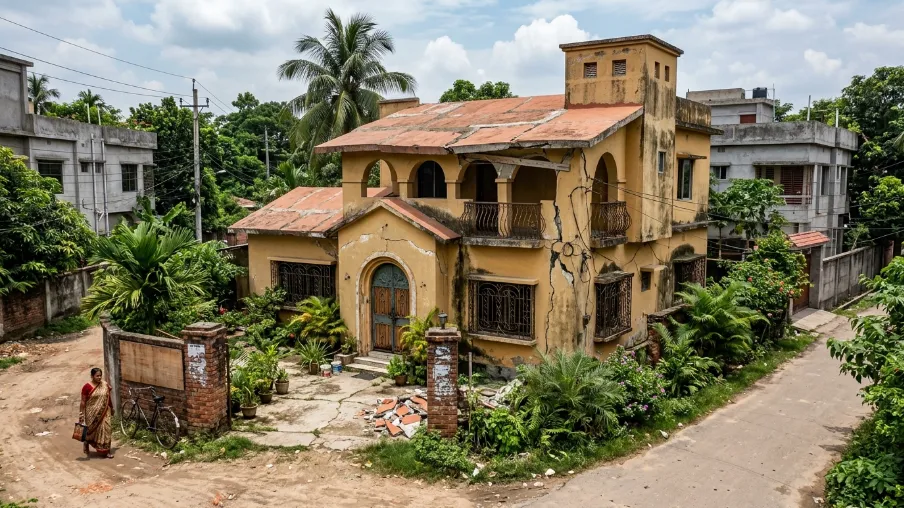
The biggest mistake is copying a dry-climate design as-is. Instead, Mexican style homes need real changes here, since our humidity, rain, and drainage needs are different. For instance, Dhaka's humidity swings from around 52% in the dry season to nearly 98% during monsoon months, according to climate data from the Bangladesh Meteorological Department (BMD).
Other common errors include skipping roof insulation, overusing bold color indoors, and treating the courtyard as decoration instead of a working feature. A proper drawing and design process helps adapt Mexican-inspired home ideas to local conditions by planning ventilation, drainage, materials, and structural details before construction begins.
Fortunately, good construction management catches these issues early. We saw the drainage mistake firsthand on that 2021 project, which is why it’s now a fixed checkpoint we review on each design.
Copying photos from dry, desert climates without adjusting for local weather
Skipping roof insulation, which cancels out the cooling benefit of thick walls
Using too much bright color indoors, which can feel overwhelming in a small room
Treating the courtyard as decoration instead of a working light and air feature
Tips From the Field
Since 2019, we've worked on many homes like this, and we've noticed something. The homes clients call "peaceful" share one trait: a clear view from indoors to outdoors, whether that's a courtyard, veranda, or balcony. If you can't fit a full courtyard, try a covered balcony instead.
Add plants and good airflow, and it can do a lot of the same work. In fact, UCLA Health and the Urban Mind Project point to similar benefits, even from a smaller space.
We recommend walking your plot at different times of day before you finalize window and courtyard placement. For example, in mid-2023 we visited a site in Bashundhara in the afternoon and found a problem. A wall we'd planned as shaded would catch direct sun for two hours each evening.
However, our morning visit hadn't shown this at all. So, we changed the layout before building started. We visit each courtyard plot twice, once in the morning and once in the late afternoon, before we lock in the design.
Future Trends About Mexican Style Homes
Modern Mexican style homes are getting simpler: fewer accent colors, and smaller courtyards that do more, like doubling as dining or plant space. As a result, this style travels well to South Asia. It keeps the cooling and daylight benefits of traditional courtyard planning, while efficient process planning helps reduce construction time, cost, and maintenance needs. Sustainable architecture ideas from ArchDaily also highlight the value of climate-responsive design approaches.
Frequently Asked Questions About Mexican Style Homes
What are Mexican style homes?
Mexican style homes are traditional-inspired houses that feature stucco or adobe walls, courtyards, clay-tile roofs, warm earth-tone colors, wooden beams, and handcrafted details like wrought iron and painted tiles.
Can I build this style in Bangladesh's climate?
Yes, with some changes. You'll need proper roof waterproofing, and you'll also need good drainage around any courtyard. That's because Dhaka gets close to 1,854mm of rain a year, and nearly 80% of it falls between May and September. So, drainage planning matters more here.
Does this style really help mood, or is that just marketing?
The parts are backed by real research. A 2020 study covered 4,598 people, in 30 countries. It links warm colors to comfort and joy. A 2014 sleep-medicine study links daylight to a 56% mood boost. It also links daylight to a 51% productivity gain. No study has tested the whole style as one package. But each piece has evidence behind it. This also matches what our clients tell us.
Is adobe construction practical for a modern home?
Full adobe brick is rare in urban Bangladesh. However, the same idea, thermal mass, still works with modern concrete block or thick, rendered walls. For example, a 2024 study found adobe-style walls cut cooling loads by up to 81.7% at peak summer demand, versus standard concrete. Similarly, our own site checks in Baridhara back this up, at a smaller scale.
What is Talavera tile? Do I need imported tile?
Talavera is a hand-painted tile tradition. It comes from Puebla, Mexico. It dates back to the 1530s. You don't need to import it. Many local suppliers offer similar tile. It costs less too.
How much land do I need for a courtyard layout?
It depends on your design. Even a small plot can fit a light-well. Or a veranda. Or a balcony. These bring much of the same benefit. You don't need a full courtyard. We proved this on a small plot in Mohammadpur. A six-foot light-well still lit three rooms.
Is this style only for luxury homes?
No. A small home can use the same ideas. Warm color. Natural light. Simple texture. You can do this on a modest budget. Just limit tile and imported material. Keep it to one or two accent areas.
How much does it cost to build this style in Bangladesh?
Cost depends on plot size. It depends on how much courtyard space you add. It also depends on your tile choice, imported or local. Local brick, stucco, and a few tile accents keep costs close to a standard build. A detailed quantity take-off gives you the most accurate number.
.webp&w=256&q=75)