
Top 5 Design Tips for Integrating Shaker Interior Doors into Your Home
.webp&w=96&q=75)
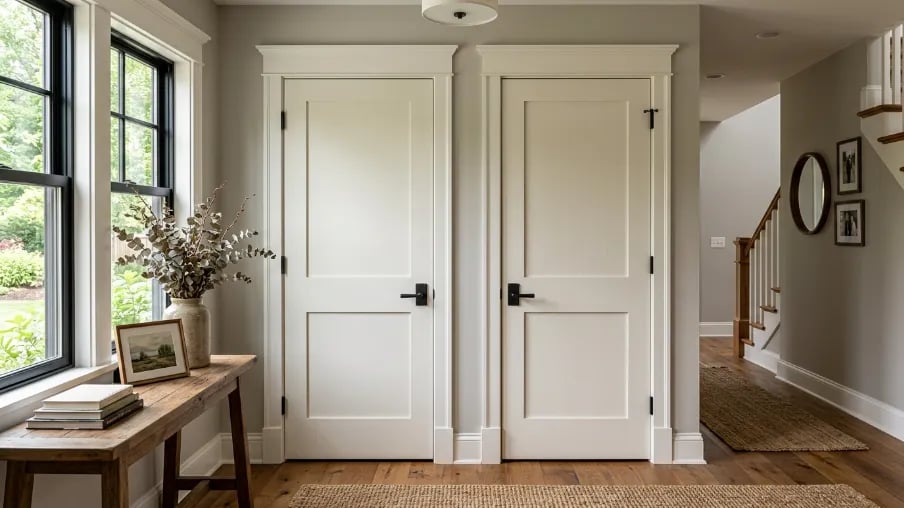
Shaker interior doors refers to a style of interior door that features a simple frame-and-panel design with clean lines and recessed panels. These doors are known for their timeless appearance, durability, and versatility, making them suitable for modern, traditional, and farmhouse-style homes.
If you want a door style that works in almost any home, shaker interior doors are one of the safest and smartest choices you can make. Their clean lines, flat panels, and simple frame make them easy to match with modern, traditional, or minimalist interiors. This is exactly why shaker doors for homes across Bangladesh have become such a reliable go-to.
In this guide, I'll walk you through five practical design tips for choosing and installing shaker interior doors the right way. These are based on what actually works in real homes across Bangladesh.
Whether you're renovating an apartment in Dhaka or planning a new home from scratch, doors are one of those details that get overlooked until it's too late. Getting the door style right early, as part of a proper drawing and design plan, saves you money and time. It also cuts down on back-and-forth with contractors later.
Key Takeaways
Shaker interior doors suit modern, traditional, and minimalist homes because their clean, flat-panel design blends easily with different interior styles.
Choose the panel style based on each room's purpose: 2-panel for bedrooms, 3-panel for hallways, and 5-panel for larger rooms or entryways.
Pick the right material for the environment. Solid wood performs better in humid spaces like bathrooms, while MDF is a cost-effective option for dry rooms.
Decide between prehung and slab doors before construction. Prehung doors simplify full renovations, while slab doors are ideal when the existing frame is still in good condition.
Keep the design consistent by selecting the right finish, color, and glass or closet door options early in the planning process to avoid costly changes later.
What Are Shaker Interior Doors?
Shaker interior doors are doors with a flat center panel set inside a simple, unornamented rectangular frame. The name comes from the Shaker design movement, which valued simplicity, function, and honest craftsmanship over decoration.
This is different from older colonial or raised-panel doors, which often have curved moldings and more ornamentation. The same principles that shaped Shaker furniture, clean lines and function over ornament, carried the style into door design.
In my experience working with homeowners on interior planning, shaker panel interior doors are popular because they don't compete with other design elements in a room. They sit quietly in the background, which is exactly what most modern interiors need.
Today's shaker interior door styles range from flat two-panel layouts to more detailed five-panel versions. That restraint in the underlying shaker interior door design is really what ties the whole look together.
Why Shaker Doors Work So Well in Bangladeshi Homes
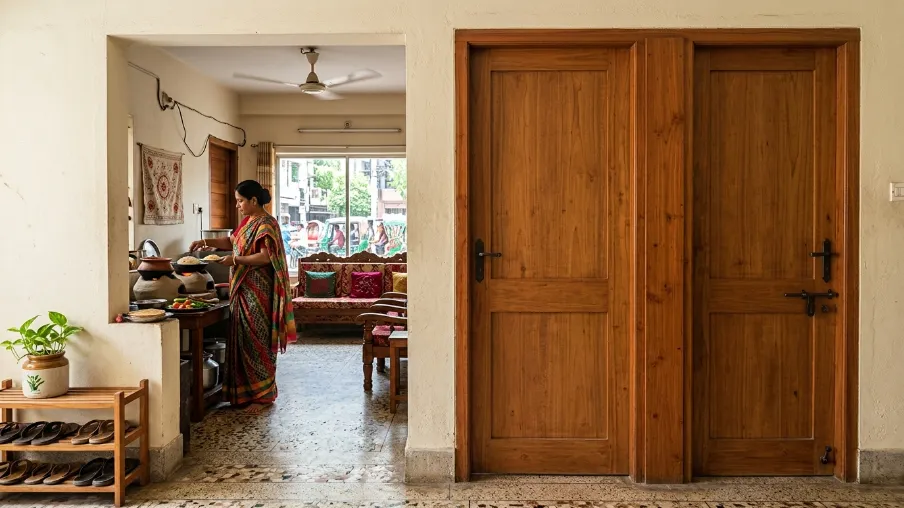
Homes in Bangladesh often mix different influences: some rooms lean modern, others keep a more traditional feel. Shaker style interior doors adapt to both without looking out of place. I noticed that clients who were unsure about their overall design direction almost always felt safe choosing shaker doors. That's because shaker doors don't lock you into one specific style.
There's also a practical side. Space in many Dhaka apartments is limited, and heavy, ornate doors can make rooms feel smaller. A simpler door profile, like a 2 panel shaker interior door or a 5 panel shaker interior door, keeps sightlines clean and makes rooms feel more open.
If you're browsing shaker interior door ideas for a renovation, this adaptability is usually the first thing worth noting. It's also a big part of why shaker interior doors for modern homes have become such a common recommendation among designers.
Their clean lines and timeless appeal also complement styles like Modern Mexican interior design, where natural materials, warm tones, and simple architectural details create a balanced and inviting atmosphere.
Shaker Doors vs. Other Interior Door Styles
Short answer: Shaker doors sit between flush doors (completely flat, no detail) and raised-panel or French doors (more ornate, more expensive). They offer a middle ground of subtle detail without heavy cost or maintenance. Within the broader category of interior panel doors, shaker styles have become one of the more popular choices for contemporary interior doors precisely because of this balance.
Door Style | Look | Typical Cost vs. Shaker | Best Fit For |
|---|---|---|---|
Flush/flat panel doors | Completely smooth, no frame detail | Generally lower | Ultra-minimalist interior doors for budget projects |
Shaker interior doors | Flat panel inset in a simple frame | Baseline | Most modern and transitional homes |
Raised-panel doors | Curved moldings, more ornamentation | Generally higher | Traditional or classical interiors |
French/glass doors | Multiple glass panes, often taller | Generally higher | Studies, dining rooms, light-sharing spaces |
In practice, shaker doors are often chosen specifically because they avoid the two extremes. They don't look as bare as a flush door, and they don't carry the cost or upkeep of a heavily detailed raised-panel door.
Tip 1: Match the Panel Style to Your Room's Purpose
Short answer: Use 2-panel doors for bedrooms and living areas, 3-panel doors for hallways, and 5-panel doors for larger rooms or entryways. Not every room needs the same door style. This is one detail many homeowners skip.
2 panel shaker doors work well for bedrooms and living areas where you want a calm, minimal look. These are also some of the most requested shaker bedroom doors, since the simpler layout suits a room meant for rest.
3 panel shaker doors suit hallways and transitional spaces, adding a bit more visual rhythm without feeling busy.
5 panel shaker doors are a good fit for larger rooms or entryways where you want a slightly more detailed look.
For wet areas, shaker bathroom doors typically need moisture-resistant materials, so panel count matters less than the material choice discussed below. In practice, the best shaker interior doors for any room are matched to that room's humidity, traffic, and light needs. A single style used throughout the whole house rarely fits every room equally well.
Tip 2: Choose the Right Material for the Right Room
Short answer: Solid wood suits bedrooms and entry doors. MDF works best for budget-friendly painted rooms with low moisture, and unfinished doors give you flexibility for custom paint or stain. This is where a lot of projects go wrong: people choose a door because it looks good in a photo. They don't think about how it will hold up day to day.
Material | Best For | Pros | Considerations |
|---|---|---|---|
Solid wood shaker interior doors | Bedrooms, main entry doors | Durable, good sound insulation, ages well | Higher cost, needs sealing in humid climates |
MDF shaker interior doors | Budget-friendly rooms, painted finishes | Smooth surface, holds paint well, affordable | Less moisture-resistant than solid wood |
Unfinished shaker interior doors | Custom paint or stain projects | Flexible finish options | Requires finishing work before installation |
In a humid climate like Bangladesh's, I generally recommend being cautious with MDF doors in bathrooms or kitchens unless they're properly sealed. Solid wood, while pricier, often performs better long-term in areas with fluctuating humidity.
This lines up with what most material comparison guides note about MDF's sensitivity to moisture, compared to solid wood's better resistance when properly sealed and maintained. This is one reason solid shaker wood doors remain a popular default for high-traffic or high-moisture rooms, even with the added cost.
A Real Example: Getting the Material Choice Wrong
Situation: A client renovating a mid-sized flat in Dhaka wanted a uniform look across the home. So they specified MDF shaker doors for every room, including the bathroom, to keep costs consistent.
Problem: Within roughly a year, the bathroom door began to swell slightly along the bottom edge where it met the floor. The paint also started to lift near the hinges. The humidity from daily use, combined with limited ventilation, was the likely cause.
Solution: We replaced that single door with a solid wood shaker door sealed on all edges. We kept MDF for the rest of the home, where humidity exposure was lower.
Result: The replacement door has held up without issues since. The rest of the MDF doors in drier rooms have shown no similar problems.
Lesson learned: Uniformity across a home is a reasonable goal, but it shouldn't override material suitability in high-moisture rooms. A mixed-material approach, where each door matches its room's conditions, is often more practical than treating every door the same.
Tip 3: Decide Between Prehung and Slab Doors Early
Short answer: Choose prehung doors for full renovations where speed and alignment matter. Choose slab doors for partial upgrades where the existing frame is still in good shape. This decision affects your budget and timeline more than most people expect.
Prehung shaker interior doors come with the frame and hinges already attached. They're faster to install and reduce the risk of alignment issues, which matters if you're working with a contractor on a tight schedule. As buying guides on prehung vs. slab doors point out, this convenience comes with a higher price and a heavier unit to transport.
Slab shaker interior doors are just the door itself, without the frame. These are more affordable if your existing frame is in good condition. But they require more precise measurement and installation work, since slab installation depends entirely on the existing frame being level and square.
From working on similar projects, I've found that homeowners doing a full renovation usually benefit from prehung doors. Those doing partial upgrades or replacing a single door often go with slab doors to save cost. Either way, getting shaker door installation right the first time saves far more in follow-up repairs than it costs upfront.
Tip 4: Use Color and Finish to Set the Tone
Short answer: White is the most versatile finish for brightening small rooms. Dark painted tones work well as accent doors, and natural wood finishes suit warmer, modern interiors. The finish you choose changes the entire feel of a room, sometimes more than the door style itself.
White shaker interior doors are the most versatile option. They typically brighten small rooms and pair well with most wall colors, which is one reason they're often the most requested finish in residential projects.
Painted shaker interior doors in darker tones (charcoal, deep green, navy) work well as accent pieces in modern homes. They suit a single statement door, like a study or closet, especially well.
Modern shaker interior doors sometimes skip paint altogether, using a light natural wood finish to keep things warm and understated.
One thing I learned is that consistency matters more than perfection. If you're mixing finishes across a home, keep a common thread (like using the same trim color), so the transitions feel intentional rather than accidental. If you're painting doors yourself rather than ordering a factory finish, proper prep and priming matters more than the paint brand you choose.
Tip 5: Don't Overlook Glass and Closet Variations
Short answer: Use glass-panel shaker doors for offices and pantries where light matters. Plan closet door clearance (sliding or bifold) during design, not after construction. Not every door needs to be solid. Interior shaker doors with glass work well for home offices, pantries, or spaces where you want light to pass through without full visibility.
A frosted or reeded glass panel set into a shaker frame keeps the clean aesthetic while adding a functional benefit. This is similar in spirit to how French and glass-panel doors share light between connected rooms.
For storage spaces, shaker closet doors are worth planning early, especially if you're considering sliding or bifold configurations. These need different clearance measurements than standard swing doors, so it's best to confirm this during the design phase rather than after the frame is built. As comparisons of bifold and sliding closet doors generally note, bifold doors give fuller access to storage, while sliding doors save floor space in tighter rooms. It's a trade-off worth thinking through before committing to hardware.
How Much Do Shaker Interior Doors Cost?
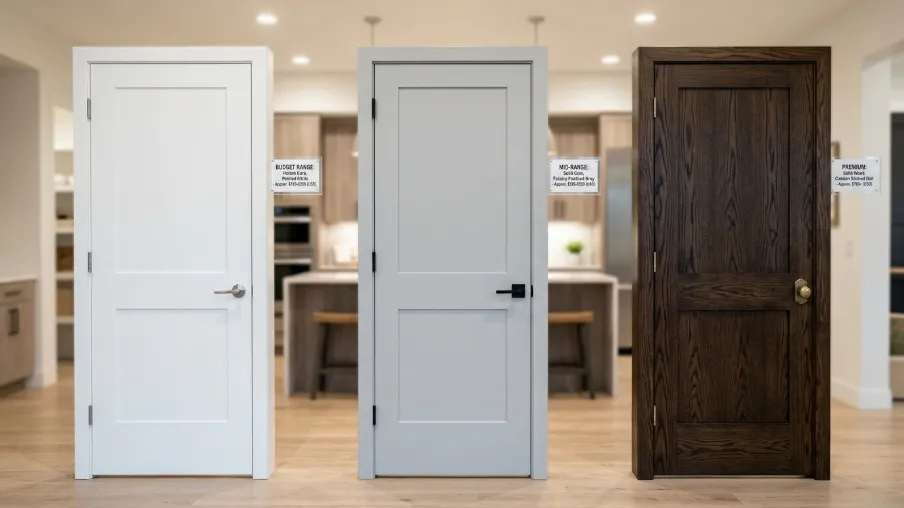
Short answer: Cost depends mainly on material and whether the door is prehung. MDF slab doors are generally the most affordable option, and solid wood prehung doors sit at the higher end.
Pricing for shaker interior doors varies by supplier, material, size, and finish. It's not something we can quote a fixed number on here. As a general pattern, though:
MDF slab doors are typically the most budget-friendly starting point.
Solid wood doors cost more but often last longer, particularly in humid conditions.
Prehung doors cost more than slab doors of the same material, since you're paying for the frame and hardware as well.
Custom sizes, glass panels, and specialty finishes generally add to the base price.
Material availability and pricing can shift, and they vary between suppliers in Dhaka and elsewhere in Bangladesh. The most reliable way to get an accurate number is to request quotes based on your specific room measurements and material preference, rather than relying on a general estimate.
If you'd rather not chase individual supplier quotes yourself, an estimation and quantity take-off service can consolidate this into a single, itemized budget for your whole renovation.
Standard Sizes and Measurements
Short answer: Most interior doors, including shaker styles, are manufactured in standard heights of around 80 inches (203 cm). Widths commonly range from 24 to 36 inches (61-91 cm) depending on room type, though custom sizes are available.
Bathroom and closet doors tend to run narrower, while bedroom and main entry doors are usually wider. According to standard door size guides, 80 inches remains the baseline height used across most residential construction. Width is chosen based on room function and accessibility needs.
If you're working with an older building or a non-standard frame, which is fairly common in older homes, it's worth having exact measurements taken before ordering. Even small size mismatches can complicate installation later.
Caring for Shaker Interior Doors
Short answer: Wipe painted or finished shaker doors with a soft, slightly damp cloth. Avoid harsh chemical cleaners that can dull the finish, and check hinges periodically for looseness that can affect alignment over time.
Dust regularly to prevent buildup in the panel grooves, which are more visible on shaker doors than flush doors.
Avoid excess moisture on unsealed or unfinished wood doors, especially in bathrooms.
Touch up paint chips early rather than letting them spread, particularly around handles and edges that see frequent contact.
Tighten hinge screws periodically, since regular hinge maintenance is one of the most effective ways to prevent a door that no longer closes properly.
Choosing the same panel style for every room without considering scale or function.
Skipping moisture-resistant materials in bathrooms and kitchens.
Measuring for slab doors without accounting for an uneven or older frame.
Ignoring hardware: hinges and handles that don't match the door's simplicity can undercut the whole look.
Finalizing paint color before checking it under the room's actual lighting.
Practical Steps for Getting Started
Walk through your home and list which doors need replacing.
Group rooms by function (bedroom, bathroom, closet, entry) to decide panel style per space.
Choose materials based on humidity exposure, not just appearance.
Decide prehung vs. slab based on your existing frame condition.
Confirm your finish plan across the whole home before ordering, so colors stay consistent.
Custom shaker interior doors take a bit more planning than off-the-shelf options, but the result is a home that feels considered rather than generic. If you're unsure at any step, working with a design professional early on typically saves more money than it costs, since it avoids rework later.
Limitations and Trade-Offs to Keep in Mind
No door style is right for every situation, and it's worth being upfront about where shaker doors have limits:
They can look plain in very traditional or ornate interiors: If your home leans heavily toward classical or heavily decorative styling, shaker doors may feel out of place next to detailed cornices or carved furniture. In that case, a raised-panel door might blend in better.
Solid wood costs more upfront: Budget-conscious projects often need to weigh long-term durability against short-term cost. There's no single right answer: it depends on how long you plan to stay in the home.
Not all local suppliers stock every panel and material combination: Custom shaker interior doors may involve longer lead times than off-the-shelf options, so it's worth confirming availability before finalizing a design timeline. This is consistent with what most material sourcing guides note about supply and manufacturing differences between MDF and solid wood doors.
DIY installation carries real risk for prehung doors: Misaligned frames are a common and costly mistake. This is one area where professional help, such as through a construction management service that oversees installation quality, is generally worth the added cost.
These trade-offs don't mean shaker doors are a poor choice. In most residential projects we've seen, they remain one of the more adaptable options available. But going in with realistic expectations helps avoid disappointment later.
Frequently Asked Questions
What is the difference between shaker and flat panel interior doors?
Shaker doors have a raised frame around a flat inset panel, giving a subtle three-dimensional look. Flat panel doors are completely smooth with no frame detail. Shaker doors generally offer more visual interest while still staying minimal.
Are MDF shaker interior doors durable enough for daily use?
Yes, in most cases. MDF shaker interior doors hold up well for interior use, especially in low-moisture rooms. They're less suited to bathrooms or kitchens unless sealed properly, since MDF can swell if exposed to consistent moisture.
Can I install shaker interior doors myself, or should I hire a professional?
Slab doors on an existing, well-aligned frame can often be a DIY project for someone with basic tools. Prehung doors, or any situation involving frame repair, generally go smoother with a professional, since incorrect alignment affects how the door closes long-term.
Do shaker doors work in small apartments?
Yes. In fact, shaker style interior doors often suit small spaces better than ornate designs, since the simple lines don't visually crowd the room. Lighter finishes like white shaker interior doors can also help small rooms feel larger.
What's the most affordable way to get the shaker look?
Affordable shaker interior doors are usually MDF slab doors with a painted finish. This combination gives you the shaker aesthetic without the cost of solid wood or custom millwork.
How do I choose between 2, 3, and 5 panel shaker doors?
This mostly comes down to room size and personal preference. Smaller rooms often look cleaner with 2-panel doors, while larger spaces or entryways can carry the extra detail of 3 or 5 panel designs without feeling busy.
How much do shaker interior doors typically cost?
Cost varies by material, size, and supplier, so there's no single fixed price. As a general pattern, MDF slab doors tend to be the most affordable, while solid wood prehung doors sit at the higher end. Getting a quote based on your exact room measurements is the most reliable way to budget accurately.
What is the standard size for a shaker interior door?
Most interior doors are around 80 inches (203 cm) tall, with widths typically between 24 and 36 inches (61–91 cm) depending on the room. Older buildings may have non-standard openings, so it's best to measure before ordering.
How do I maintain a shaker interior door?
Regular dusting, especially in the panel grooves, keeps shaker doors looking clean. Avoid harsh chemical cleaners on painted finishes, and check hinges periodically, since a loose hinge is a common cause of doors that no longer close properly over time.
Final Thoughts
Shaker interior doors are a dependable choice because they don't ask a room to work around them: they adapt to whatever style you're building. The real value comes from matching panel style, material, and finish to how each room is actually used, rather than picking one design and repeating it throughout the house.
If you're planning a renovation and want these details worked out properly before construction begins, a proper drawing and design plan makes the whole process smoother. It also helps avoid costly changes mid-project.
For homeowners who'd rather have one team handle design, sourcing, and installation together, Nusaiba Construction & Technology's one-stop building solutions cover exactly this kind of detail, start to finish.
Sources and References
Shaker Furniture, The Metropolitan Museum of Art, background on the Shaker design movement and its principles of simplicity and utility.
Modern Design Movement: Shaker, Room & Board, overview of Shaker aesthetic principles and their influence on contemporary design.
MDF vs. Solid Wood for Interior Doors, Trimlite, comparison of material durability, cost, and moisture resistance.
A Quick Guide to MDF Interior Doors, The Wood Work Place, details on MDF's stability and moisture sensitivity.
What is the Difference Between MDF and Solid Wood Doors, Golden House, additional material comparison reference.
Your Guide to MDF Interior Doors, Manhattan Door, supply and manufacturing considerations for MDF vs. solid wood doors.
Prehung Entrance Doors and Interior Doors vs. Slab Doors, Lowe's, buying guide comparing prehung and slab door installation and cost.
Should You Choose Slab or Pre-Hung Interior Doors, Angi, additional comparison of installation requirements.
Standard Door Size: A Complete Guide, doors.com, reference for standard interior door heights and widths.
Understanding Door Dimensions, Mastercraft, additional door style and sizing reference.
How to Paint Interior Doors, The Home Depot, guidance on prepping, priming, and painting interior doors.
Bifold Doors vs. Sliding Doors, Coohom, comparison of closet door configurations and space trade-offs.
Simple Steps for Long-Lasting Interior Door Hinge Life, TDC Hinges, hinge cleaning and maintenance guidance.
Bangladesh National Building Code (BNBC) 2020, hosted via MCCI, general national guidance on building materials and construction standards in Bangladesh.
.webp&w=256&q=75)