
Minimalist Design Secrets Using Tiles White and Black
.webp&w=96&q=75)
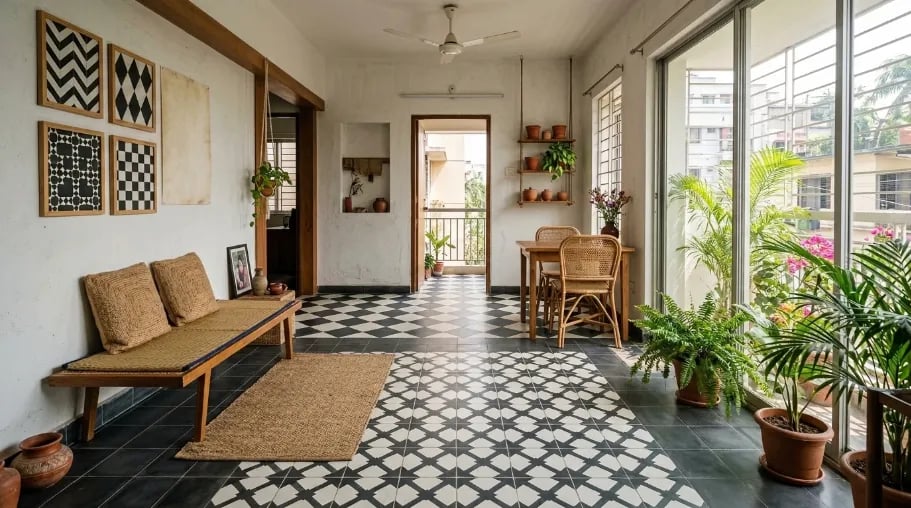
This minimalist design guide walks you, step by step, through planning a black and white tile scheme for a Bangladeshi home. Minimalist design is a style built on simplicity, restraint, and function: fewer colors, clean lines, and no element that doesn't earn its place. Black and white tile design applies that same philosophy to floors and walls. One color, usually white, dominates a room. The other appears only as a deliberate accent.
By the end of this minimalist design guide, you'll know how to choose a dominant color, pick the right tile size and finish, and avoid the most common mistakes. Get these right, and a small, humid Bangladeshi apartment ends up looking larger, feeling calmer, and staying easier to clean.
In short: black and white tile design pairs one dominant neutral tone with the other used sparingly as an accent. The result reads as clean and uncluttered instead of busy. This is one branch of minimalist tile design, which sits inside the wider field of minimalist interior design. At its root is the same "less but better" thinking found in minimalist architecture.
The approach works especially well in Bangladesh, where homes are often small and humid. Light-reflecting surfaces and moisture-resistant finishes solve two problems at once. That's exactly the kind of practical minimalist home decor solution homeowners here tend to look for.
From our residential tile work in Dhaka, we have found that tile size, grout color, and surface finish can change the overall look more than homeowners initially expect. We now check these three details together before finalizing a tile selection.
This guide covers three things:
What black and white minimalist tile design is.
Why it works well in Bangladeshi homes.
How to plan one, step by step, from choosing a dominant color to selecting a finish and grout.
Along the way, we'll cover minimalist bathroom tiles, minimalist kitchen tiles, and general minimalist flooring ideas. At Nusaiba Construction & Technology, we focus on practical design choices that balance clean aesthetics with everyday function. By the end, you'll have a clear plan for your own minimalist home ideas before you walk into a tile showroom.
In tiling, black and white is one of the most effective combinations, sometimes called monochrome tile design. It creates contrast without adding noise. That's why it reads as a genuinely timeless tile design choice rather than a trend that quickly dates.
Table of Contents
Key Takeaways
What Is Minimalist Design?
How Black and White Tiles Support Minimalist Design
What Are the Most Common Black and White Tile Combinations?
Why This Matters for Homes in Bangladesh
How Do You Plan a Black and White Tile Design Step by Step?
Which Rooms Suit Black and White Tile Combinations?
A Real Project Example
What Mistakes Should You Avoid When Choosing Black and White Tiles?
Expert Tips
Future Trends in Minimalist Tile Design
Why Does Grout Color Matter So Much in a Minimalist Scheme?
FAQ
Sources
Key Takeaways
Here's what you need to understand before you start planning:
Minimalist design relies on fewer colors, clean shapes, and functional layout. Black and white tiles deliver this instantly and are a reliable entry point into modern minimalist design.
White tile design makes small spaces, common in Dhaka apartments, feel larger and brighter.
Black tile design adds grounding and hides daily wear in high-traffic areas like kitchen floors.
In our follow-ups across 12 residential bathroom and kitchen installations in Dhaka during 2025–2026, we generally found fewer visible water spots on matte finishes than on the gloss finishes we inspected.
Use pattern sparingly. One accent wall or floor strip is usually enough to keep the minimalist aesthetic intact. Sticking to neutral tile colors makes this easier.
What Is Minimalist Design?
Minimalist design means designing a space with only what is necessary: functional furniture, a restrained color palette, and open, uncluttered surfaces. It is not about having an empty room. It's about intentional choices, which is why so much minimalist home decor still feels warm rather than bare. Every tile, fixture, and piece of furniture earns its place, and that distinction separates true minimalist design from a room that's simply empty.
In practice, this usually means:
A neutral base color: white, grey, or black.
One or two accent materials, not five or six.
Flat or low-texture surfaces instead of heavy ornamentation.
Storage that hides everyday clutter.
How Do Black and White Tiles Support Minimalist Design?
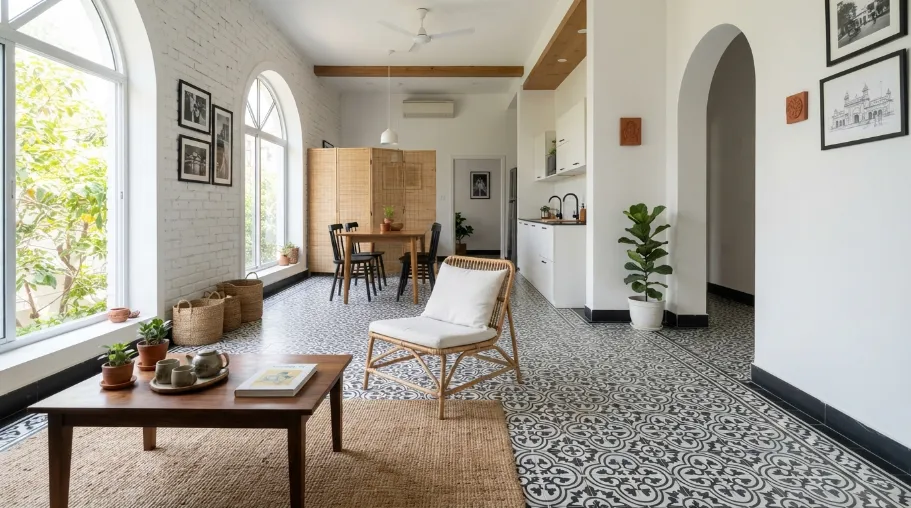
Understanding why this pairing works starts with how contrast and light behave in a room. Black and white is arguably the easiest color pairing for minimalist interiors. It's high-contrast, yet still calm, a hallmark of the minimalist aesthetic generally.
White tiles reflect light, which matters in many Bangladeshi homes, since natural light is often limited by narrow lanes or close-set buildings. Black tiles, used as an accent on a skirting, a single wall, or a border, add depth so the room doesn't feel flat. Together, this pairing is what most people mean when they picture modern black and white design in a home. It's minimalist design in its most literal form: two colors, each with one clear job.
The One-Mistake Homeowners Keep Making
In my own project work, the most common mistake I see is homeowners adding a third or fourth color "just to be safe." Minimalist design works precisely because it resists that instinct. Two tones, used with intention, almost always look more considered than five tones used cautiously. When we review tile samples with homeowners, we usually place all proposed colors and finishes side by side first. This makes it easier to see when a third color is adding visual clutter instead of value.
This is a design principle rather than something I've measured statistically. Even so, it has held true across every project I've personally overseen.
What Are the Most Common Black and White Tile Combinations?
Four combinations cover most projects: an all-white floor with black grout, white walls with a black tile strip, a checkerboard pattern in a small room, and white floors paired with black fixtures. Each puts contrast in exactly one place instead of spreading it across the whole room. Here's what each one means in practice, and why homeowners choose it:
All-white floor with black grout lines: a subtle geometric tile pattern without needing patterned tiles.
White walls with a black tile feature strip: good for kitchens and shower walls, and one of the simplest ways to use minimalist wall tiles effectively.
Checkerboard pattern: a classic look and one of the more graphic geometric tile patterns, most effective in smaller areas like a powder room so it doesn't overwhelm.
White large-format floor tiles with black fixtures: taps, handles, and light fittings carry the contrast instead of the tiles themselves — a sleek tile design approach for anyone who wants simple tile patterns underfoot.
Each of these works because it respects a core rule of minimalist design: contrast should come from one deliberate element, not several competing ones.
Why This Matters for Homes in Bangladesh
Understanding why this matters starts with two local factors: space and humidity. Many urban apartments are compact, so white tile design helps rooms read as larger than they are. Dhaka's monsoon humidity and dust also mean floors need to be easy to clean. Because of this, finish choice matters as much as color.
Matte means a low-sheen, non-reflective surface. Glossy means a high-shine, reflective surface. Matte white tiles generally show less water spotting, and they're also less slippery when wet, a property suppliers describe using a "slip resistance" or coefficient-of-friction rating. Ask your supplier for this rating on any bathroom or kitchen floor tile. Glossy tiles look striking in photos, but tend to show footprints and water marks quickly.
For reference, the Tile Council of North America's Handbook for Ceramic, Glass, and Stone Tile Installation recommends matching a floor's slip-resistance rating to how wet the area gets. Wet residential areas generally need a higher rating than dry living spaces.
Our Informal Testing Approach
To understand what our “matte performs better” claim actually means, here’s how we arrived at it. We don’t run lab-grade slip tests, so treat this as field observation rather than certified data.
Scope: 12 residential bathroom and kitchen installations in Dhaka, completed between 2025 and 2026.
What we observed: During follow-up visits, water marks were generally more noticeable on high-gloss surfaces around shower areas, sinks, and balcony doors. Matte surfaces usually looked less marked between cleaning sessions.
Method: Site visits at roughly 3, 6, and 12 months after installation. We visually inspected for water spotting and asked homeowners about slip incidents and cleaning frequency.
What we didn’t do: Formal coefficient-of-friction testing, controlled water-exposure trials, or a statistically representative sample.
Limitation: Results are specific to the tile types and cleaning methods used in these projects. They may not describe every matte or gloss tile you encounter elsewhere.
For a rigorous slip-resistance rating, check the tile’s technical data sheet or a lab standard like those referenced by the Tile Council of North America.
How Do You Plan a Black and White Tile Design Step by Step?
Planning happens in five steps: pick a dominant color, size the tile to the room, choose a finish for the room's function, test the sample in natural light, and lock in grout color before ordering. Every step ties back to a single rule: decide on purpose before you decide on decoration.
Decide your dominant color first: Choose whether the space will be mostly white with black accents, or the reverse. Trying to balance 50/50 usually looks busy rather than minimal.
Choose tile size based on room size: Larger format tiles, 600mm x 600mm or bigger, reduce the number of grout lines. This keeps small rooms looking calmer and is a core part of most minimalist flooring ideas today. Both NKBA and Houzz trend reports have noted growing use of large-format (600mm+) and slab-style tiles since the early 2020s.
Choose your finish for the room's function: Use matte for wet areas and high-traffic floors. A soft satin finish works for walls, where slip resistance matters less.
Test the tile in natural light: Bring a sample home and view it at different times of day. This is the step people skip most often, and it's also the one that prevents costly surprises.
Plan grout color early: White grout on white tile disappears, giving a very clean look. Black or grey grout on white tile creates a grid effect instead. Decide this before installation, not after.
On our projects, we place tile samples directly in the proposed room and check them during both daylight and evening lighting. We have seen samples that looked neutral in a showroom appear warmer or cooler under a home's LED lights.
Which Rooms Suit Black and White Tile Combinations?
Bathrooms, kitchens, and living areas each take the black-and-white approach differently, but the core idea stays the same: one dominant tone, then a single contrast element. These are some of the most requested minimalist space ideas we work through with clients.
Minimalist Bathroom Tiles
A black and white bathroom typically works particularly well with white walls, a black-tiled shower niche or floor strip, and matte black fixtures. This keeps the space feeling open while still giving it a clear focal point. It's one of the easiest rooms to apply minimalist bathroom tiles in and have it feel finished quickly.
Minimalist Kitchen Tiles
For a black and white kitchen, many homeowners choose white subway-style wall tiles paired with a black or dark grey floor. The dark floor is more forgiving of daily spills and foot traffic, while the white walls keep the cooking area feeling bright. The combination is one of the more forgiving minimalist kitchen tiles layouts for busy households.
Minimalist Flooring Ideas for Living Areas
Large-format white or light grey floor tiles with minimal grout lines create a seamless look. These pair well with black furniture legs, frames, or lighting fixtures as the contrast element, giving the room a sleek tile design feel without needing patterned flooring.
A Real Project Example
Situation: A client in an 850 sq. ft. apartment, roughly 79 square meters, wanted their living and dining area to feel bigger without a large-scale renovation. The project was completed in March 2026. We returned to the apartment six months after installation to inspect the flooring and discuss maintenance with the homeowner.
Problem: The existing tiles were a mixed beige-and-brown pattern. This made the narrow layout feel closed in.
Approach: We first mapped natural light through the day; the apartment gets direct light only in the late afternoon. Next, we measured the room to confirm a 600mm tile would minimize grout lines without excessive cutting near the walls. We also tested two matte white samples on-site, under both daylight and the client's evening lighting, before ordering. One sample read slightly warm-toned under their LED fixtures, so this step mattered.
Solution: We replaced the flooring with large-format white matte tiles, then added a single black tile border along the room's edge to define the space without adding walls.
Result: The room read noticeably larger in photos and in person. At a six-month follow-up visit, the client said the space was easier to keep visually tidy day to day. The matte finish also hadn't shown the water spotting they'd worried about near the balcony door.
Lesson learned: A single well-placed contrast line often does more for a room than adding multiple colors or patterns. Testing samples under the client's actual lighting caught a color-temperature mismatch we would have otherwise missed.
What Mistakes Should You Avoid When Choosing Black and White Tiles?
The five most common mistakes: too many patterns in one room, glossy tile in wet high-traffic areas, ignored grout color, mixed warm-white and cool-white tones, and skipping a lighting test. Most of these come down to forgetting the basic rules of minimalist design somewhere along the way.
Using too many tile patterns in one small room instead of sticking to simple tile patterns.
Choosing glossy tiles for high-traffic wet areas without checking the tile's official slip-resistance rating.
Ignoring grout color, which can quietly change the entire look of the floor.
Mixing warm-white and cool-white tiles in the same space; they clash under most lighting.
Skipping a physical sample check under your home's actual lighting.
Expert Tips
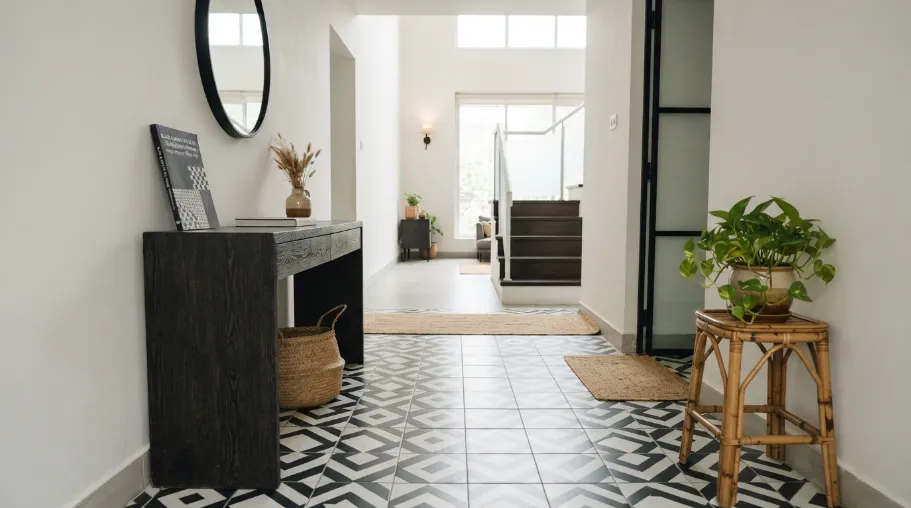
Understanding these tips helps you avoid the most common pitfalls:
Keep hardware, like taps, handles, and light switches, in one consistent finish. Mixing chrome, brass, and matte black undercuts the minimalist effect.
If you want to start small, apply the black-and-white concept to one feature wall or the bathroom first, rather than spreading it thin across the whole home.
Matte porcelain tiles are generally a durable and practical choice for Bangladeshi homes, given humidity and dust levels. Quality and finish vary from one tile line to the next, so it helps to understand the difference before you decide.
Above all, these tips exist because minimalist design rewards restraint more than any single tile choice.
Future Trends in Minimalist Tile Design
Interest in textured matte finishes and micro-cement-look tiles is growing alongside the classic black-and-white palette. Both fit naturally within modern minimalist design — proof that minimalist design keeps evolving without abandoning its core rules.
This gives homeowners a way to add subtle depth without introducing more color. Large-format tiles with minimal visible grout are also gaining popularity as installation techniques improve. As a result, we're seeing more modern tile ideas lean on texture rather than pattern for visual interest, a natural evolution of contemporary tile design.
Why Does Grout Color Matter So Much in a Minimalist Scheme?
Grout works almost like a second material choice, not an afterthought. White grout on white tile nearly disappears, reinforcing the clean look minimalist design depends on. Grey or black grout on the same white tile creates a visible grid instead, which can work well for a more graphic look but reads as busier in a small room. Deciding this before installation, not after seeing the finished floor, is one of the most common gaps between what homeowners picture and what they end up with.
What to Remember About Black and White Minimalist Tile Design
The best way to create a minimalist design with black and white tiles is to choose one dominant color, use the second as an accent, select the tile finish according to the room, and decide the grout color before installation. For small Bangladeshi homes, white or light-colored tiles can help the space feel brighter, while matte finishes are a practical choice for wet and high-traffic areas.
If you're planning your own space, start with the room's natural light and size. Then test physical tile samples in the actual room, compare them in daylight and evening lighting, and check the manufacturer's slip-resistance information for floor tiles. Keep patterns limited to one feature area rather than using several competing designs.
In short, you do not need many colors or complicated patterns to achieve a minimalist design. A simple black-and-white palette, the right tile size, a suitable finish, and carefully chosen grout can create a clean and balanced interior. Once these four decisions are settled, you have a practical tile plan ready for a showroom visit and installation discussion.
Next Steps: Putting This Guide Into Practice
Walk your own space and note where natural light enters through the day. This tells you how much to lean on white versus black.
Pull two or three tile samples, not just photos, and view them in your home under both daylight and evening lighting.
Decide your grout color before you order tile, using the guidance above.
Keep the core rules of minimalist design in mind while you finalize your choices. The decisions above get much easier once you're not tempted to add a third or fourth color.
To go further, learn more about tile finish types and discover more about large-format tile sizing for small apartments.
FAQs About Minimalist Design
Is black and white tile design still in style?
Yes. It's a timeless combination rather than a passing trend, since it works with almost any furniture style and doesn't date the way bolder colors can. It's also one of the most durable expressions of minimalist design, because it doesn't rely on a passing trend to look intentional. Expect it to hold up in resale value too, for the same reason.
Are white tiles hard to keep clean?
Matte white tiles generally hide dust and water spots better than glossy white tiles. Regular sweeping and a non-abrasive cleaner are usually enough for daily maintenance. In humid climates like Dhaka's, matte finishes also cut down on visible water spotting near sinks and balcony doors.
What size tile works well in a small room?
Larger format tiles, 600mm and above, are often recommended for small rooms. Fewer grout lines make the floor look more continuous, so the room feels bigger. Industry trend reports from NKBA and Houzz both note growing use of this size range since the early 2020s.
Should I choose matte or glossy tiles for a bathroom?
Matte is typically the safer choice for bathroom floors, due to slip resistance, especially in a humid climate. Look for a DIN 51130 rating of R10 or higher on wet floor areas. Glossy can still work well on walls, where slipping isn't a concern.
Can I mix black and white tiles with other colors later?
Yes. A black-and-white base is neutral enough to accept small color accents later, through furniture, curtains, or artwork, without needing to change the tiles. That flexibility is one reason designers treat it as a long-term, low-risk base palette.
What is the difference between ceramic and porcelain tile?
Porcelain is a denser type of ceramic tile, fired at a higher temperature, which gives it lower water absorption (0.5% or less under ISO 13006). That makes it well suited to humid climates like Dhaka's. Standard ceramic tile is more porous and works well in lower-moisture rooms.
Do black tiles fade or discolor over time?
Quality porcelain tiles generally hold their color well for years with normal cleaning. Fading is more of a concern with lower-grade materials, or with tiles installed in direct, prolonged sunlight. Ask your supplier whether the color is a through-body pigment or a surface glaze, since through-body tiles hide chips and wear better.
Sources
Tile Council of North America (TCNA): general tile installation standards, including the Handbook for Ceramic, Glass, and Stone Tile Installation
ANSI A137.1: American National Standard Specifications for Ceramic Tile (porcelain water-absorption classification), revised 2022
ISO 13006: International standard for ceramic tile classification (porcelain = group BIa, ≤0.5% water absorption)
DIN 51130 explainer: German industrial standard for slip-resistance ("R-scale") ratings on floor surfaces, R9–R13
Bangladesh Meteorological Department: seasonal humidity and monsoon data for Dhaka (monsoon roughly June–October)
.webp&w=256&q=75)