
Steel Structure Buildings: Complete Guide to Pre-Engineered Construction
.webp&w=96&q=75)
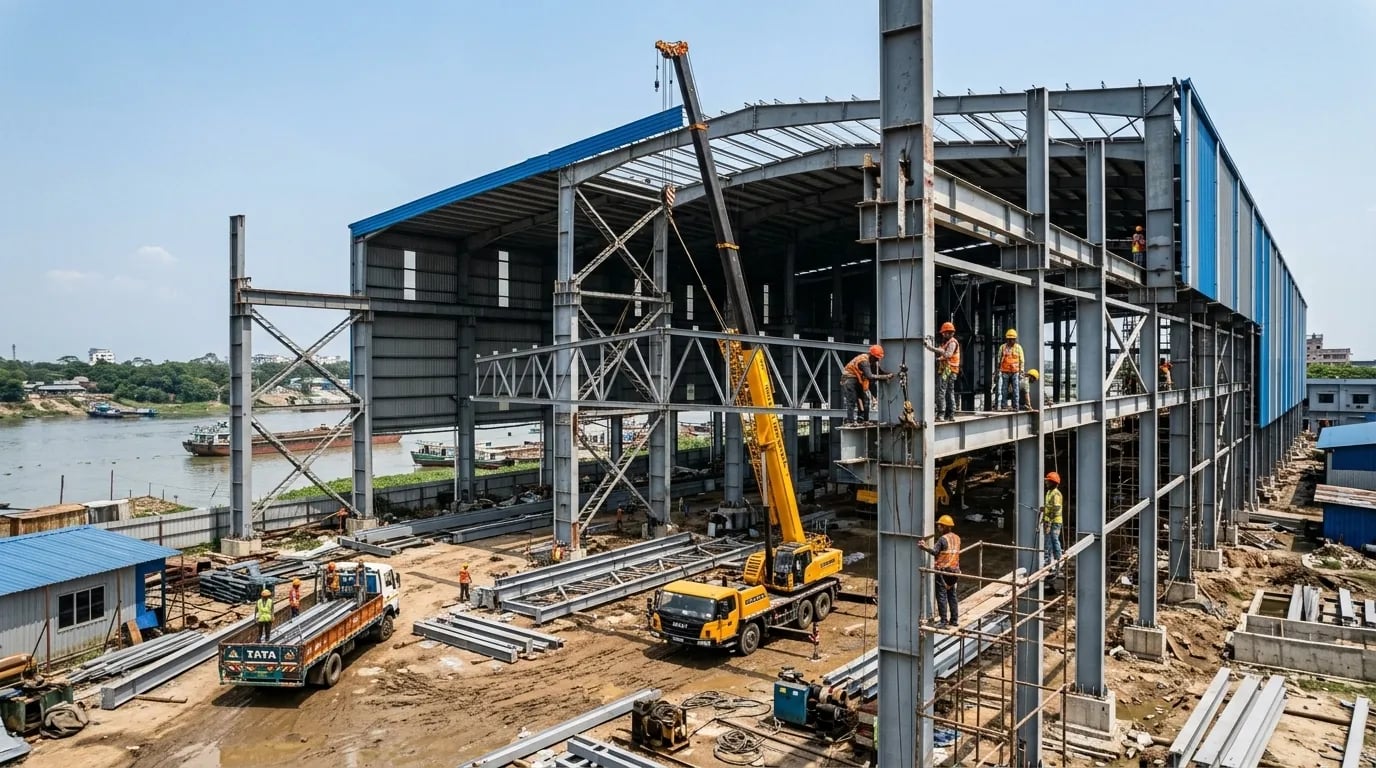
Steel structure buildings are buildings constructed mainly with steel columns, beams, frames, and other structural components to support the building’s load. They are known for strength, durability, faster construction, and design flexibility. These buildings are commonly used for warehouses, factories, commercial spaces, offices, workshops, and industrial facilities.
I wrote this guide in October 2026 after comparing standards, industry reports, and building-code resources side by side. I checked each figure against its source before using it. However, I have not inspected your site, so treat my numbers as general guidance. In my review, the same lessons kept appearing: plan early, protect the steel, and demand tested materials.
About the Author
Written by: Mitu Das, SEO Specialist & Member of the Leadership Team at Nusaiba Construction & Technology
Reviewed by: Nusaiba Construction & Technology Team
Published: 4th October 2026
Editorial policy: This guide explains steel structure buildings, including their components, types, advantages and disadvantages, construction process, applicable standards, maintenance requirements, and cost considerations in Bangladesh. It compares information from recognized engineering organizations, building-code resources, steel industry bodies, and publicly available construction references.
The guide focuses on practical factors such as structural design, steel grades, load requirements, corrosion protection, fire safety, fabrication, erection, foundation work, and project cost comparison.
Key Takeaways
Steel structure buildings use a prefabricated steel frame, so they usually go up faster than concrete buildings.
Steel is strong, recyclable, and ideal for wide, open spaces.
Corrosion and fire protection need early planning in Bangladesh's humid climate.
Design must follow the Bangladesh National Building Code (BNBC) and recognized steel standards.
Compare the full project cost, not just the price per kilogram of steel.
What Are Steel Structure Buildings?
A steel structure building uses a skeleton of steel columns, beams, and braces to carry every load. Factories cut and drill the parts in advance, and crews bolt them together on site. Bangladeshi owners use this method for factories, warehouses, showrooms, and offices because it builds faster than most concrete options.
In short, steel structure buildings meaning comes down to this: the steel skeleton carries the weight, and the walls only wrap the space. Engineers design each part in software, so prefabricated steel buildings arrive precise and ready to assemble.
Think of a bicycle frame. The frame carries the rider, and everything else simply attaches to it. In practice, that is why a steel shell can rise in days while foundation and finishing work continue around it.
Why does this matter? Because steel is predictable. Its density is about 7,850 kg/m³, and common structural grades like ASTM A36 have a minimum yield strength of 250 MPa, according to ASTM International. Furthermore, Eurocode 3 (EN 1993) uses a modulus of elasticity of 210 GPa for structural steel. Therefore, engineers can calculate loads and deflections with high confidence.
Steel is also a global material. worldsteel reports that the world produced roughly 1.89 billion tonnes of crude steel in 2023. Meanwhile, Bangladeshi producers such as BSRM supply local steel structure building materials, including rebar, plates, and sections.
For real-estate construction, speed matters too. Developers want faster handover, because earlier handover means earlier rent or sales income. For example, a steel frame building construction schedule often runs alongside foundation work, which saves weeks.
What Are the Key Steel Structure Building Components?
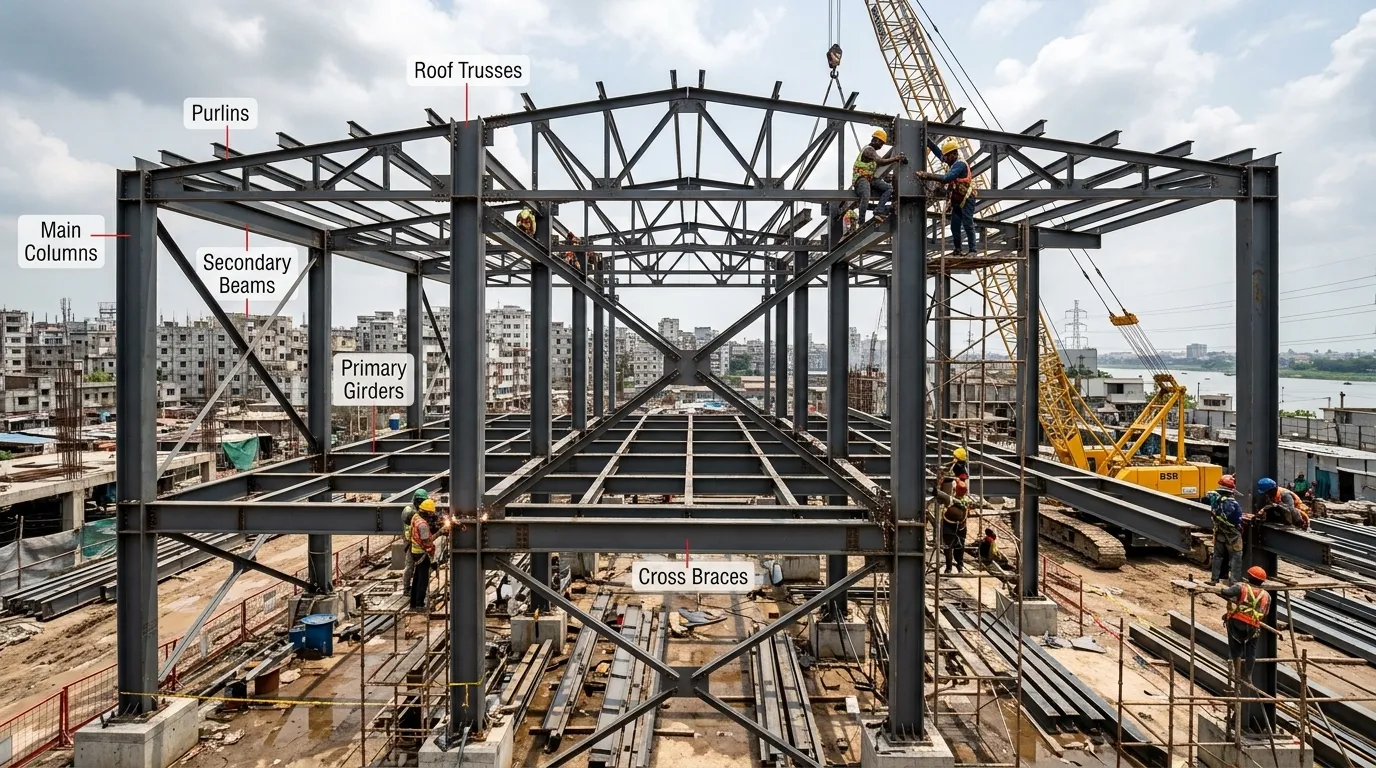
Steel structure building components include columns, rafters, beams, purlins, girts, bracing, base plates, and bolts. Columns and rafters form the main frame that carries loads to the foundation. Purlins and girts carry roof and wall sheets. Bracing keeps the whole frame stable against strong wind and earthquakes.
Here is how each part works:
Primary frame: Columns and rafters carry the main loads to the foundation.
Secondary members: Purlins and girts support roof and wall cladding.
Bracing: Rods or angles resist sideways forces.
Connections: High-strength bolts join parts, so little on-site welding is needed.
In practice, bolt tightening is the step crews rush most. In my reading of erection guides, loose or untightened bolts rank among the common site errors. Therefore, ask your contractor for a written bolt-check record before cladding hides the connections.
Steel building design principles start with loads. Engineers check dead load, live load, wind, and seismic forces. According to the Housing and Building Research Institute, BNBC sets the design rules for Bangladesh, and BNBC 2020 is its latest edition. The code divides the country into four seismic zones, with zone coefficients from 0.12 to 0.36. For example, Sylhet sits in the highest zone, so it faces much higher earthquake demands than the south.
Steel structure building load capacity follows from these checks. Member size, steel grade, spacing, and connection quality all change the result. Therefore, no single number fits every project.
What Types of Steel Structure Buildings Work Best?
The main steel structure buildings types are portal frames, multi-story steel frames, truss structures, and space frames. Portal frames suit factories and warehouses. Multi-story frames suit offices and apartments. Trusses and space frames cover large spans like exhibition halls. The best type depends on your span and height.
These are the most common types of steel structures you will meet in practice:
Type | Best use | Typical advantage |
|---|---|---|
Portal frame | Factories, warehouses | Wide, column-free interior |
Multi-story frame | Offices, hospitals | Fast floor-by-floor erection |
Truss structure | Roofs, workshops | Light weight over long spans |
Space frame | Halls, terminals | Very large open areas |
In practice, industrial steel buildings dominate Bangladesh's garment and logistics sector. According to the Bangladesh Garment Manufacturers and Exporters Association (BGMEA), ready-made garments earned about US$47 billion in fiscal year 2022-23, roughly 84 percent of national exports. That export base explains the steady demand for new factory space.
In my review, portal frames appear most often in these projects. Owners value the clear span, because it lets them rearrange machines later without moving columns.
The same pattern appears abroad. The Metal Building Manufacturers Association (MBMA) says pre-engineered systems make up roughly 40 percent of new low-rise non-residential construction in the United States.
Steel structure building applications go well beyond factories. Owners also use steel for schools, hospitals, airports, bridges, cold storage, and temporary offices.
What Are the Advantages and Disadvantages of Steel Structure Buildings?
Steel structure buildings advantages include speed, strength, light weight, flexibility, and recyclability. The disadvantages include corrosion risk, fire sensitivity, and dependence on skilled fabrication. In most cases, good design and coatings reduce these risks, so the benefits usually outweigh the drawbacks for industrial projects.
Advantages
Speed: Factory fabrication and site work run at the same time. Industry reports often suggest schedule savings of 30 to 50 percent, though results vary.
Long spans: Clear spans of 30 to 60 meters are common in portal frames.
Sustainability: According to the American Institute of Steel Construction, structural steel averages about 93 percent recycled content. However, worldsteel notes that steelmaking causes about 7 to 9 percent of global direct CO2 emissions, so recycled content matters.
Expansion: You can add bays later with limited disruption.
Disadvantages
Corrosion: Humidity and coastal air attack bare steel.
Fire: Research from the Steel Construction Institute indicates steel loses roughly half its strength near 600°C, so protection is needed.
Thermal movement: Eurocode 3 gives steel an expansion rate of 12 millionths per °C. As a result, a 30 m beam grows about 11 mm when the temperature rises 30°C, so designers must allow for it.
Skills: Poor welding or bolting creates real safety problems.
In practice, corrosion starts at base plates, roof-sheet edges, and scratched coatings, because water sits there longest during the monsoon. Therefore, touch up any scratch made during erection before the rains arrive.
Steel structure building safety depends on three things: correct design, quality fabrication, and proper erection. The Rana Plaza collapse on 24 April 2013 killed 1,134 people, according to the International Labour Organization. That building was concrete, but the lesson applies to every material: code-compliant design and honest inspection save lives. Furthermore, Fire Service and Civil Defence rules apply to commercial and industrial buildings, so confirm fire exits and protection early.
Steel structure building standards also protect you. Designers use BNBC, the AISC 360-22 specification, and ASTM material standards. In most cases, BSTI-compliant steel and certified welding procedures are expected.
How Does Steel Structure Construction Work, and What Does It Cost?
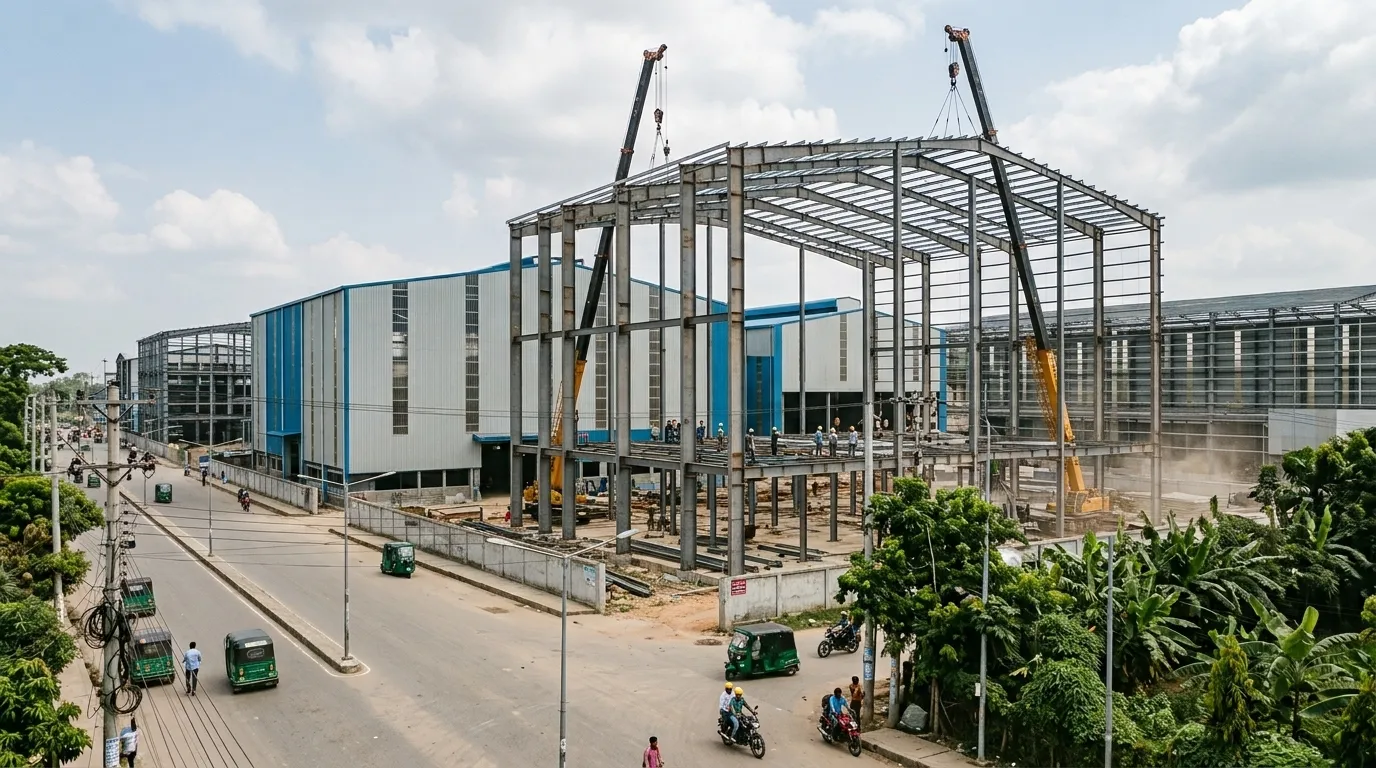
The steel structure construction process runs from design to handover in six steps. Engineers design, factories fabricate, trucks deliver, and crews erect. Cost depends on span, height, steel grade, and finish. Therefore, request itemized quotes from several suppliers before you commit to a price.
Site study and soil test: This sets the foundation design.
Structural design: Engineers apply BNBC loads and steel standards.
Fabrication: The factory cuts, drills, and coats each member.
Foundation work: Crews cast footings and place anchor bolts.
Erection: Cranes lift columns and rafters, then workers bolt them.
Cladding and finishing: Roof sheets, walls, doors, and paint go on.
My practical tip from this review: book the soil test first. Soil results can change footing size, and the foundation drives the whole schedule. Therefore, an early test prevents costly redesign later.
Steel structure building cost varies widely. I could not find a reliable single price for Bangladesh, because steel prices change often. Instead, compare quotes on the same drawings and the same steel grade. Also check that products meet BSTI requirements.
When you collect quotes, compare them line by line. In most cases, a low quote leaves out items like foundations, anchor bolts, insulation, or transport. Therefore, ask every supplier to list these items clearly.
Steel structure vs concrete building is a common question. Here is a quick comparison:
Factor | Steel structure | Concrete building |
|---|---|---|
Build time | Usually faster | Usually slower |
Weight | Lighter | Heavier |
Fire resistance | Needs added protection | Naturally better |
Maintenance | Coating checks needed | Crack and rebar checks needed |
Best fit | Industrial, wide spans | Residential, heavy mass |
Steel structure building lifespan often passes 50 years with good care. According to the American Galvanizers Association, hot-dip galvanized coatings can protect steel for 50 years or more in many atmospheric environments. Steel structure building maintenance is simple: inspect coatings yearly, repaint worn areas, and tighten loose bolts. For example, coastal sites may need checks twice a year.
A simple routine works well. Walk the frame, photograph rust spots with the date, and touch up paint before the rains. Over the years, that photo log shows you exactly where problems start.
Conclusion: Steel Structure Buildings and Your Next Steps
Steel structure buildings give Bangladeshi owners speed, strength, and flexible space. However, they work best when you plan for corrosion, fire, and local code rules. Therefore, treat design and fabrication quality as your top priorities, not just price. Nusaiba Construction & Technology can also help you plan and manage construction requirements based on your project needs.
Here are your next steps:
Define your building's use, size, and future expansion needs.
Hire a licensed structural engineer familiar with BNBC 2020.
Request itemized quotes from at least three fabricators.
Ask for coating details, test reports, and a maintenance plan.
Do these four things, and you will answer the biggest question behind steel structure buildings: is this right for my project? For most factories and warehouses, research suggests the answer is yes.
Methodology and limitations: I wrote this guide in October 2026 by comparing the cited organizations' public resources and cross-checking figures where two sources overlapped. Figures like recycled content, production totals, seismic coefficients, and fire behavior come from those bodies or standard engineering references. I could not confirm local prices or deep-page URLs, and code details change. Verify them with the linked sources and your engineer.
FAQs about Steel Structure Buildings
What are steel structure building applications?
Steel structure building applications include factories, warehouses, garment plants, showrooms, schools, hospitals, airports, and bridges. Industrial steel buildings are the most common use in Bangladesh. Prefabricated steel buildings also suit temporary offices and cold storage because crews can assemble and later relocate them quickly.
How much load can a steel structure building carry?
Steel structure building load capacity depends on member size, steel grade, spacing, and connections. Engineers design for dead, live, wind, and seismic loads using standards like BNBC. Therefore, no single number applies. Your engineer should calculate capacity from your specific use and site conditions.
Which standards apply to steel structure buildings in Bangladesh?
Steel structure building standards in Bangladesh start with BNBC 2020. Designers also use recognized references such as AISC 360-22 and ASTM material standards. In most cases, BSTI-compliant steel and certified welding procedures are expected. Always confirm current requirements with your engineer and local authority.
Are steel buildings safe during earthquakes?
Evidence indicates steel performs well in earthquakes because it bends before it breaks. However, steel structure building safety depends on good connections, bracing, and code-compliant design. Poor workmanship can undo these benefits. Therefore, insist on qualified engineers, tested materials, and proper inspection during erection.
Do steel structure buildings last longer than concrete buildings?
Not automatically. Steel structure building lifespan often exceeds 50 years with coating care, and concrete can last equally long with sound rebar protection. In humid areas like Bangladesh, steel needs regular inspection. Overall, maintenance quality matters more than the material itself, so budget for upkeep either way.
.webp&w=256&q=75)