
Top Reasons to Choose Fluted Glass Doors for Your Home
.webp&w=96&q=75)
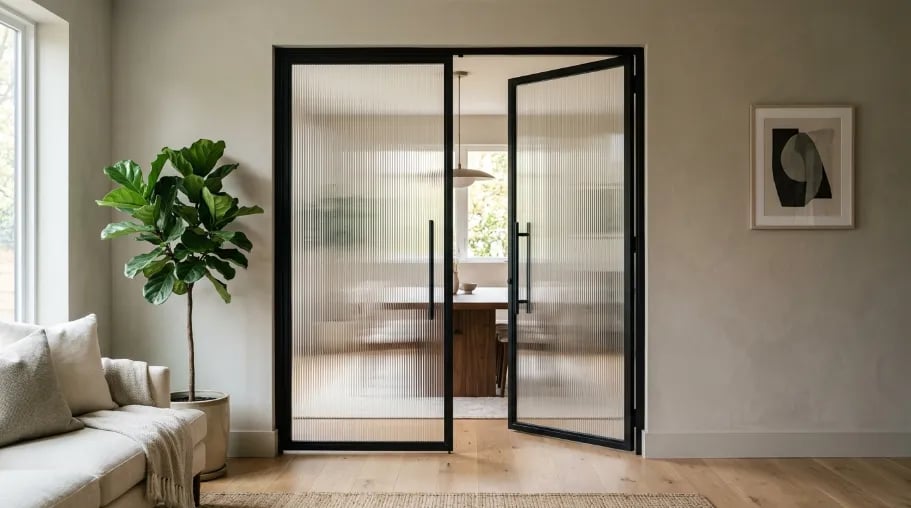
Fluted glass doors refers to doors built with glass panels pressed into narrow, vertical ridges, letting light pass through while blurring whatever sits on the other side. In other words, they give you privacy and daylight at the same time. This guide explains what fluted glass doors are, why homeowners choose them, and how to understand the differences between styles before you decide.
Published: August 20th, 2026
Written by: Mitu Das, SEO Specialist & Leadership Team Member at Nusaiba Construction & Technology
I work with homeowners in Dhaka. Many are turning old flats into open, modern spaces. To understand why fluted glass has become such a popular choice, it helps to know what problem it actually solves: rooms that need both light and privacy at once. This guide walks you through the meaning of fluted glass, where it's used, what affects the look and feel, and what to check before you commit to a style.
Key Takeaways
What it means: fluted glass doors use vertically ridged glass panels that let light through while blurring the view.
Why it matters: they suit small or shared homes in Bangladesh, where rooms often share borrowed light.
How it's used: as interior doors, sliding doors, closet doors, or shower doors, paired with black, wood, or aluminum frames.
What affects the look: frame material, glass thickness, and ridge depth, not just the fluted texture itself.
What to understand before deciding: tempered fluted glass is roughly four times stronger than standard glass and is required in most bathroom and shower doors.
What Are Fluted Glass Doors?
Fluted glass doors are doors made with textured glass featuring vertical, raised ridges that create a stylish look while providing privacy and allowing natural light to pass through. They are commonly used for interior spaces such as bedrooms, bathrooms, offices, kitchens, and living areas.
To understand where this style comes from, it helps to look at its history. Glass historians explain that the earliest known examples date back to Roman and Egyptian glassmaking around the first century AD, and the look became especially fashionable again during the Art Deco period of the 1920s and 1930s.
Suppliers sometimes draw a technical distinction between fluted glass (concave grooves) and reeded glass (convex ridges), though in practice most sellers use the two names interchangeably, so don't worry too much about which term a supplier uses.
A quick technical explanation: most fluted glass doors sold for home use are made from tempered (toughened) glass, not standard annealed glass. Tempered glass is heat-treated so that if it ever breaks, it crumbles into small, blunt pieces rather than sharp shards.
Under the ASTM C1048 standard, tempered glass must reach a minimum surface compression of 10,000 psi (69 MPa), which means it's roughly four times stronger than annealed glass of the same thickness.
It's also expected to meet ANSI Z97.1 and the U.S. glazing safety standard, 16 CFR Part 1201 you can learn more about how that standard works here which the CPSC last updated in 2016. Ask your supplier directly whether the glass is tempered, since this isn't always obvious from a photo.
Why Fluted Glass Doors Are Gaining Popularity in Bangladesh

Fluted glass doors are gaining popularity in Bangladesh because they help solve a common problem in compact homes: balancing privacy with natural light. The textured glass allows daylight to travel between rooms while reducing visibility. This makes it especially useful in Dhaka apartments, where limited windows and smaller layouts can make rooms feel dark.
Homes in Dhaka and Chattogram are often compact. Many rooms share light from just one window or veranda. To understand this challenge, picture a fluted glass door between a living room and a bedroom: daylight travels further into the flat, while the bedroom still stays private. That's the core idea behind why this style works so well here.
Many homeowners are also moving away from heavy wooden doors toward lighter, more modern finishes. This fits a bigger design shift, and it helps to know where that shift comes from.
Fluted glass, once an Art Deco favorite in the 1920s, is back in style worldwide you can discover more about that design history here and design writers have named it one of the top material trends heading into 2026. The shift isn't limited to doors, either some Western kitchen retailers now list fluted glass as a standard cabinet-front option rather than a custom upgrade.
What I Notice in Dhaka Homes
In residential spaces I work around in Dhaka, one recurring challenge is balancing privacy with limited natural light. A solid door can make an already-dark room feel more enclosed, while clear glass can compromise privacy. Fluted glass sits between these two options, which is why it can work particularly well for bedrooms, bathrooms, home offices, and internal partitions.
How One Small Flat Used Fluted Glass to Solve a Light Problem
A small flat can use fluted glass doors to bring daylight into darker rooms without sacrificing privacy. For example, replacing a solid bedroom door with fluted glass can allow light from a nearby living room window to enter the bedroom. The ridged texture still obscures clear views, making the space feel brighter and more open.
Here's a simple example that shows how this works in practice. Imagine a two-bedroom Dhaka flat with only one window in the living room. The main bedroom, tucked behind a solid wall, stays dark all day even with the lights on.
By replacing the solid bedroom wall's door with a fluted glass door, daylight from the living room window now reaches into the bedroom during the day, while the ridged texture still blurs the view enough to keep the space private at night.
This is a common pattern: swapping one or two solid interior doors for fluted glass ones, starting with the darkest room that shares a wall with a well-lit space.
One thing I learned from this kind of project: always check the door in the real room first, not just in a showroom. A panel that looks bright under display lighting can read as slightly darker in a room with only one window. That's why a sample panel, tested in the actual room, matters more than photos, and it's a step worth understanding before you order anything.
A Practical Lesson From Residential Renovations
One practical lesson I've learned is that glass samples can look very different under showroom lighting compared with the natural light inside a home. I recommend checking the actual sample near the intended doorway before finalizing the glass.
Understanding Where Fluted Glass Doors Work Best
Living room and bedroom partitions split space without blocking light.
Bathroom and shower doors give privacy without a boxed-in feel.
Closet and wardrobe doors add texture to a plain hallway.
Home office doors let light in but keep your view private.
Entry and French doors make a strong first impression at your front door.
What Are the Main Benefits of Fluted Glass Doors?
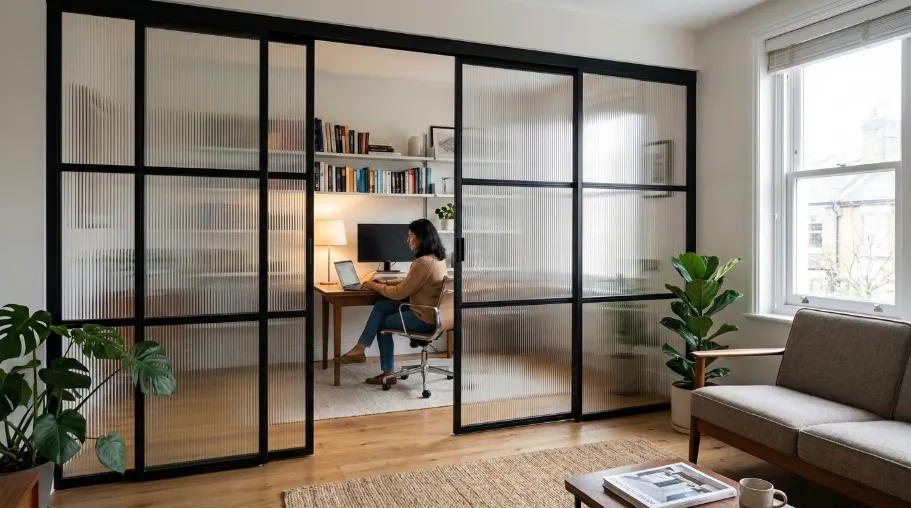
Fluted glass doors provide privacy, natural light, visual texture, and flexible design options. Their ridged surface helps obscure shapes while allowing daylight through, making them useful for bedrooms, bathrooms, offices, and room dividers. They can also be paired with black, wooden, or aluminum frames to match different interior styles.
To understand why fluted glass has become so popular, it helps to break down what it actually does for a room. Here's an explanation of the five main benefits.
1. Why It Offers Privacy Without Losing Light?
Fluted glass provides privacy by breaking up clear views while still allowing natural light to pass through. The vertical ridges distort shapes and outlines, making it harder to see clearly through the door. However, it does not provide complete privacy, so opaque or heavily frosted glass may be better where full visual privacy is required.
This is the top reason people choose fluted glass doors, and it's worth understanding why the trade-off matters. A closed solid door usually means a dark room. One U.S. door manufacturer rates reeded glass at 7 out of 10 for privacy on its standard opacity scale, where 1 is clear glass and 10 is fully opaque which shows that textured glass can block most, but not all, visibility.
A 2022 study on residential lighting also found that brighter rooms were linked to improved reported mood, which helps explain why homeowners resist trading daylight for privacy. Fluted glass keeps the room bright while blurring outlines, so it works well in bathrooms, bedrooms, and home offices with few windows.
2. Why It Gives a Modern, Textured Look
Fluted glass gives doors a modern look because its vertical ridges create depth, rhythm, and visual texture. Unlike plain clear glass, it adds a decorative element without making the door feel heavy. The texture works particularly well with minimalist interiors, black frames, wooden frames, and contemporary room partitions.
Plain glass can feel cold. Frosted glass can feel a bit dated. Fluted glass adds a soft rhythm to a wall or doorway, which is worth understanding if you're deciding between the two. I've worked on similar projects, and even one fluted glass door can lift a plain hallway. It looks even better with a black or matte aluminum frame.
3. Why It Works With Multiple Frame Styles?
Fluted glass works with black, wooden, and aluminum frames, making it easy to match different interior styles. Black frames create a bold modern appearance, wooden frames add warmth, and aluminum frames suit sleek offices and sliding systems. The frame material can significantly change the overall character of the finished door.
Fluted glass doors are not locked into one look. This means the frame you pick changes the whole feel of the door:
Frame Type | Best For | General Feel |
|---|---|---|
Black frame | Modern, minimalist homes | Bold, contemporary |
Wooden frame | Traditional or warm interiors | Classic, cozy |
Aluminum frame | Offices, sliding systems | Sleek, low-maintenance |
4. Why It Offers Flexible Door Formats
Fluted glass isn't just for hinged doors. Understanding the different formats helps you match the door to the space:
Fluted glass sliding doors – great for tight spaces where a swing door won't fit.
Fluted glass French doors – a decorative pick for entryways or living rooms.
Fluted glass room dividers – softens the split in an open-plan flat.
5. Why It's Easier to Maintain Than Fabric
Fluted glass is generally easier to maintain than fabric because it does not require washing and can be cleaned with a soft cloth and mild glass cleaner. However, its vertical grooves can collect more dust and water spots than flat glass. Regular wiping and a soft brush can help keep the textured surface clean.
Curtains collect dust and need regular washing. A fluted glass door is simpler to care for: wipe it down with a soft cloth and mild glass cleaner. The ridges do hold a bit more dust than flat glass, which means a soft brush attachment helps if you vacuum nearby.
What Are the Challenges and Limitations of Fluted Glass Doors?
The main limitations of fluted glass doors are incomplete privacy, slightly harder cleaning, higher costs than basic doors, and style preferences. The ridges can collect dust, while strong lighting or close viewing may reveal some movement behind the glass. For maximum privacy or the lowest cost, solid or opaque doors may be more practical.
No door material is perfect for every home, and it's worth understanding the honest trade-offs before you decide.
It won't give full privacy up close: Fluted glass blurs shapes well, but at very close range, or with strong light behind you, some movement can still show. This means that if you want full privacy, a solid door or a heavier obscure glass is a better fit.
The ridges are a bit harder to clean: Dust and water spots settle in the grooves, taking slightly more effort than a flat pane.
It's not the cheapest option: If price is your only concern, plain frosted or laminate glass usually costs less for similar privacy.
Style is a matter of taste: Some people find the vertical lines too modern for a traditional home. Understanding this ahead of time, by viewing a real sample in your space, avoids relying on a showroom photo alone.
When I Would Not Recommend Fluted Glass
Fluted glass is not the right choice for every room. I would avoid it where complete visual privacy is essential, where the door will receive heavy impact without appropriate safety glazing, or where the owner wants the lowest possible upfront cost. In those situations, an opaque or solid door may be more practical.
What Affects Fluted Glass Door Performance?
Fluted glass door performance depends on the glass type and thickness, frame quality, hardware, installation, and maintenance. Safety glass is important for doors and wet areas, while properly fitted hinges, handles, rollers, and tracks support smooth operation. Accurate measurements and professional installation also help prevent alignment and performance problems.
Factor | What to Check |
|---|---|
Glass thickness | Match thickness to door size and use |
Tempering | Confirm safety glass for doors and wet areas |
Frame | Check material, finish, and alignment |
Hardware | Check hinges, rollers, handles, and tracks |
Installation | Confirm professional measurement and fitting |
Privacy | Test visibility under actual lighting |
What Common Mistakes Should You Avoid?
Common mistakes include choosing glass thickness based only on price, skipping accurate measurements, ignoring privacy requirements, and selecting poor-quality hardware. Homeowners should also check the frame, hinges, handles, and sliding tracks before installation. Requesting a real glass sample and measuring the opening accurately can prevent expensive changes later.
Knowing these common mistakes ahead of time can save you a reorder:
Skipping accurate measurements. Many Bangladeshi flats have non-standard door openings. Always measure before you order.
Picking glass thickness by price alone. Thin glass is cheaper but may not hold up on a high-traffic door.
Ignoring frame upkeep. Wooden frames in humid weather may need care to avoid moisture damage.
Overusing texture. Too many patterned surfaces in one room can feel busy, not clean, which is worth understanding before you commit to a design.
Understanding Fluted Glass Door Pricing
Fluted glass door pricing depends mainly on the door size, glass thickness, frame material, hardware, customization, and installation. Prices can vary significantly between suppliers, so there is no single standard cost. The best approach is to compare detailed quotes that separate the glass, frame, hardware, delivery, installation, taxes, and customization charges.
What usually affects the price, so you know what to expect:
Door size and number of panels
Glass thickness (thicker glass costs more but dampens sound better)
Frame material – aluminum and black steel often cost differently than wood
Custom cutting for a non-standard opening
Installation, especially for sliding door tracks
What Should a Fluted Glass Door Quote Include?
A fluted glass door quote should clearly list the glass type and thickness, door dimensions, frame material, hardware, installation, delivery, customization, taxes, and warranty. For sliding doors, the quote should also identify the track system. An itemized quote makes it easier to compare suppliers and understand the actual total cost.
Glass thickness and type
Door dimensions
Frame material
Hardware
Handles and hinges
Sliding track, if applicable
Delivery
Installation
Any customization
Taxes or additional charges, if applicable
Are Fluted Glass Doors Worth It?
Fluted glass doors are worth considering if you want privacy, natural light, and a modern appearance in the same door. They can cost more than basic flush doors, but they provide a distinctive design feature and useful light transmission. If your priority is only low-cost privacy, frosted or solid doors may offer better value.
What Should You Know Before Choosing a Fluted Glass Door?
Before choosing a fluted glass door, check the glass type, thickness, privacy level, frame material, door size, hardware, and installation requirements. Always request a real sample and view it under the lighting conditions of your room. For bathrooms and other wet areas, confirm that the glass meets the appropriate safety-glazing requirements.
Understanding these points ahead of time helps you avoid surprises later:
Ask for a real glass sample. Photos rarely show the true texture or light effect.
For bathrooms, confirm the glass is tempered or meets a recognized safety-glazing standard, not standard plate glass.
Using fluted glass as a room divider? It helps to know that double-glazing improves sound blocking.
For sliding doors, understand that the track hardware often matters more than the glass itself.
How to Choose the Best Fluted Glass Doors for Your Home
Choose a fluted glass door by first measuring the opening and identifying how the door will be used. Then select the appropriate glass, frame, and opening style. Consider hinged or sliding designs, privacy needs, room lighting, and maintenance. Finally, test a real glass sample in the intended space before placing the order.
Picking the best fluted glass door starts with understanding the room, not the photo you liked. Here's the order I'd follow to work through the decision:
Measure the opening first. Get exact width, height, and wall depth. This matters most in older Bangladeshi flats.
Decide the door's job. A bathroom needs tempered safety glass. A living room partition doesn't.
Pick the frame material. Black for modern, wood for warmth, aluminum for offices or sliding doors.
Choose the glass thickness. Thicker glass costs more but lasts longer and blocks more sound.
Choose swing or slide. Sliding suits tight spaces. Hinged doors suit standard rooms.
Request a sample panel. Test the texture in your own room's light before you order.
Fluted Glass Doors vs. Frosted Glass Doors: Which Is Better?
Fluted glass doors are better when you want privacy combined with visible texture and a decorative feature, while frosted glass is better for a simpler appearance. Both allow light through while reducing visibility. Choose fluted glass for a stronger design statement, or frosted glass when straightforward privacy and easier cleaning are the main priorities.
Factor | Fluted Glass Doors | Frosted Glass Doors |
|---|---|---|
Light transmission | High, with a soft ripple effect | High, but flat and even |
Privacy | Good – shapes are broken up | Good – shapes are blurred |
Visual texture | Bold, ridged, modern look | Smooth, minimal texture |
Best for | Feature doors, partitions, modern homes | Simple, budget privacy |
Maintenance | Slightly more dust in the grooves | Easier flat-surface cleaning |
Want to see this comparison in more depth? Compare fluted vs. frosted glass door options on your product pages to help readers decide which one fits their room.
Where to Find and Choose a Fluted Glass Door Supplier
You can find fluted glass door suppliers through local glass companies, door manufacturers, and reputable online suppliers. Compare their glass quality, frame options, hardware, customization, installation, warranty, and total pricing. In Bangladesh, choosing a supplier familiar with non-standard apartment openings can also make measurement and installation easier.
Understanding what to look for in a supplier matters as much as understanding the glass itself. Look for a supplier who takes exact on-site measurements, shows you a real glass sample rather than a photo, and confirms whether the glass meets a recognized safety-glazing standard for wet areas.
Since older Bangladeshi buildings rarely have standard door openings, a supplier used to local flat layouts will help you understand what to expect before you commit.
What Do You Need to Know About Fluted Glass Doors?
Fluted glass doors combine vertically textured glass with natural light, privacy, and modern design. They work well in bedrooms, bathrooms, offices, kitchens, closets, and room dividers. Before choosing one, consider the glass type, thickness, door size, frame, hardware, installation, privacy level, and total cost to ensure the design suits your space.
To recap what this guide explains:
Meaning: fluted glass doors have vertically ridged glass panels that let light through while blurring the view.
Why they matter: they solve the light-versus-privacy trade-off common in compact Bangladeshi homes.
How to understand pricing: cost depends on size, thickness, and frame, not the texture itself.
How they compare: fluted glass is more of a design statement; frosted glass is simpler and more budget-friendly.
What to do next: measure your space, request a sample, and understand your frame and glass options before you decide.
Frequently Asked Questions About Fluted Glass Doors
Is fluted glass good for privacy?
Yes. Fluted glass provides good privacy by blurring shapes and outlines while allowing natural light through. It offers more privacy than clear glass but does not completely block visibility. For bathrooms, bedrooms, or other areas requiring full privacy, heavily frosted or opaque glass may be a better choice.
Can fluted glass doors be used in bathrooms?
Yes. Fluted glass doors can be used for bathrooms and shower areas when appropriate safety glazing is used. Tempered glass is commonly selected because it is stronger than ordinary annealed glass and is designed to break into smaller, less dangerous pieces. Always confirm the supplier's safety-glazing specification before installation.
Are fluted glass doors expensive compared to regular doors?
Fluted glass doors can cost more than basic flush doors because the total price includes glass, framing, hardware, and installation. However, the final cost depends on size, glass thickness, frame material, and customization. Requesting an itemized quote is the best way to compare the real cost.
What frame color works best with fluted glass?
Black frames create a modern, bold appearance, while wooden frames provide a warmer and more traditional feel. Aluminum frames suit sleek offices and sliding systems. There is no single best frame color; choose one that complements your room's existing furniture, finishes, and overall interior style.
Do fluted glass doors need special cleaning?
No. Fluted glass generally needs only a soft cloth and mild glass cleaner. However, the vertical grooves can collect more dust and water spots than flat glass. Regular wiping and a soft brush can help clean the ridges without scratching the textured surface.
Can fluted glass doors be custom sized?
Yes. Fluted glass doors can be custom-made to fit different door openings, which is useful in older Bangladeshi apartments with non-standard dimensions. A supplier should measure the opening accurately before cutting the glass. Custom sizing helps ensure the finished door fits properly and reduces installation problems.
Is fluted glass suitable for sliding doors?
Yes. Fluted glass works well in sliding doors, especially where a swinging door would take up valuable floor space. It is commonly used for closets, home offices, room dividers, and compact apartments. The sliding track and hardware should be selected to support the glass weight and intended frequency of use.
Final Thoughts: What You Need to Know About Fluted Glass Doors
Fluted glass doors combine textured glass with style and privacy. They let in natural light while softly obscuring the view, making them ideal for bedrooms, bathrooms, offices, and entryways. Before choosing one, consider the glass thickness, door size, frame material, hardware, installation requirements, and overall cost.
Planning a renovation? Measure your door openings first, then request a sample panel before you pick glass thickness and frame material. With that, you have everything you need to make a confident, informed choice.
Sources and References
Tempered glass – Wikipedia – how tempered glass is made, how it breaks, and its relative strength.
16 CFR Part 1201, eCFR – the U.S. federal safety standard for glazing, including glass doors.
CPSC Tempered Glass Safety Alert (PDF) – consumer safety notes on tempered glass in doors and enclosures, including the 2016 standard update.
Guardian Glass – Safety Glass Overview – compares tempered and laminated safety glass.
Cardinal Glass Glossary – Tempered Glass – ASTM C1048 compression figures and ANSI/CPSC standards.
.webp&w=256&q=75)