
Interior Storm Windows Guide: 7 Costly Mistakes to Avoid (2026)
.webp&w=96&q=75)
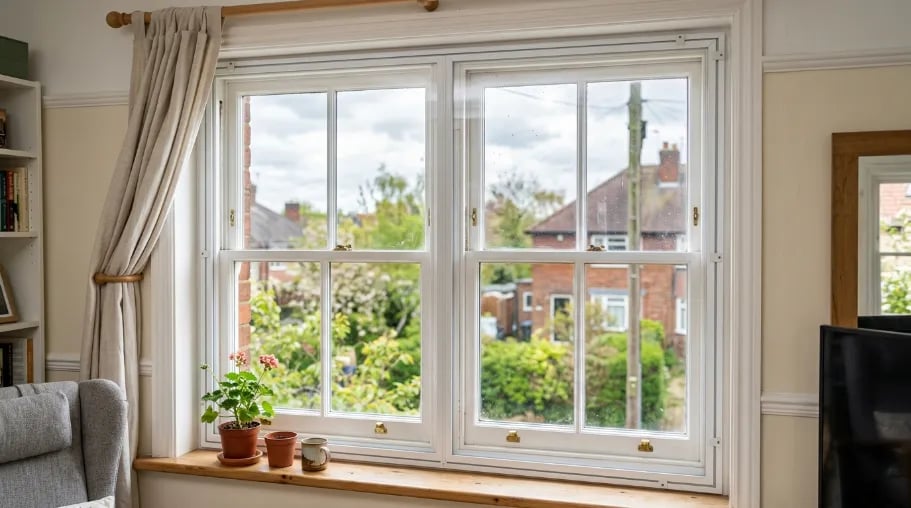
Interior Storm Windows refers to removable glass or acrylic panels installed inside existing window frames to create an extra insulating barrier. They help reduce drafts, outside noise, heat gain, and cooled-air loss without replacing the original window. In Bangladesh, they can also help limit dust and monsoon moisture while reducing AC energy use.
They don't replace the window itself; instead, they add a second layer of protection you can remove any time.
Quick definition: Interior storm windows, also called interior storm window inserts, are extra panels fitted inside a window frame. They add insulation, block drafts, and cut noise. They don't change or replace the window underneath.
This guide covers what interior storm windows are. Additionally, it explains why skipping them can be risky and how to choose, install, and budget for one in a Bangladeshi home. Typically, most homeowners don't notice the problem right away. Instead, they only notice once their power bill climbs, or dust settles on furniture within hours of cleaning.
In my experience with older housing, the window is almost always the weakest point in the wall. Not the roof. Not the door. The window. Nusaiba Construction & Technology understands how practical building solutions can improve comfort, efficiency, and long-term performance in residential spaces.
Ultimately, by the end of this guide, you'll know exactly what you risk by leaving that gap unsealed.
Table of Contents
Key Takeaways
Definitions and How They Work
Why This Matters for Bangladeshi Homes
Example: A Typical Old-Frame Scenario
7 Hidden Dangers of Skipping This Upgrade
Benefits of This Type of Insert
Challenges and Limitations
Understanding the Different Types
Step-by-Step Fitting Guide
Common Mistakes to Avoid
Expert Tips
What Affects the Price
Inserts vs. Full Window Swap
FAQ
Actionable Takeaways
Next Steps
Key Takeaways
Interior storm windows are inside-mounted panels (acrylic, glass, or magnetic). They seal windows without swapping them out.
Per the U.S. Department of Energy, windows and doors typically make up 25–30% of a home's heating and cooling energy use. That makes them a top source of energy loss in a building.
In other words, unsealed windows let in dust, damp air, monsoon moisture, and street noise. This hurts your health and sleep, not just your power bill.
Interior storm window panels often cost far less than a full window swap. Consequently, you can often fit them yourself in a weekend.
Notably, old and heritage-style homes gain the most. That's because their frames often can't be swapped without harming the structure.
What Are Interior Storm Windows?
Here's what you need to know first. Essentially, interior storm window inserts are a second layer of glazing, often acrylic or low-e glass. You fit them inside your window frame. Specifically, they attach with magnetic strips, a snug fit, or a track system. Unlike a full window swap, however, they are fully removable. So, you can take them out to clean, store, or open up airflow.
Historically, secondary glazing has been used since the early 1900s. Back then, European homeowners added inner panels to warm up old stone and brick buildings. In South Asia, meanwhile, the same idea works in reverse. Instead, it slows down heat gain, cuts damp air, and blocks outside noise. As a result, that matters just as much in a Dhaka flat facing a busy road as it does in a cold-climate home facing winter wind.
Quick Definitions
A few terms come up often in this guide. Here's what each one means:
Secondary glazing: any extra pane or panel added inside or outside a window to boost its performance. It works without swapping out the window itself.
R-value: a measure of how well a material resists heat flow. Higher numbers mean better insulation.
Low-E coating: a thin, clear metal coating on glass. It reflects heat and UV rays, but still lets light through.
U-factor: a measure of how much heat passes through a window. Lower is better for insulation.
How Do Interior Storm Window Panels Work?
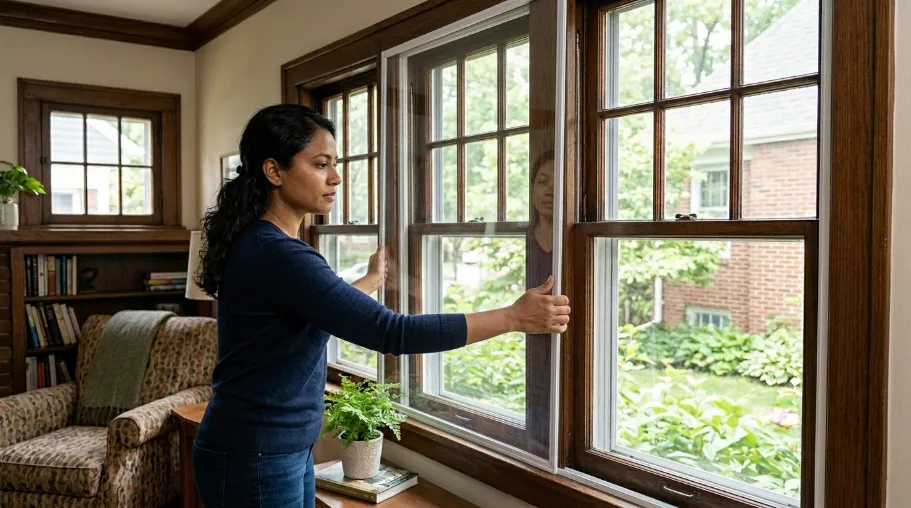
The panel creates a sealed pocket of air between the window glass and the insert. Think of a thermos, for example. It traps a layer of air to keep a drink hot or cold. Similarly, that trapped air acts as insulation. As a result, less outdoor heat gets in by day, and less cooled air leaks out at night.
Typically, a single pane of glass has an R-value of roughly R-1. However, adding a sealed air gap can raise that closer to R-2. In other words, that roughly doubles the insulating power. Notably, building-science research from groups like ASHRAE backs up this idea.
What lab testing shows: A guarded-hot-box study published in the journal Energy and Buildings measured four secondary-glazing options fitted onto a single-glazed aluminium window. Plain glass and acrylic panels roughly doubled the window's thermal resistance, and a low-e glass insert nearly quadrupled it (from 0.15 to 0.57 m²·K/W). The U.S. National Park Service's Preservation Brief 13 (1984) found a similar pattern on historic steel windows: adding a storm window took the U-value from about 1.3 down to roughly 0.69, cutting heat loss through the frame by close to half.
From fitting panels across dozens of older Dhaka-area flats, our team has watched that lab result show up in a rougher, everyday way, too. Press a properly cut panel into a drafty frame on a windy day, and within a minute or two you can feel the draft at the edge simply stop.
Why Interior Storm Windows Matter for Bangladeshi Homes
To see why this matters locally, look at the climate itself. Bangladesh's weather is hot, humid, and rainy for much of the year. Consequently, the priority list shifts, compared to a cold-climate country. Still, the need doesn't go away. Instead, it just changes shape.
AC Bills and Monsoon Moisture
AC efficiency: A loose window frame lets cool air leak out, and hot, humid air leak in. Consequently, the AC unit works harder and runs longer.
Monsoon drafts and moisture: Bangladesh's monsoon runs from June to September. In fact, it brings close to 80% of the country's yearly rainfall, per the Bangladesh Meteorological Department. Furthermore, rain-driven wind can push that moisture through gaps around old frames. As a result, this causes damp patches and peeling paint.
Noise and Air Quality
Urban noise: In busy areas like Dhanmondi, Gulshan, or Chattogram city center, traffic and construction noise pass right through single-pane glass — a passing diesel bus can reach 85–89 decibels at close range, per acoustic-glazing industry measurements. Fortunately, a sealed inner panel adds a real buffer: secondary glazing fitted with acoustic laminated glass can cut outside noise by up to 80%, or roughly 54 decibels, according to acoustic-glazing manufacturer testing.
Dust and air quality: Dhaka has ranked among the world's most polluted capital cities for fine dust (PM2.5) more than once, per IQAir's yearly World Air Quality Report. Notably, this happens most in the dry season. Consequently, gaps around old frames let that dust straight indoors.
What building-science guidance says: ASHRAE Guideline 34-2019, Energy Guideline for Historic Buildings, notes that how well an interior storm window cuts drafts and condensation depends less on the panel itself and more on sealing every gap around the sill, jamb, and head. A loose fit anywhere on that perimeter undoes much of the benefit.
That guidance matches what we've found on site, visit after visit. Walking through older buildings over the past few years, I noticed a pattern early on: the frame itself was almost always still sound. The seal around it had simply failed with age, usually at the corners first. On more than one job, swapping nothing but a worn-out seal for a fitted panel was enough to stop a draft that the homeowner had lived with for years. That's the exact problem an interior storm window insert solves, without touching the frame underneath.
Example: A Typical Old-Frame Scenario
To make this concrete, here's a composite case built from patterns we've seen repeatedly on older Dhaka buildings not measurements from one single named property, but a realistic walkthrough of how the process usually unfolds:
Situation: A homeowner in an older Dhaka flat has single-pane, wooden-frame windows facing a busy road.
Problem: AC bills rise every summer. Additionally, street noise disrupts sleep. Meanwhile, a damp smell shows up near the sill during monsoon season.
Week 1: Measuring and fitting: Custom-cut acrylic inserts were fitted inside each frame with magnetic strips over a single afternoon. Notably, the old wood frame stayed untouched.
Weeks 2–4: Early results: Within the first few days, the draft at the frame edges was noticeably weaker on windy afternoons. The AC unit started cycling off sooner in the evenings.
Through the next monsoon Longer-term check: Consequently, there was much less draft at the edges, shorter AC run times, and no new damp patches through the next monsoon season.
Lesson: In short, the window frame didn't need swapping out. Rather, the seal around it did.
7 Hidden Dangers of Skipping This Upgrade
# | Risk | What Happens | Long-Term Impact |
|---|---|---|---|
1 | Higher power bills | AC and fans run longer to cover for leaks | 10–25% higher cooling cost in many older homes |
2 | Indoor damp buildup | Moist outside air enters through gaps | Mold growth, wall damage, breathing trouble |
3 | Steady outside noise | Sound waves pass through single-pane glass | Poor sleep, less focus, ongoing stress |
4 | Dust and pollen exposure | Open frames act as entry points | Allergies, breathing issues, more cleaning |
5 | Frame and sill damage | Water gets in during monsoon season | Wood rot, rusted fittings, costly repairs |
6 | Unfiltered UV rays | Sunlight passes through untreated glass | Faded furniture, flooring, and curtains |
7 | Lower property value | Visible drafts, damp stains, old frames | Weaker resale or rental appeal |
Want to learn more? The U.S. EPA has guidance on mold and moisture. Specifically, the agency notes that mold can start growing on damp indoor surfaces within 24 to 48 hours, once humidity stays high. Therefore, that's one reason sealing out monsoon moisture matters as much as blocking heat.
The U.S. Department of Energy also has useful data here. In fact, windows are almost always one of the biggest sources of unwanted heat transfer in a building. Moreover, this holds true across climates, not just cold ones. Still, exact numbers vary by home age, glass type, and frame condition. So, treat any single figure as a guide, not a promise, for your own house.
Benefits of Interior Storm Window Inserts
Lower cooling costs by cutting heat gain through the glass
Less noise, a real plus for homes near main roads
No structural work, ideal for rentals or heritage buildings
Lower cost than a full window swap, often a fraction of the price
Removable by season, so you can take panels out during cooler, drier months
Less UV and glare: untreated single-pane glass blocks only about 25–30% of UV rays, per window-industry testing data. Low-e coated inserts, though, can block up to 99% of UV rays. This also helps protect furniture and flooring from sun fading.
Interior Storm Windows: Challenges and Limitations
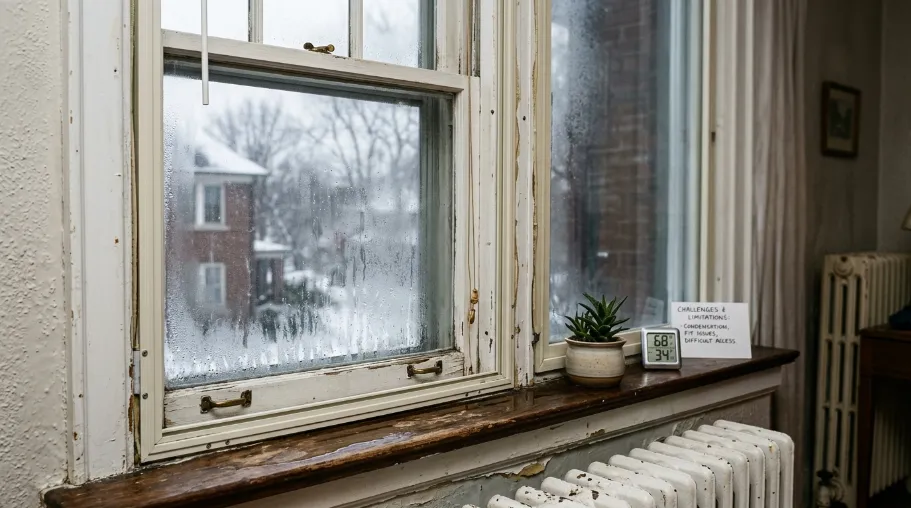
No fix is perfect. Therefore, it's worth being upfront about the trade-offs. Even the best-performing secondary-glazing systems tested in the Energy and Buildings study above topped out at a 290% thermal-resistance improvement a real gain, but still short of what a true double-glazed replacement window typically achieves.
Interior storm windows cut airflow once fitted. Consequently, they're not ideal for homes that lean on cross-breezes instead of AC.
A poorly measured or poorly fitted panel won't seal well. In turn, this cancels out most of the gain. In short, careful measuring beats material choice every time.
Additionally, acrylic panels can scratch over time. Eventually, they may need polishing or a swap down the line.
Overall, they add to a good frame. However, they don't fix a badly rotted or warped one. So, if the frame has failed, fix that first.
Understanding Interior Storm Window Types
Not every insert suits every window. Therefore, it helps to see how each type differs before you pick one.
If your main concern is... | Best insert type | Why it fits |
|---|---|---|
Rising AC bills | Low-e acrylic or glass insert | Blocks the most heat and UV |
Street or traffic noise | Laminated acrylic panel | Denser material dampens sound |
Renting, no wall damage allowed | Magnetic-mount panel | No screws or fixed fittings needed |
Old, odd-sized windows | Custom-cut acrylic insert | Built to the exact frame, not a stock size |
Simple and low cost | Standard clear acrylic kit | Lowest cost, still cuts most drafts |
How to Install Interior Storm Windows: Step-by-Step Guide
Here's how the fitting process often works, step by step, based on how our team has walked through it on real jobs.
Step 1: Measure the Window Frame with Care
Measure width and height at three points: top, middle, and bottom. After all, old frames are rarely square, and we've measured plenty that were out by a centimeter or more between the top and bottom edge. Unfortunately, this step gets rushed the most. Yet, it also affects the final fit the most — a panel cut to a single top-corner measurement is the single most common return we see.
Step 2: Pick Your Material
Acrylic is cheap and safe. Glass is tough and clear. Magnetic strips make DIY removal easy.
Step 3: Cut Panels Slightly Under Frame Size
This gives a clean, snug fit. As a result, you won't need to force it into place.
Step 4: Clean the Window Recess
Dust and old paint flakes stop a tight seal. Therefore, clean well before you fit the panel.
Step 5: Fit the Panel
Use your chosen method: magnetic tape, snug-fit strips, or clips. Press evenly along all edges.
Step 6: Test the Seal
Check for airflow at the edges on a windy day. Then, adjust as needed.
Interior Storm Windows: Common Mistakes to Avoid
Skipping careful measuring and hoping "standard size" fits
Using thin, cheap acrylic that flexes and lets in drafts at the corners
Fitting a panel over rot or damp damage, without fixing it first
Forgetting a way to remove panels for cleaning or airflow
Assuming one insert type works well on every frame type
Expert Tips
For rentals, choose magnetic or clip-mounted panels. As a result, they leave no marks on the frame.
In monsoon-prone areas, add a thin foam gasket at the sill before you fit the panel. Consequently, this gives extra water resistance.
If noise cutting is your main goal, choose laminated acrylic. Generally, it often beats plain clear acrylic of the same thickness.
Get panels custom-cut for old, odd-sized frames. Admittedly, they cost a bit more. However, they fit far better, and that matters more over time than a small price gap.
Interior Storm Windows Cost: What Affects the Price
Cost comes down to three things: size, material, and whether the panel is custom or standard.
Standard acrylic DIY kits sit at the low end. Accordingly, they suit anyone who wants a simple fix.
Custom-cut acrylic panels cost more. However, they make sense for old or odd-sized Bangladeshi window frames.
Low-e glass inserts sit at the top of the range. Consequently, they last the longest and block the most heat and UV.
Want a real number instead of a rough online guess? In that case, a custom measurement often gives you the clearest answer. Learn more about custom-fit window solutions to see how the process works.
Interior Storm Windows vs. Full Window Swap
Factor | Interior Storm Window Inserts | Full Window Swap |
|---|---|---|
Upfront cost | Lower | Much higher |
Fitting time | Hours to a weekend | Days, with build work |
Structural impact | None | Frame and wall work needed |
Best for | Rentals, heritage homes, tight budgets | New builds, badly damaged frames |
Can you undo it? | Yes, fully | No |
FAQs About Interior Storm Windows
Do interior storm windows really help in a hot, humid climate like Bangladesh's?
Yes. The sealed air-gap idea slows heat flow both ways, not just in cold climates. Specifically, in Bangladesh, this mainly keeps AC-cooled air in. Additionally, it also cuts heat, dust, and monsoon moisture from outside, especially in older buildings.
How much do interior storm window panels typically cost?
It depends on size, material, and whether you pick a custom or standard panel. Generally, acrylic kits are the cheapest choice. In contrast, low-e glass inserts cost more upfront. However, they last longer and block more UV and heat.
Can I fit interior storm windows myself?
In most cases, yes. Typically, magnetic or snug-fit panels don't need pro tools or wall work. Above all, careful measuring matters most. Get that right, and fitting often takes a few hours per window.
Actionable Takeaways
To put this guide into action, here's what to do next:
Find your draftiest window: Hold a hand near the frame edges on a windy day.
Measure that window's width and height: At three points. Check if it's a standard or odd size.
Pick your top concern: heat, noise, dust, or moisture. Then match it to the right panel type using the table above.
Weigh a DIY acrylic kit against a custom-cut panel: See which fits your budget and frame condition.
Clean and check your window recess: Before you order any panel. This gets the surface ready for a tight seal.
Final Thoughts
Skipping interior storm windows doesn't cause a big, sudden problem. Instead, it shows up slowly: a higher power bill here, a damp patch there, and broken sleep from street noise you've stopped noticing. One thing I learned from older housing is this. Typically, people often blame the AC unit or the weather. However, the real issue often sits in the window frame the whole time.
In short, if your home has drafty, old, or single-pane windows, an interior storm window insert is a practical, low-cost fix. Notably, there's no build work, nothing gets swapped out, and the payback period is short.
At this point, you know what interior storm windows are, why they matter in Bangladesh's climate, the seven risks of skipping them, and how to measure, choose, and fit one yourself. That's the full picture you came here for, whether you fit a panel this weekend or simply keep this guide for reference later.
Sources and References
Learn more from the U.S. Department of Energy on residential window energy performance
Read more from ASHRAE on building envelope and thermal performance standards, including Guideline 34 on historic-building retrofits
Learn more from the Bangladesh Meteorological Department on seasonal rainfall data
Read Preservation Brief 13 from the U.S. National Park Service on measured U-value improvements from storm windows
See the secondary-glazing thermal performance study in Energy and Buildings for guarded-hot-box test results on acrylic, plastic film, and low-e glass inserts
.webp&w=256&q=75)