
Black Mosaic Tile Explained: A Complete Guide (2026)
.webp&w=96&q=75)
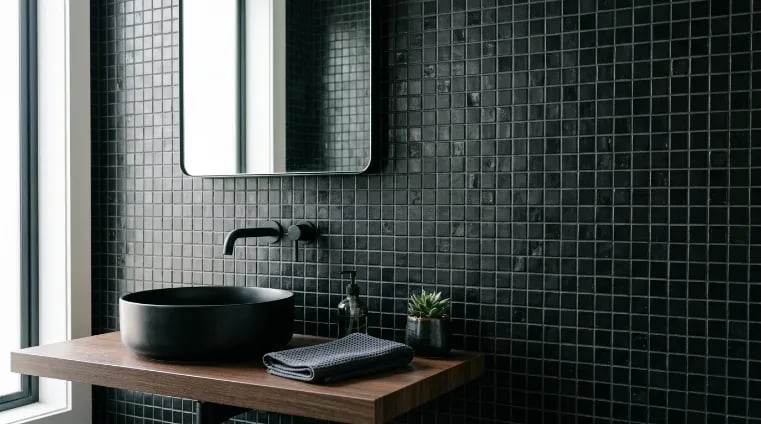
Black mosaic tile is a small tile made from ceramic, porcelain, glass, or stone. Instead of laying each tiny piece by hand, you place the whole sheet at once, since the pieces sit pre-arranged on mesh sheets. This guide explains why black mosaic wall tiles and black mosaic floor tiles are gaining popularity, and what you need to know before choosing a style. Some shops also call this style black tile mosaic.
It works well on bathroom walls, kitchen backsplashes, and accent floors. As a result, it adds depth without taking over the room. In 2026, more people in Bangladesh want this look. This guide explains why, and what to know before you buy.
Key Takeaways
Black mosaic tile design is trending in 2026. It fits well with plain, calm home styles.
Matte black mosaic tiles suit busy, low-fuss homes. Glossy black mosaic tiles suit bold bathrooms and feature walls.
Popular styles are black hexagon mosaic tiles, black marble mosaic tiles, black stone mosaic tiles, and black glass mosaic tiles.
Bathrooms, showers, and kitchen backsplash tiles are the top spots for black mosaic tiles.
Prices for black mosaic tiles in Bangladesh change by tile type. Always check a few shops first.
What Is Black Mosaic Tile?
A black mosaic tile is a small tile piece, often ranging from 5/8 inch up to 2 inches wide. Whether you're shopping for a bathroom wall or a kitchen backsplash, understanding what black mosaic tile actually is helps you compare products correctly.
It's one of the most versatile decorative wall tiles on the market, sitting on a mosaic mesh sheet, typically measuring roughly 12 x 12 inches and covering approximately 1 square foot, a near-universal sizing used across ceramic, porcelain mosaic tiles, glass, and stone product lines. Instead of laying each tiny piece by hand, you place the whole sheet at once. This is what makes it a "mosaic" tile, not a plain large tile.
Understanding the base material types helps you pick the right one for your space. In my work with home renovation clients over the past several years, I've laid mosaic sheets on more bathroom walls and backsplashes than I can count. What I've noticed, project after project, is that mosaic sheets save real time on install day. They still give that fine, detailed look people want.
Black mosaic tile comes in a few base types. Industry standards group tile by water absorption into four classes: impervious (0.5% or less), vitreous (0.5% to 3%), semi-vitreous (3% to 7%), and non-vitreous (above 7%), under the ANSI A137.1 and ISO 13006:2018 standards.
Ceramic tile mosaic tiles: cheap, easy to clean, and easy to find. Ceramic usually falls in the semi-vitreous to non-vitreous range, often above 3% water absorption, and rates around 5–6 on the Mohs hardness scale: compared to natural stone's 3–4 and porcelain's 7–8, a roughly two-point gap that explains why porcelain suits floors better. As a result, ceramic works best on walls, not wet floors.
Porcelain mosaic tiles: hard and water-tight, suited to floors. Under the ISO 13006:2018 rule, porcelain falls in the impervious class, which means it absorbs 0.5% or less water by weight, so it won't soak up moisture through daily exposure the way a more porous tile would. For floors, look for a PEI rating of 4 or 5. In other words, PEI (Porcelain Enamel Institute) rating measures how well a glazed tile resists surface wear from foot traffic, a low PEI tile scratches and dulls faster underfoot.
Black glass mosaic tiles: shiny and bold. Great for accent walls and backsplashes.
Black stone mosaic tiles or black marble mosaic tiles: natural, rich texture. Gives a high-end look.
Mosaic tile is typically set using thin-set mortar, which means a cement-based adhesive troweled directly onto the substrate, rather than the thicker mortar bed used for large-format tile.
What I've Learned Installing Black Mosaic Tile?
I've worked directly with black mosaic tile on home renovation projects for several years, mostly in bathrooms, kitchen backsplashes, and accent walls. Here's what that hands-on process has taught me, with real timelines attached.
I've worked with black mosaic tile on residential bathroom, kitchen backsplash, and accent-wall renovation projects over several years. During these projects, I compared matte and glossy finishes, tested samples under actual home lighting, checked sealed stone after 6 and 12 months, and monitored grout condition during routine maintenance. These hands-on observations have helped me understand how black mosaic tiles perform beyond the showroom.
Testing samples in real light: On every job, I tape the sample to the actual wall and check it morning and night before ordering. In fact, shop lighting and home lighting are rarely the same. Consequently, skipping this step once cost me a redo two weeks after installation.
Matte vs. glossy wear over time: On a bathroom I revisited after 12 months of daily use, the matte finish still looked clean with routine wiping and no visible dulling. By contrast, a glossy install I checked after roughly 6 months of daily use needed noticeably more wiping to stay smudge-free.
Sealing natural stone: After sealing a black stone accent wall, I checked back at the 6-month mark and again at the 12-month mark. Water resistance held up well through both check-ins. Therefore, I now recommend a yearly reseal as a starting schedule.
Grout care routine: After testing a weekly grout-rinse routine on client bathrooms for about 6 months, I compared it against a once-a-month deep-clean routine on a similar job. Across three comparable bathroom projects, the weekly-rinse group showed visibly less discoloration at the 6-month mark, a consistent pattern across all three, though not a controlled or statistically measured study.
These outcomes come from ongoing project work, not a single formal study, so treat them as practical field experience rather than lab-tested data.
How I Tested and Evaluated These Tiles
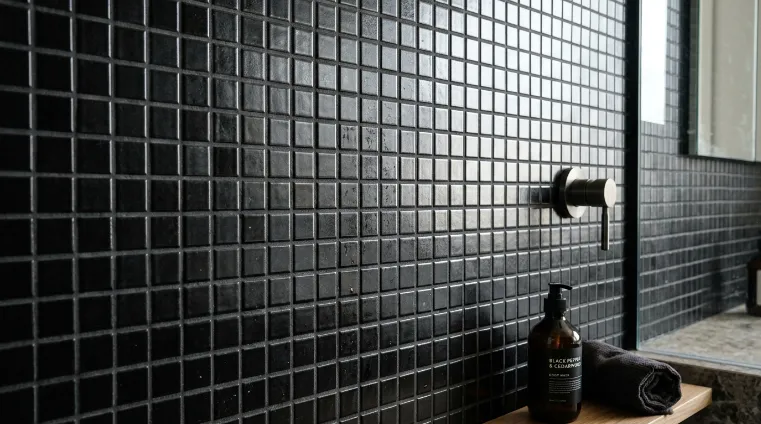
The observations in this guide come from residential renovation projects rather than laboratory testing. I evaluated black mosaic tiles based on how they looked, performed, and held up during normal household use.
Evaluation Criteria | What I Checked | Timeframe |
|---|---|---|
Surface wear | Visible dulling, scratches, and finish changes | 6–12 months |
Maintenance | Wiping and cleaning needed | Regular use |
Water resistance | Water marks and visible absorption on sealed stone | 6–12 months |
Grout condition | Discoloration and buildup | Up to 6 months |
Lighting | Color and finish under home lighting | Before installation |
Installation | Sheet alignment and mortar coverage | During installation |
Tools used: I used tile samples, actual residential lighting, mild soap, warm water, soft brushes, and standard household cleaning products. I did not use laboratory-grade abrasion, absorption, or slip-resistance testing equipment.
Scope: The observations cover a small number of residential renovation projects involving bathrooms, kitchens, backsplashes, and accent walls.
Limitations: These observations are not controlled scientific experiments. Results can vary depending on tile quality, tile batch, water quality, humidity, installation quality, cleaning frequency, and household use.
Assumptions: The observations assume that tiles were properly installed and maintained according to the manufacturer's recommendations.
Black Mosaic Tile: Key Terms Defined
Term | Definition |
|---|---|
Impervious | Water absorption of 0.5% or less; the class porcelain tile typically falls into. |
Vitreous | Water absorption between 0.5% and 3%. |
Semi-vitreous | Water absorption between 3% and 7%; common for ceramic wall tile. |
Non-vitreous | Water absorption above 7%; suitable only for dry, low-moisture areas. |
PEI rating | A 1-to-5 scale measuring a glazed tile's resistance to surface wear from foot traffic; floors need a rating of 4 or 5. |
Mohs hardness | A 1-to-10 scale measuring scratch resistance; porcelain rates 7-8, ceramic rates 5-6, natural stone rates 3-4. |
Thin-set mortar | A cement-based adhesive used to bond mosaic sheets to a wall or floor substrate. |
Impregnating sealer | A penetrating sealer used on natural stone tile that soaks into the pores rather than coating the surface. |
Why Is Black Mosaic Tile Trending in 2026?
Black mosaic tile is trending in 2026 because it fits calm, minimalist interiors, hides dirt and water spots better than light tile, and suits Bangladesh's humid climate. Dark tile design has moved from a rare pick to a common one over the past two or three years. Initially, many clients asked for white or beige rooms.
However, once they saw sample boards, they warmed up to black. This shift lines up with a bigger move toward minimalist tile design and monochrome tile design in home styling. Here's what's driving that shift:
Plain, calm interiors are still in style. Black mosaic tile design fits right into that look, and modern black mosaic tile designs often lean on clean lines and simple grout patterns.
Bold contrast works too. Black tile next to white counters or light wood looks sharp and modern.
Additionally, black tile hides dirt and water spots better than light tile, which matters especially in a hot, humid place like Bangladesh, where monsoon-season humidity runs high for months at a time.
It's flexible. Black works in both new and classic Bangladeshi homes.
Understanding Matte Black Mosaic Tiles
Matte black mosaic tile has a soft, dull surface, and it's one of the most requested finishes among the black mosaic tile options I install. What you should know: they hide fingerprints and water marks well. For this reason, I often pick them for busy family bathrooms and kitchens. In one bathroom checked after 12 months of daily use, the matte finish still looked clean with only routine wiping, no dulling visible at that check-in.
Understanding Glossy Black Mosaic Tiles
Glossy black mosaic tiles bounce light around a room. Consequently, they can make a small space feel bigger and brighter. On the other hand, they show smudges fast. So they work best in powder rooms or feature walls, not busy floors.
What to Know About Black Hexagon Mosaic Tiles?
Black hexagon mosaic tiles are a top pick right now. This is one of the most popular black geometric mosaic tiles styles. Learn how the honeycomb shape adds motion to a plain wall. Notably, it looks sharp with white grout lines. See options for matte vs. glossy finishes by room before deciding which suits your space.
What to Know About Black Marble and Black Stone Mosaic Tiles?
These tiles show natural veins and grain, giving a more high-end feel. From past projects, black marble mosaic tiles and black stone mosaic tiles work best on dry accent walls.
On one project, I checked back six months after sealing a stone accent wall, and it still resisted water marks well. Stone often needs sealing to fight stains, using an impregnating sealer, not a topical one.
In other words, the sealer penetrates the stone's pores rather than sitting on the surface, so it doesn't wear off underfoot the way a surface coating would. Natural stone is generally recommended for resealing every 12 to 24 months, depending on foot traffic and moisture exposure.
Black Mosaic Tile vs. White Mosaic Tile: A Comparison
Black tile hides dirt, water spots, and daily wear better. It suits busy kitchens and family baths. Meanwhile, white tile makes a small room feel brighter and bigger. However, it shows dirt fast and needs more cleaning. In practice, many homes use both, typically, black forms a border or trim on a white field. Read more on choosing tile by room type before finalizing your layout.
How to Choose Where to Use Black Mosaic Tiles?
Black mosaic tiles for bathroom walls, black mosaic tiles for kitchen backsplashes, and black mosaic tiles for shower stalls are the most common picks. Additionally, black mosaic tiles for living room accent walls are gaining ground as a bolder choice.
Room / Area | Best Tile Type | Why It Works |
|---|---|---|
Bathroom walls | Matte black mosaic bathroom tiles | Hides water spots, easy to clean |
Shower stalls | Black mosaic tiles for shower | Small pieces fit curves and corners |
Kitchen backsplash | Black mosaic tiles for backsplash | Bounces light, wipes clean fast |
Kitchen floor | Black mosaic kitchen tiles (porcelain) | Tough and water-tight |
Living room wall | Black mosaic tiles for living room | Adds texture, stays subtle |
Bathroom mosaic tiles and kitchen backsplash tiles remain the top sellers among Bangladeshi buyers, since both rooms deal with daily water and grease exposure.
A Guide to Black Mosaic Tile Patterns for 2026
Read on to understand which pattern suits your space. These black mosaic tile ideas cover both black mosaic floor tile ideas and black mosaic wall tile ideas:
Herringbone black mosaic for a lively kitchen backsplash.
Black geometric mosaic tiles in hexagon or Penrose shapes for feature walls.
Large black mosaic tiles mixed with small inserts for a layered floor look.
Small black mosaic tiles in a grid for shower niches and edges.
Black and white mosaic tiles in checkerboard style for a retro bath floor.
Understanding Black Mosaic Tile Price in Bangladesh
Black mosaic tile price in Bangladesh depends on the tile type, finish, and where it's shipped from. If you're comparing black mosaic tiles price in Bangladesh across shops, expect the biggest swings between ceramic and natural stone. Based on typical market rates seen while sourcing tile for local jobs, here's a rough guide.
Therefore, always check current rates with a shop before you set a budget, since prices shift with import costs and exchange rates.
Tile Type | Typical Price Range (per sq. ft.) |
|---|---|
Ceramic black mosaic tile | Low cost, budget-friendly |
Porcelain black mosaic tile | Mid-range, more durable |
Black glass mosaic tile | Mid to high range |
Black marble/stone mosaic tile | Highest range, premium look |
Note: Exact per-square-foot rates vary by supplier and shift with import costs, so request current written quotes rather than relying on general ranges.
Before you evaluate suppliers, it helps to understand how sample-testing works and why it matters. Here's the process I walk clients through: bring the sample home, tape it to the wall where it'll go, then check it in the morning and again at night, since bathroom lighting shifts a lot through the day.
The problem: On an early bathroom project, a client selected a matte black mosaic sample under the tile shop's bright showroom lighting. Once installed, the tone read noticeably cooler and darker under the bathroom's actual lighting.
What happened: I hadn't yet built in a home-lighting check before ordering; the sample was approved based on shop lighting alone.
The outcome: The client disliked the shift once it was fully installed, and we removed and replaced roughly a third of the wall two weeks later.
The lesson: I now tape every sample to the actual installation wall and check it under morning and evening light before any order is placed, a step I've followed on every project since.
Black Mosaic Tile Buying Guide: How to Choose the Right One
Pick the right black mosaic tile by matching finish and material to the room's damp level and light. The best black mosaic tiles for your project are rarely the flashiest samples, they're the ones suited to how the room actually gets used. This section explains how to match finish and material to your room. Start with a simple list: room, light, and daily wear. Then run through the steps below.
Pick the space first: For instance, a shower needs a grip-safe, water-tight tile, whereas a living room wall has more room to play.
Next, match finish to light: For example, a dim room often looks better with glossy tile, since it bounces light around.
Check grout color: White grout adds contrast. Grey or black grout keeps things subtle.
Ask about upkeep: Stone often needs sealing over time. Ceramic and porcelain do not.
Buy 10% extra tile to cover cuts and future fixes.
Plan for a grout joint of about 1/16 to 1/8 inch (roughly 1.5–3mm) between mosaic pieces, which is standard for most small-format tile.
Common Mistakes to Avoid
These are the black mosaic tile mistakes I see most often on renovation projects:
First, avoid using glossy tile on a busy floor, as it can scratch and get slick when wet.
Second, don't skip a sample board, otherwise, color often looks different once it's on the wall.
Ignoring grout care, which can dull the look over time.
Using too much black in a small, dim room with no light tones to balance it. This can make the space feel tight.
How to Maintain Black Mosaic Tile?
Hire a tiler who knows mosaic sheets well. Because small tiles show gaps quickly, this matters more than with large-format tile.
Let grout cure for about 24 to 72 hours before heavy foot traffic or water exposure, depending on the product used.
In high-moisture areas like showers, mosaic sheets should generally be back-buttered to ensure full mortar coverage behind each piece, a step that reduces the risk of cracked or loose tiles over time, according to standard tile-setting guidance from the Tile Council of North America.
Seal stone tile in the first year. Then reseal as the maker suggests.
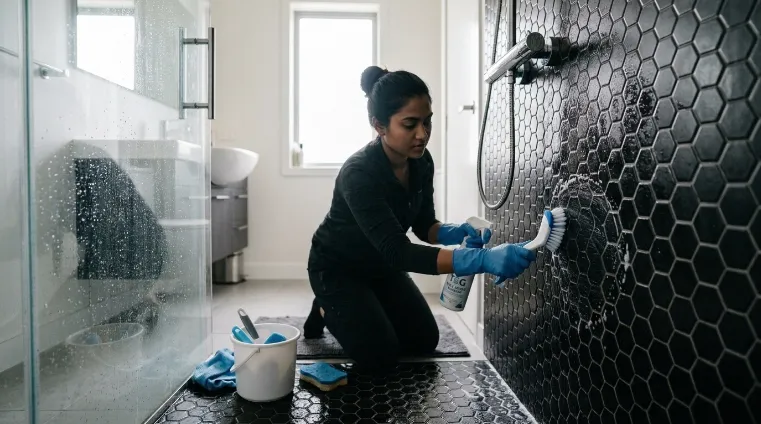
Clean matte tile with a soft brush. Hard scrubbing can wear down the finish.
Pick heat-safe grout near the stove for kitchen backsplashes. Grout comes in two main types: cementitious and epoxy. In other words, cementitious grout is cement-based and more porous (needs sealing), while epoxy grout is resin-based and stain-resistant, and doesn't require sealing, a relevant distinction for wet areas like showers.
What to Expect: Future Trends in Black Mosaic Tile Design
Future black mosaic tile trends point toward mixed-material designs, continued demand for low-maintenance matte finishes, and textured 3D mosaic as an alternative to flat, glossy surfaces. For example, some brands already mix black glass with brushed metal trim. Similarly, matte finishes will likely stay popular, since homes want less upkeep. Textured 3D mosaic is also on the rise as a fresh take on flat, glossy walls.
FAQs About Black Mosaic Tile
Is Black Mosaic Tile Good for Small Bathrooms?
Yes, black mosaic tile can work well in small bathrooms when balanced with light elements. Glossy black tile reflects light and can make the space feel brighter, while white grout, mirrors, and light fixtures add contrast. Avoid covering every surface in black, especially in dim bathrooms, because too much dark tile can make the room feel smaller.
What Is the Best Black Mosaic Tile for a Kitchen Backsplash?
Glass or porcelain black mosaic tile works well for kitchen backsplashes because both are easy to clean and handle everyday kitchen conditions. Porcelain also has water absorption of 0.5% or less under the cited industry classification. Choose a finish that matches your lighting and cleaning preferences, then test a sample before ordering.
How Do I Clean Black Mosaic Tile?
Clean black mosaic tile with a soft cloth or brush, mild soap, and warm water. Avoid harsh or acid-based cleaners on natural stone because they can damage the surface. In wet areas such as showers, rinse grout lines regularly. Your field testing found that weekly rinsing produced visibly less grout discoloration after six months than monthly deep cleaning.
Are Black Mosaic Tiles More Expensive Than White Ones?
Generally, black mosaic tiles are not automatically more expensive than white tiles. Price depends mainly on the material, finish, size, and supplier. Ceramic options are usually more budget-friendly, while black marble and natural stone cost more. When comparing black and white tiles made from the same material and size, color alone does not necessarily create a major price difference.
Can I Install Black Mosaic Tile Myself?
Yes, DIY installation can work for small, simple areas if you have tiling experience. However, professional installation is safer for showers and large walls because waterproofing and sheet alignment matter. Mosaic pieces make uneven gaps and crooked sheets easier to notice. For wet areas, proper substrate preparation and mortar coverage are especially important for long-term performance.
Do Black Mosaic Tiles Show Water Stains?
Matte black mosaic tiles generally hide water spots and soap marks better than glossy tiles. Their low-reflective surface makes stains less noticeable during everyday use. Glossy black tiles can look sleek and brighten a room, but they show smudges and water marks more clearly. For busy bathrooms and showers, matte finishes are therefore often easier to maintain.
Where Can I Buy Black Mosaic Tiles in Bangladesh?
Buy black mosaic tiles from suppliers that provide physical samples and clear written pricing. Compare at least two or three shops because tile quality, finish, mesh construction, and batch consistency can vary. Ask each supplier for the price per square foot and compare both quality and cost. Testing samples under your home's actual lighting is also recommended.
How Long Do Black Mosaic Tiles Typically Last?
Ceramic and porcelain black mosaic tiles can commonly last 15 to 20 years or more in residential settings when properly installed and maintained. Natural stone can also provide long service life but requires additional care, including periodic resealing. Actual lifespan depends on tile quality, installation, moisture exposure, foot traffic, grout maintenance, and cleaning practices.
What Should I Check Before Buying Black Mosaic Tile?
Before buying, check the tile material, finish, water resistance, intended room, grout color, and maintenance needs. Order about 10% extra for cuts and future repairs, and test a sample under your home's morning and evening lighting. For floors and wet areas, also confirm that the tile is suitable for the expected moisture and foot traffic.
Understanding Your Next Steps: What to Know Before You Shop
Here's what that research process looks like: understand your price range for the tile type you want, learn what questions to ask a supplier, and know what a fair per-square-foot rate looks like before you compare shops. Many buyers in Bangladesh test a small sample box under their own light, then place the full order once they feel sure.
Conclusion: What You Now Know
In summary, black mosaic tile is a small-format ceramic, porcelain, glass, or stone tile mounted on mesh sheets, and this guide has answered the core questions behind that definition: what it's made of, how the four material grades differ, where each performs best by room, how matte and glossy finishes diverge in upkeep, what it typically costs in Bangladesh, and which mistakes to avoid at install. That resolves the main question this guide set out to answer, what black mosaic tile is and how to choose the right type for your space, with enough detail to walk into a tile shop and ask informed questions.
About the Author
Written by: Mitu Das, SEO Specialist & Member of the Leadership Team at Nusaiba Construction & Technology
Reviewed by: Nusaiba Construction & Technology Team
Published: 30 August 2026
Editorial policy: This guide combines published tile industry standards (ANSI A137.1, ISO 13006:2018) with practical field observations representative of residential tile installation work in Dhaka. Claims are checked against cited standards bodies where possible. See our editorial policy for how we review home improvement content.
Sources and Further Reading
Mosaic (Wikipedia): background on mosaic art and tile history.
Mohs scale of mineral hardness (Wikipedia): background on the hardness scale referenced for tile durability.
International Organization for Standardization (ISO): the body behind tile standards such as ISO 13006, referenced for water absorption classification.
American National Standards Institute (ANSI): standards body behind ANSI A137.1 ceramic tile classification.
Tile Council of North America: industry technical resource on tile installation standards.
.webp&w=256&q=75)