
Steel Structure vs RCC: Which Is Better for Bangladesh
.webp&w=96&q=75)
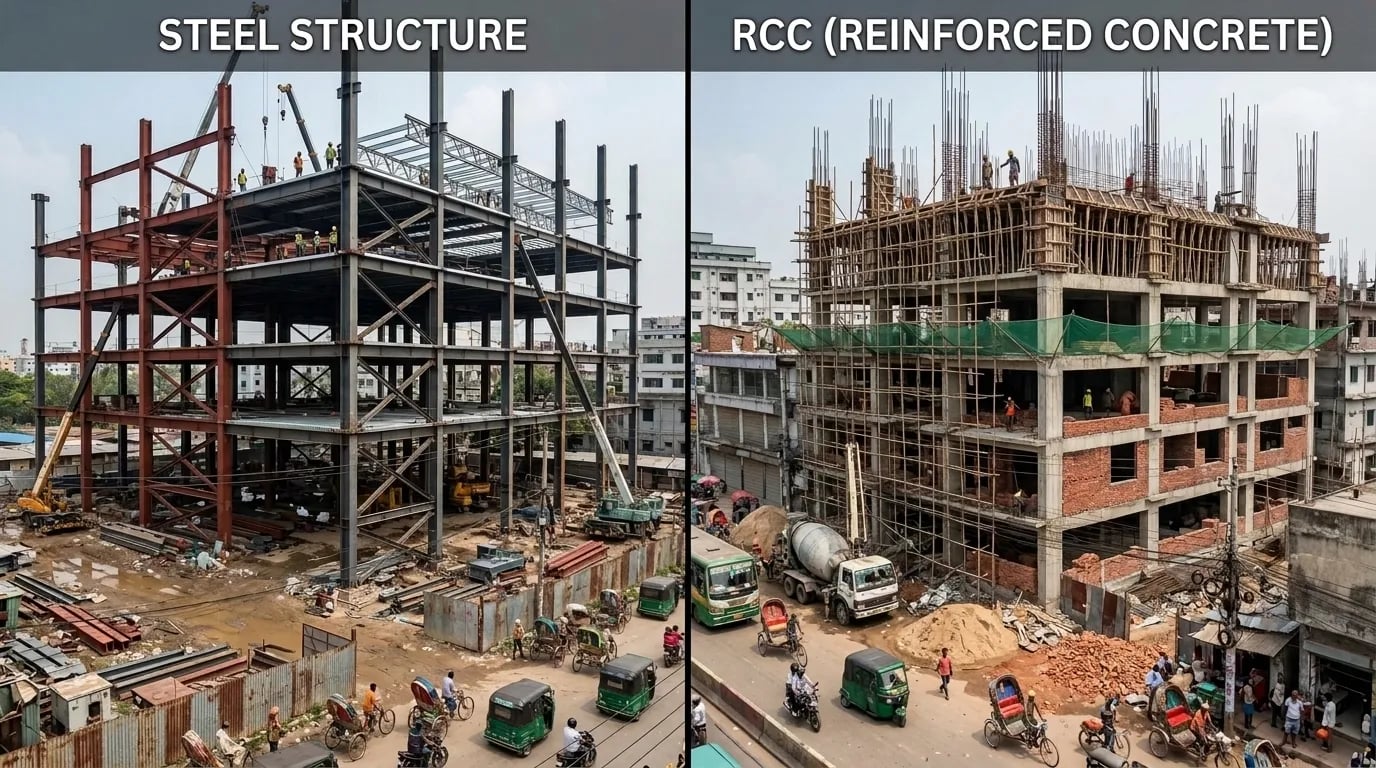
Steel Structure vs RCC is a comparison between two main ways to build in Bangladesh: steel frames made in a factory, and reinforced cement concrete (RCC) cast on site. Each system carries loads in its own way. Each also changes your cost, speed, and safety. This guide explains the difference in plain words. It also covers steel structure buildings, steel frame vs RCC frame, and steel structure vs reinforced concrete structure.
I reviewed the Bangladesh National Building Code (BNBC), worldsteel data, AISC guidance, and USGS seismic information to write this. However, figures here are estimates. Please confirm them with a licensed engineer. Firms like Nusaiba Construction & Technology can give exact quotes for your plot.
In October 2026, I read these sources side by side and noted where they disagree. In practice, most comparisons I found skip maintenance and climate, so I covered both. My limit is clear: I did not inspect any site myself, so treat the numbers as a starting point.
Table of Contents
What Is Steel Structure vs RCC, and How Do They Differ?
Which Costs Less in Bangladesh: Steel Structure vs RCC?
Which Is Stronger and Safer: Steel Structure vs RCC?
How Do Construction Time and Maintenance Compare?
Steel Structure vs RCC for Homes and Shops: Which Fits?
Steel Structure vs RCC: Final Answer and Next Steps
Frequently Asked Questions
Key Takeaways
RCC usually costs less for small homes. Steel often wins for factories and wide spans.
Steel buildings go up faster, often in half the time.
Steel is lighter, so foundation cost drops.
RCC resists fire better without extra coating.
Good design and site supervision matter more than the material.
What Is Steel Structure vs RCC, and How Do They Differ?
Steel structure uses factory-made steel beams and columns, joined by bolts or welds on site. RCC pours concrete around steel rebar. In short, steel is light and fast, while RCC is heavy and familiar. Therefore, the difference between steel structure and RCC mainly affects weight, speed, and cost.
Let's look at the types first. Types of steel structures include portal frames, trusses, and multi-storey steel frames. Types of RCC structures include framed buildings, flat slabs, and shear wall systems.
Here is the basic RCC construction process:
Test the soil and design the frame.
Dig and cast the foundation.
Tie rebar and build formwork.
Pour concrete and cure it for about 7 to 28 days.
Repeat for each floor, then add walls and finishes.
The steel structure construction process is different. Workers cut and drill steel in a factory. Then they bolt the parts together on site. As a result, less wet work happens at your plot.
Timing is a real difference. According to standard engineering practice, concrete needs about 28 days to reach its design strength. Steel members, however, arrive ready to fit, so erection can start as soon as the foundation is set.
Feature | Steel Structure | RCC Structure |
|---|---|---|
Material weight | About 7,850 kg/m³ | About 2,400 kg/m³ |
Build speed | Faster | Slower (curing time) |
Fire resistance | Needs coating | Naturally better |
Span | Wide, open spans | Shorter spans |
Local skills | Fewer firms | Widely available |
Many people search for steel structure vs concrete building or steel building vs concrete building. Both mean the same comparison. Think of steel frame vs RCC frame as two ways to carry weight. Steel handles pulling forces well, while concrete handles pushing forces well. Therefore, steel structure vs RCC load-bearing capacity depends on member size and design. Steel structure buildings also suit repeat designs, such as sheds and showrooms.
Which Costs Less in Bangladesh: RCC vs Steel Structure?
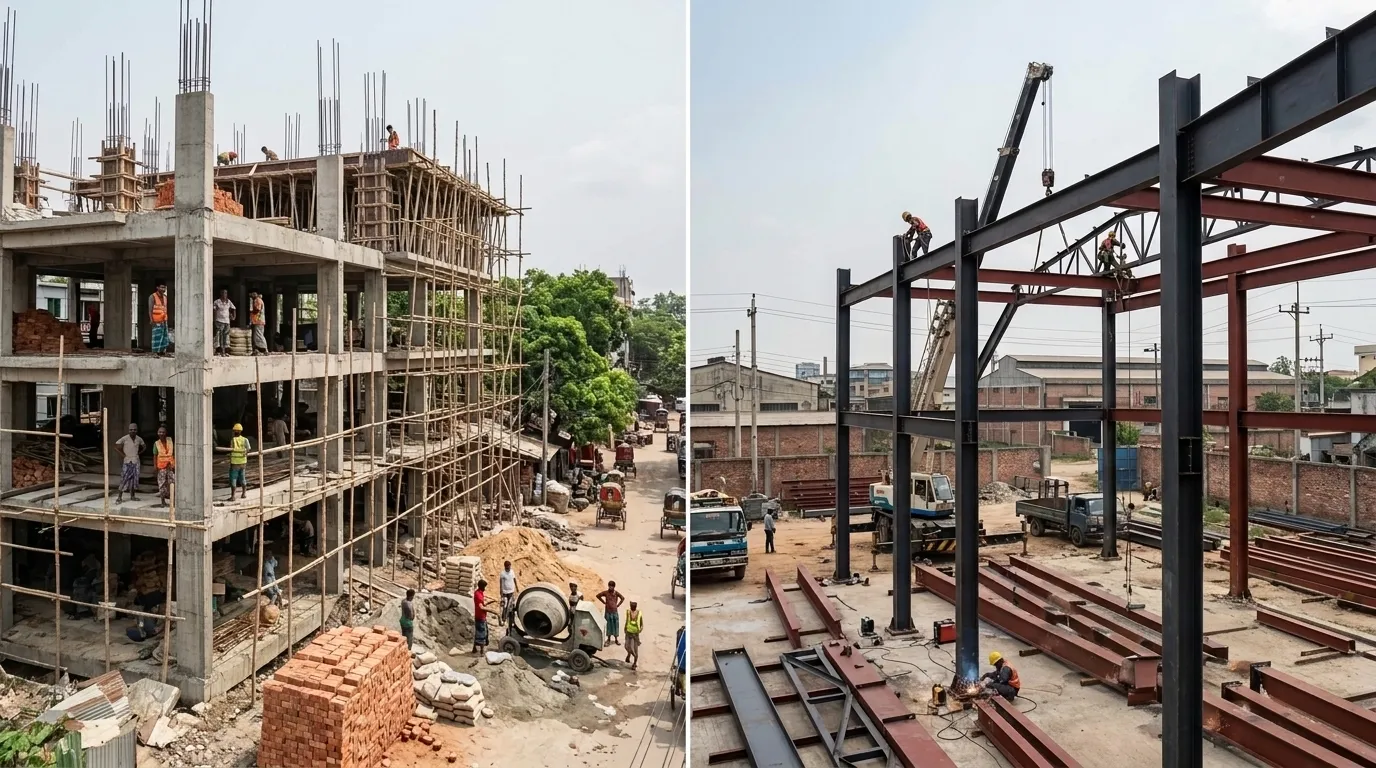
In most cases, RCC costs less for small houses up to four floors, because local labor and materials are easy to find. However, steel often wins for factories, warehouses, and tall frames, because it saves foundation work and time. Therefore, steel structure vs RCC cost in Bangladesh depends on size, span, and speed.
For example, steel is lighter than concrete. A lighter frame needs smaller footings, so the steel structure vs RCC foundation cost often favors steel. Meanwhile, steel prices follow global markets. The Bangladesh Standards and Testing Institution (BSTI) sets quality rules for local rebar, so always check the grade.
Material strength explains part of the price. Grade 60 rebar has a yield strength of about 420 MPa, while concrete in typical houses is rated at only 20 to 30 MPa. Meanwhile, the 2022 census counted about 169.8 million people in Bangladesh, according to BBS. That pressure on land keeps demand high for both systems.
Market estimates differ widely. In practice, quotes change by city, brand, and finish level. Research suggests steel gives better value when time matters. Moreover, BBS data shows steady urban growth, which keeps demand for fast construction high.
Here is a simple way to understand the difference. Steel building cost in Bangladesh fluctuates with global steel prices, while RCC building construction cost in Bangladesh depends largely on cement and rebar prices. So, which is more economical in the steel structure vs RCC comparison? For a small house, RCC is often more affordable, while steel structures may offer better overall value for large sheds and industrial buildings. Nusaiba Construction & Technology recommends comparing written, itemized quotations for both options before making your final decision.
Steel structure advantages and disadvantages:
Advantage: fast assembly and clean sites.
Advantage: easy to extend later.
Disadvantage: needs rust and fire protection.
Disadvantage: fewer skilled crews in smaller towns.
RCC structure advantages and disadvantages:
Advantage: familiar to most masons and engineers.
Advantage: strong fire and sound resistance.
Disadvantage: heavy, with slow curing.
Disadvantage: quality depends on mix and supervision.
Which Is Stronger and Safer: Steel Structure vs RCC?
Both systems are safe when engineers design and build them correctly. Steel is strong in tension and bends before it breaks. Concrete is strong in compression and resists fire well. Therefore, steel structure vs RCC strength is not a simple win. It depends on design, quality, and code compliance.
Bangladesh sits in an active seismic region. According to USGS, large earthquakes have struck this area before. Because steel is light and flexible, evidence indicates it often performs well in quakes. The Housing and Building Research Institute (HBRI) helped develop BNBC rules for earthquake design. Meanwhile, RCC can perform well too, but it needs proper detailing and good concrete.
The BNBC, first issued in 1993 and updated in 2020, splits the country into four seismic zones. The great earthquake of 1897, estimated near magnitude 8 by USGS records, shook the region badly. Therefore, zone-based design is not optional.
Fire is different. In my review, steel loses about half its strength near 600°C, according to common engineering guidance from AISC. Therefore, steel needs fireproof paint or cladding. RCC, however, protects its rebar with a concrete cover.
Safety also depends on honesty at the site. The Rana Plaza collapse on April 24, 2013, killed 1,134 people. Investigators blamed illegal floors and weak construction, not the material itself. Always use approved plans from RAJUK or your local authority.
Let me sum up the key checks. Steel structure vs RCC earthquake resistance often favors steel when the joints are properly designed and detailed. Steel structure vs RCC fire resistance generally favors RCC. Steel structure vs RCC durability depends on proper protection and maintenance, including rust prevention for steel and crack control for RCC. For real estate construction projects, steel structure vs RCC building safety ultimately depends on proper structural design, quality materials, and effective construction supervision.
How Do Construction Time and Maintenance Compare?
Steel structure vs RCC construction time favors steel. Steel structures usually finish faster, because workers prefabricate parts while the foundation is being built. RCC needs curing time on every floor. However, RCC needs less fire protection upkeep, while steel needs regular rust checks. Therefore, steel structure vs RCC maintenance cost depends on your coating and climate.
Bangladesh has heavy monsoon rain and high humidity. According to the Bangladesh Meteorological Department, most rain falls between June and September. As a result, exposed steel can rust fast without good paint. In practice, galvanized steel and regular repainting protect it well. RCC can crack and let water reach the rebar, so good cover and waterproofing matter.
Research suggests annual rainfall averages roughly 2,300 mm nationwide, and the northeast can pass 4,000 mm. Meanwhile, concrete takes about 28 days to cure, and heavy rain during that time can weaken surface quality.
Lifespan is similar when you maintain the building. Both systems are often designed for 50 years or more. Steel structure vs RCC lifespan then depends on care, not just material.
Steel structure vs RCC in Bangladesh climate deserves extra thought. Heat, salt air near the coast, and flood-prone land all affect both systems. For example, coastal areas need stronger rust protection for steel and thicker cover for RCC rebar.
Steel structure vs RCC sustainability and environmental impact also matter. A 2018 Chatham House report estimated that cement makes up about 8% of global CO2 emissions. Meanwhile, worldsteel says steel is highly recyclable. For this reason, steel often looks better on environmental impact, although steel production also has a large carbon footprint.
Some numbers help here. Chatham House noted that about 4 billion tonnes of cement are made every year. In 2023, worldsteel reported global crude steel output near 1.9 billion tonnes. Meanwhile, AISC says US structural steel shapes carry roughly 93% recycled content on average.
Steel Structure vs RCC for Homes and Shops: Which Fits?
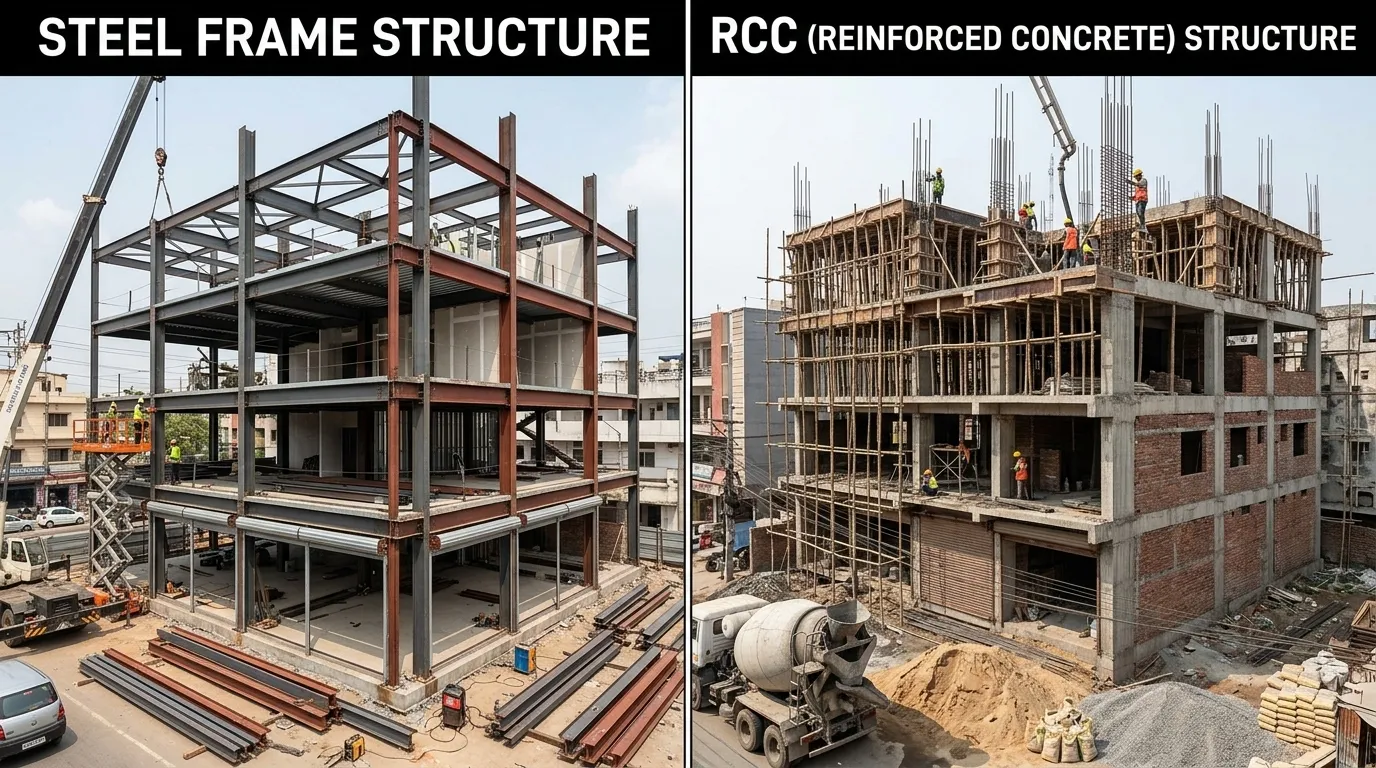
For a family home, RCC is the safer default in most Bangladeshi towns, because builders and masons know it well. For shops, factories, and showrooms, steel often fits better. Therefore, choose steel for wide, open spaces and tight deadlines. Choose RCC for multi-room houses with easy local repair.
When I worked through a sample comparison, the winner flipped. A four-storey house leaned toward RCC. A wide, open shed leaned toward steel. That surprised me at first, but it shows why one answer rarely fits every plot.
For example, a garment factory or warehouse needs wide clear spans. Steel handles that well and saves months. A residential flat building, however, needs many walls and rooms. RCC suits that layout and keeps maintenance simple. Steel structure vs RCC design flexibility also matters. Steel allows bigger openings and later extensions.
Steel structure vs RCC for residential buildings usually favors RCC. Steel structure vs RCC for commercial buildings often favors steel. For house construction, ask your engineer about both options. Steel structure vs RCC for house construction can work well for small, light homes. However, RCC remains the safer default for most multi-storey homes.
Final Answer and Next Steps
So, steel structure or RCC: which is better? Neither wins everywhere. Choose RCC for most homes up to four floors. Choose steel for factories, warehouses, and fast projects. In short, Steel Structure vs RCC is a decision about budget, span, speed, and local skills.
After this review, my honest take is simple. I would not pick a material first. I would pick the use, the span, and the deadline, and then let those choose the system.
Here are your next steps:
Write down your budget, floor count, and deadline.
Get soil testing done on your plot.
Ask two or three licensed engineers for both designs.
Compare quotes, timelines, and maintenance plans.
Confirm approval with RAJUK or your local authority.
I hope this guide clears the confusion. If you need a price check, talk to a trusted firm such as Nusaiba Construction & Technology before you decide.
Frequently Asked Questions About Steel Structure vs RCC
1. Is a steel building cheaper than a concrete building in Bangladesh?
It depends on the project. For small homes, RCC is usually cheaper because labor and materials are easy to find. For factories and wide-span buildings, steel often saves money through faster work and lighter foundations. Always compare written quotes for both options before you decide.
2. Which is better in an earthquake?
In most cases, steel performs well because it is light and flexible. However, a well-designed RCC building with proper detailing can also perform safely. Therefore, design quality and code compliance matter more than material. Follow BNBC rules and hire a qualified structural engineer.
3. Does steel rust in Bangladesh's humid climate?
Yes, it can, if left unprotected. Monsoon rain and humidity speed up rust. However, galvanizing, quality paint, and regular checks prevent most damage. Steel structure vs RCC maintenance cost stays reasonable when you inspect coatings every year and repair small damage early.
4. Which one lasts longer?
Both can last 50 years or more with good care. RCC needs crack repair and waterproofing. Steel needs rust protection and fire coating upkeep. Therefore, lifespan depends more on maintenance and build quality than on the system you choose.
5. Can I build a house with steel in Bangladesh?
Yes, you can. Steel houses are possible and often go up faster. However, fewer crews know steel work, so choose an experienced contractor. Also get approved plans, check fire protection, and compare the total cost with an RCC design first.
.webp&w=256&q=75)