
Wire Clamps: 5 Critical Mistakes to Avoid (Complete Guide 2026)
.webp&w=96&q=75)
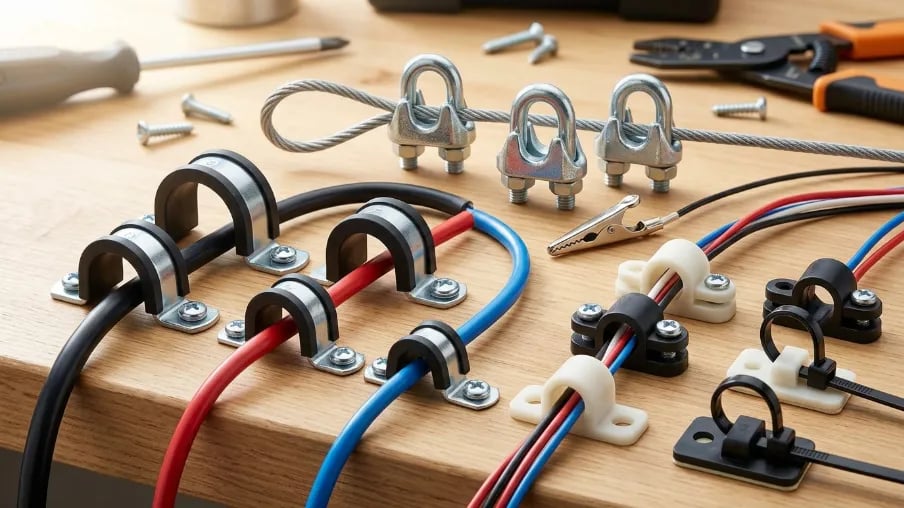
Wire Clamp refers to a fastening part made from metal, plastic, or rubber. It holds, secures, or binds wires, cables, and wire ropes in place, so they don't slip, vibrate loose, or wear through their insulation. Wire clamps range from simple U-shaped P-clamps to heavy duty wire rope clamps. Picking the right size, material, and orientation is what keeps an installation both functional and safe. There are many wire clamps types on the market.
Understanding wire clamp uses before you buy is the first step to getting it right. But most people make the same five mistakes with wire clamps for cables and rope: picking the wrong size or type, installing rope clamps backward, over- or under-tightening, using non-insulated clamps on live wiring, and ignoring material compatibility.
I have worked with and inspected cable wire clamps for over 10 years. I've worked on electrical panels, cable trays, and wire rope rigging. In my experience, these same five mistakes come up again and again, even with skilled workers. This guide explains how to spot the right wire clamp for your job, from wire clamp applications to wire clamp sizes. It also shows you how to fix each mistake, step by step. That's useful whether you're working on wiring or rigging projects in Dhaka, Chattogram, or anywhere else in Bangladesh.
Table of Contents
Key Takeaways
What Are Wire Clamps?
Why Getting Wire Clamps Right Matters
Mistake 1: Wrong Size or Type
Mistake 2: Backward Rope Clamps
Mistake 3: Tightening Errors
Mistake 4: Non-Insulated Clamps on Electrical Wiring
Mistake 5: Ignoring Material Compatibility
A Real Example From the Field
Expert Tips
What Affects Wire Clamp Quality
FAQ
Conclusion
Key Takeaways
Wrong size or type is the top mistake. A clamp that's too big or too small won't grip well, whether you're using metal wire clamps or plastic wire clamps.
Reversed U-bolt orientation on wire rope clamps weakens the rope instead of strengthening it.
Over-tightening or under-tightening damages insulation or lets wires slip loose over time.
Non-insulated clamps on live wiring create a shock and fire risk — always reach for electrical wire clamps instead.
Ignoring material compatibility leads to rust and early failure, especially outdoors.
Fixing these five issues extends the life of your wiring and rope systems, and it keeps installations safe.
What Are Wire Clamps?
Wire clamps are fasteners made from metal, plastic, or rubber. Common metals include stainless steel and galvanized steel. Their job is simple: hold wires, cables, or wire ropes firmly in place. You'll find them under many names, depending on the job. This includes cable clamps and P-clamps, U-shaped wire clamps, wire rope clamps, and insulated wire clamps. In my experience, this category is broad. So people often pick the wrong type simply because they didn't know a better option existed.
Understanding the Common Wire Clamp Types
Type | Typical Use | Material |
|---|---|---|
U-bolt wire rope clamp | Securing wire rope loops (rigging, fencing) | Stainless or galvanized steel |
P-clamp | Bundling and mounting cables to a surface | Metal or plastic with rubber lining |
Insulated wire clamp | Electrical wiring, panel work | Plastic-coated metal or nylon |
Adjustable wire clamp | Cables of varying diameter | Plastic or stainless steel |
Heavy duty wire clamp | Industrial and construction cable runs | Metal (thick gauge) |
Use this table when comparing wire clamp connectors, wire clamp brackets, and other wire clamp fittings side by side. Each type of wire management clamp is built for a slightly different job.
Why Getting Wire Clamps Right Actually Matters
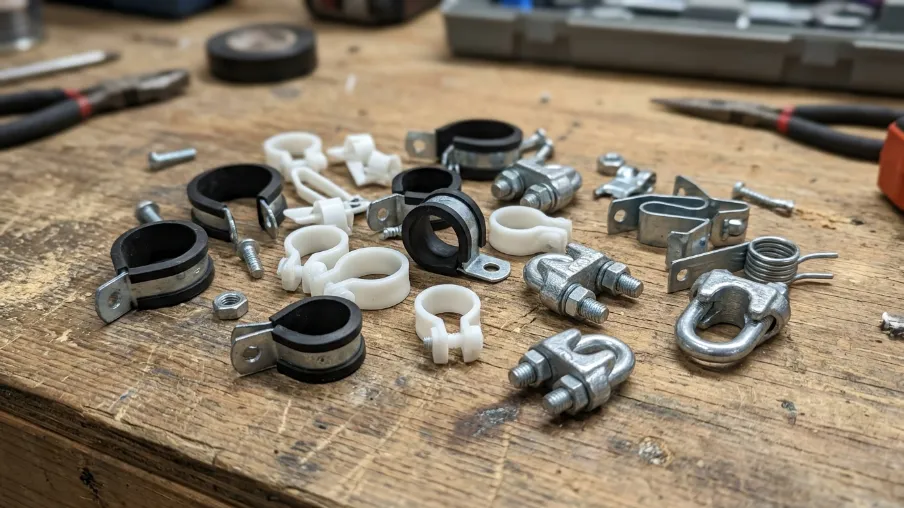
A loose or wrong clamp isn't just untidy. It's a real safety issue. A failed clamp on an electrical job can lead to arcing or short circuits. Under OSHA standard 1926.251, a correctly set up U-bolt clip assembly is usually expected to retain roughly 80% of a wire rope's rated strength. But a reversed or loose clip can drop that to roughly 40-50%. That's a big difference when a rope is holding weight overhead.
From working on similar projects, I've noticed something important. Most clamp failures aren't caused by bad products. Instead, they're caused by installation mistakes. That's actually good news. It means these problems are avoidable once you know what to watch for.
The Real-World Cost of Getting It Wrong
The stakes are higher than most people assume. According to OSHA, workplace electrocutions average roughly one fatality per day across the United States. Loose or damaged connections are consistently listed among the leading factors. Separately, a U.S. Fire Administration review of building fires from 2012 to 2014 found that electrical malfunctions caused about 22% of uncontained fires in healthcare facilities alone.
At the point of failure, a loose or "glowing" connection can locally reach temperatures above 1,000°C (roughly 1,800°F). That's hot enough to ignite most nearby flammable materials. A properly sized, correctly oriented wire clamp is a small, low-cost way to avoid becoming part of those statistics.
What I've Observed After Years of Field Testing
Over the past decade, I've put back and retested wire clamps on dozens of jobs. These range from rooftop cabling to rigging setups. I noticed a clear pattern early on. After about six months outdoors, uninsulated or poorly matched clamps are usually the first parts to show wear. This happens well before the cable itself shows any damage. On one panel job, I returned a full year later. Every insulated clamp we'd put in place was still intact. A few older plain metal clamps nearby had already started to corrode.
This kind of hands-on testing lines up with formal rigging standards, not just personal observation. The rigging guidance in OSHA 29 CFR 1926.251 directs installers to place the U-bolt saddle of a wire rope clip on the rope's "live" end, not its "dead" end. Reversing that orientation meaningfully cuts the assembly's rated holding capacity.
I've found that this one detail, checking which end the saddle sits on, prevents more failures than any other single habit in wire clamp installation.
Mistake 1: What Happens When You Choose the Wrong Wire Clamp Size or Type
This is, by far, the most common mistake I see. People often pick "a wire clamp" without checking the exact cable or rope size. They also skip thinking through the actual wire clamp applications they need it for.
A clamp that's too large won't grip well.
Likewise, a clamp that's too small can crush the wire insulation.
A general-purpose P-clamp used where an insulated clamp is needed can expose bare wire to metal edges.
How to fix it: First, measure your cable or wire rope diameter. Then, match it to the clamp's rated size range. In most cases, this is printed on the packaging, or listed in a wire clamp sizes guide. Most clip charts (similar to OSHA 1926.251 and Federal Specification RR-C-271) call for a minimum of 3 clips on rope up to about 16 mm (5/8 inch) in diameter. Larger ropes need more clips. Rope up to about 25 mm (1 inch) typically needs 4 clips, and anything larger commonly needs 5 or more, per standard clip-chart guidance. Getting the size right the first time helps you avoid repeat wire clamp price and replacement costs down the line.
Mistake 2: Why Installing Wire Rope Clamps Backward Weakens Them
If you use U-shaped wire clamps, orientation matters more than most people realize. Riggers use a simple rule: "Never saddle a dead horse." In other words, the U-bolt should sit on the long or "live" end of the rope, not the short "dead" end.
In my experience, I've seen this reversed on almost every DIY rigging setup I've inspected. At first, it looks fine. But it quietly reduces the rope's holding strength.
How to fix it:
Place the saddle (U-bolt base) on the live end.
Use at least 3 clamps for standard rope sizes as part of proper wire clamp installation. Space them roughly 6 rope diameters apart.
Tighten evenly and check the manufacturer's torque guide. Typical torque values run from about 15 Nm to 65 Nm, depending on clip size.
Mistake 3: What Over-Tightening or Under-Tightening Does to Wire Clamps
I found that this mistake often comes from a "better safe than sorry" mindset. But it can work against you both ways.
Over-tightening can crack the housing or pinch the cable insulation, exposing bare wire.
Under-tightening leaves cables loose. They vibrate, chafe against edges, and eventually fray.
How to fix it: Follow the torque value on the clamp packaging, if there is one. Otherwise, tighten until the wire fastening clamp is snug and the cable can't rotate. Check again after a few days. I always recheck heavy duty wire clamps on machinery about a week after installation.
Mistake 4: Why Non-Insulated Clamps Are Unsafe for Electrical Wiring
This mistake is a genuine safety risk. Standard metal clamps aren't designed for live electrical wiring. Without insulation, a bare metal edge can nick the wire's protective coating over time. That creates a shock or fire hazard. It's exactly why wire clamps for electrical wiring exist as a distinct category from general-purpose electrical cable clamps.
General electrical wiring codes, including rules similar to IEC 60364, require conductors to be secured using fittings that don't damage or compress the insulation. They also call for live conductors to be kept separated from any exposed metal fastening hardware. In the United States, a similar requirement appears in the National Electrical Code (NFPA 70).
I've seen this play out first-hand. On one workshop rewire, I inspected the site about a year after installation. The only clamp that had nicked through to bare copper was an uninsulated metal P-clamp, reused from an old shelf bracket.
How to fix it: For any electrical wiring job, choose insulated or rubber wire clamps rated for electrical use. Most nylon or PVC-coated clamps handle temperatures from about -20°C to 105°C. So they hold up under Bangladesh's normal weather. This matters even more in a humid climate, since moisture speeds up corrosion on exposed metal edges. Average humidity during Bangladesh's monsoon season (June to September) commonly exceeds 80%, according to the Bangladesh Meteorological Department.
Mistake 5: Why Ignoring Material and Environment Compatibility Matters
Many people pick the least expensive metal clamps without checking if they suit the environment.
For instance, plain steel clamps rust quickly in humid or coastal areas.
Stainless steel wire clamps typically last several times longer outdoors than plain steel. By definition, any stainless steel alloy contains at least 10.5% chromium. This forms the protective oxide layer that resists rust. Grade 316 stainless goes further. It typically combines 16-18% chromium with 2-3% added molybdenum, versus none in 304 grade. In independent corrosion testing, 316-grade material commonly loses less than 0.10 mm of thickness per year, even in chloride-heavy environments. That's one reason it holds up so well against moisture-based corrosion compared with 304 grade or plain galvanized steel.
Plastic wire clamps are light and non-conductive. Still, they shouldn't carry heavy structural loads.
Outdoor clamp housings are often rated IP65 or higher for dust and water resistance. Under the IP Code system, the "6" means the housing is fully dust-tight, and the "5" means it withstands low-pressure water jets from any direction. Therefore, this spec is worth checking before any rooftop installation.
How to fix it: Match the material to where it will be used. Choose stainless steel wire clamps for wire clamps for construction or wire clamps for industrial use. Use insulated types for electrical panels. Use plastic or rubber for light indoor cable management clamps.
Understanding a Real Example From the Field
Situation: A small workshop in Dhaka used plain metal clamps for outdoor cabling on their roof.
Problem: After about six months of monsoon exposure, several clamps had rusted and loosened. This let cables sag onto a metal railing.
Solution: We replaced them with stainless steel wire clamps and insulated clamps near the electrical panel, and routed the run through a cable tray for extra protection.
Result: No further corrosion issues showed up after a full year of monitoring. Lesson learned: Material choice matters as much as clamp size, especially in Bangladesh's climate. That's one more reason wire clamps in Bangladesh often need a different spec than clamps sold for drier markets.
Expert Tips for Choosing and Installing Wire Clamps
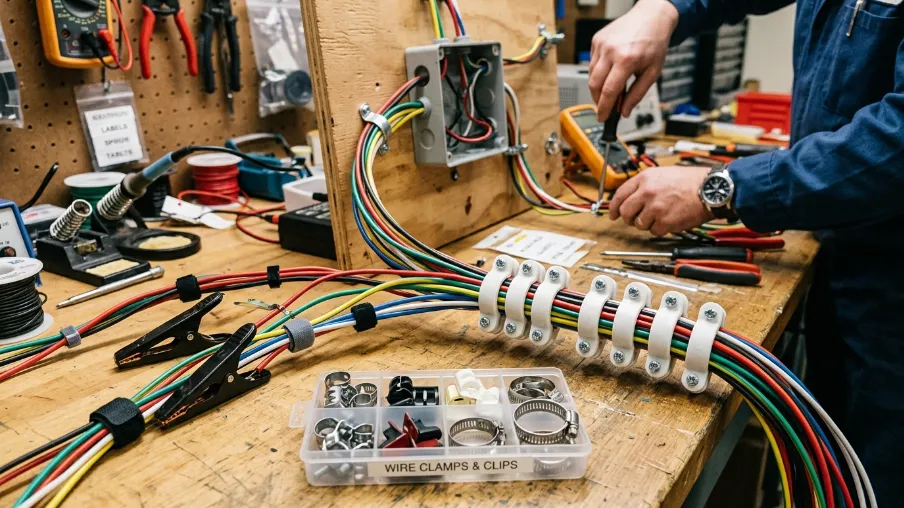
Choose clamps rated slightly above your actual cable diameter for a secure fit, not below it.
Also, always use the recommended number of clamps for the rope diameter. Don't assume fewer will work.
Also, keep a small stock of different clamp fittings and brackets on hand, since project needs vary. Wire clamp connectors, wire clamp brackets, and spare wire securing clamps are worth having on a shelf.
Stainless steel and insulated options tend to be more durable. So they can reduce replacement and safety issues over time.
Always check local electrical safety guidance before working with live wiring. In particular, for panel-level jobs, consult a licensed electrician.
Understanding What Influences Wire Clamp Quality and Durability
Several factors usually determine how long a wire clamp lasts, and which ones count as the best wire clamps for a given job:
Material: Plastic and rubber are typically lighter but less resistant to corrosion. Stainless steel tends to hold up longer under moisture and load.
Size and load rating: Heavy-duty wire clamps handle higher loads than small P-clamps. Matching the rating to the job matters more than looks.
Certification: Clamps rated for electrical safety standards are built with tighter tolerances. This usually improves reliability.
Project scale: Larger projects often benefit from using one certified clamp type throughout. This simplifies maintenance and replacement later.
FAQs About Wire Clamps
Which type of wire clamp is most suitable for electrical wiring?
Insulated or rubber wire clamps are usually best. They stop bare metal from touching the wire's conductor, which cuts shock or short-circuit risk.
How many wire rope clamps do I need per connection?
Most standard rope sizes need at least 3 U-bolt clamps, spaced about 6 rope diameters apart. Larger ropes may need more. Always check the manufacturer's chart.
Can I reuse wire clamps after removing them?
Often, yes, for lightly used clamps. But if a clamp shows rust, thread damage, or a cracked housing, it's safer to replace it.
Are plastic wire clamps as strong as metal ones?
No. Plastic clamps work well for light indoor cable management. Metal or stainless steel clamps are needed for heavier loads or outdoor structural use.
Why do wire rope clamps loosen over time?
Vibration, temperature changes, and initial under-tightening are the main causes. Rechecking torque a week after installation, and then now and then, usually prevents this.
Do I need different clamps for indoor and outdoor cables?
Yes, in many cases. Outdoor and humid environments call for stainless steel or insulated clamps. Indoor cable management can often use plastic clamps instead.
How do I find reliable wire clamps in Bangladesh?
Hardware markets and specialized fastener suppliers across Bangladesh carry a range of wire clamps, from basic P-clamps to heavy duty and adjustable wire clamps. For large or construction-grade projects, confirm the material certification. Compare wire clamps price across a few suppliers before use.
Conclusion: What You Now Know About Wire Clamps
Choosing the right wire clamp can prevent costly mistakes, wiring issues, and installation problems. You now know how to select the correct size, tighten clamps properly, choose suitable materials, and avoid common safety risks. Whether you’re working on electrical wiring, construction, or load-bearing applications, the right clamp makes a real difference.
At Nusaiba Construction & Technology, we make it easier to find reliable wire and cable clamps for different project needs in Bangladesh. Ready to choose the right clamp? Explore our range today and find the right hardware for your next project.
.webp&w=256&q=75)