
Sustainable Construction Practices in Bangladesh: Building a Greener Future
.webp&w=96&q=75)
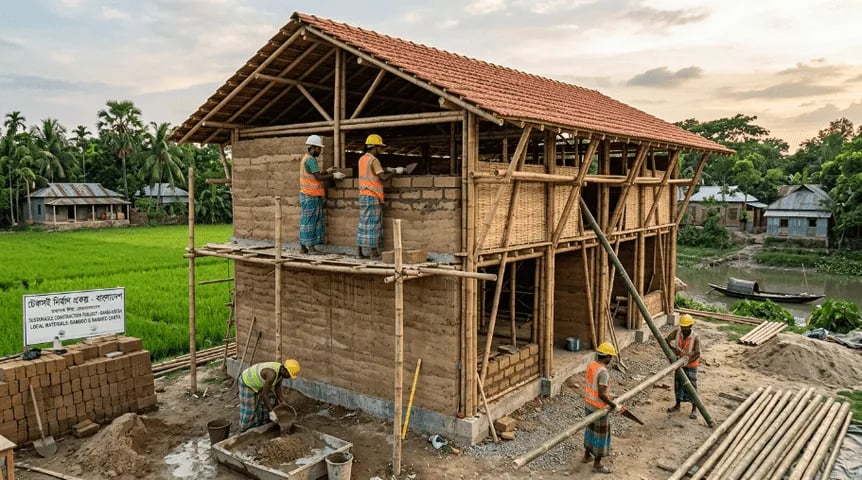
Sustainable construction practices refer to building methods that reduce environmental impact while using energy, water, materials, and land efficiently. These practices include energy-efficient design, sustainable building materials, renewable energy, water conservation, construction-waste reduction, natural ventilation, and climate-resilient construction. In Bangladesh, sustainable construction practices can help buildings respond to flooding, heavy rainfall, extreme heat, air pollution, and rising resource pressures while improving long-term efficiency and durability.
According to the International Energy Agency (IEA), buildings account for about 30% of global final energy consumption, making energy-efficient building design an important part of reducing resource use. Bangladesh has also introduced an Energy Efficiency and Conservation Master Plan that includes building energy-efficiency measures. For construction projects in Bangladesh, sustainability therefore means more than using green materials; it involves designing, constructing, and operating buildings more efficiently throughout their lifecycle.
This guide covers three things. First, what sustainable construction means. Second, why it matters in Bangladesh. Third, how you can apply green building practices, whether you're planning a home, a commercial project, or a renovation.
Written by: Mitu Das, SEO Specialist & Member of the Nusaiba Construction & Technology Leadership Team
Published: August 16, 2026
Key Takeaways
Sustainable construction practices combine eco-friendly materials, energy-efficient design, and waste reduction to lower a building's environmental footprint.
Bangladesh's climate (heavy monsoons, flooding, and extreme heat) makes climate-resilient construction a practical necessity, not just an environmental preference.
Buildings account for about 30% of global final energy consumption, according to the IEA.
World Bank research has identified traditional brick-kiln technologies as an important source of air pollution in Bangladesh.
A 2022 World Bank assessment reported PM2.5 exposure at major construction and traffic locations in Dhaka at 150% above the WHO 24-hour guideline used in the assessment.
Table of Contents
What Are Sustainable Construction Practices?
Why Does Sustainable Construction Matter in Bangladesh?
What Are the Benefits and Challenges?
Which Sustainable Building Materials Are Worth Considering?
Our Practical Approach to Sustainable Construction
What We Learned From Project Monitoring
Common Mistakes to Avoid
Expert Tips for Sustainable Construction in Bangladesh
Future Trends in Sustainable Construction
How We Verify Our Construction Information
Conclusion
FAQs About Sustainable Construction Practices
What are sustainable construction practices?
Sustainable construction practices are building methods that reduce environmental impact while improving the efficient use of energy, water, and materials. They include energy-efficient design, renewable energy, sustainable materials, water conservation, construction-waste reduction, natural ventilation, and climate-resilient building techniques. In Bangladesh, these practices can help buildings respond to flooding, extreme heat, heavy rainfall, and rising resource costs.
Why are sustainable construction practices important in Bangladesh?
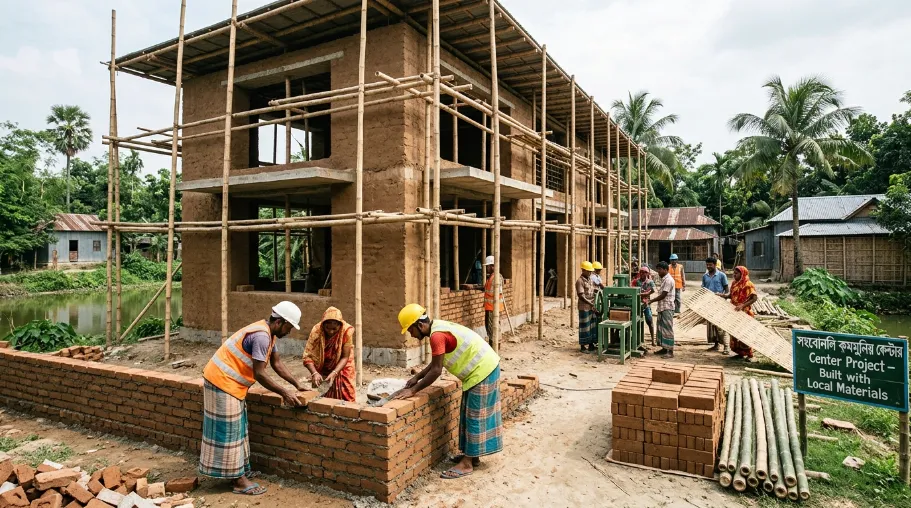
Sustainable construction practices are important in Bangladesh because they can reduce resource consumption, lower operating costs, and improve resilience to climate risks. Bangladesh faces recurring flooding, cyclones, heavy monsoon rainfall, and rising temperatures. According to the IPCC, climate risks can increase pressure on infrastructure and communities, making energy efficiency, water management, drainage, and resilient building design increasingly important.
What are the best sustainable construction practices for buildings?
The best sustainable construction practices for buildings include energy-efficient design, sustainable materials, water conservation, renewable energy, waste reduction, and climate-resilient construction. These measures can reduce energy and water consumption while improving long-term building performance. For Bangladesh, passive cooling, natural ventilation, rainwater management, solar energy, efficient lighting, and locally suitable materials are particularly practical options.
Why Does Sustainable Construction Matter for Bangladesh?
Sustainable construction matters for Bangladesh because buildings must perform under climate, energy, water, and resource pressures. The IPCC identifies South Asia as highly exposed to climate-related hazards, including extreme heat, flooding, and heavy precipitation. Designing for these conditions can improve building resilience while reducing energy and resource consumption over the building's operating life.
The energy side is also measurable. According to the International Energy Agency, buildings account for about 30% of global final energy consumption. Bangladesh's Energy Efficiency and Conservation Master Plan also includes an energy-efficiency building programme linked with the country's building-code framework. These figures show why building orientation, shading, efficient cooling, lighting, ventilation, and energy monitoring should be considered during the design stage.
Bangladesh faces a mix of pressures. Together, they make resource-efficient construction genuinely urgent, not just a nice idea. For example, the government's Eighth Five Year Plan (2020-2025) includes rules for climate-resilient systems and carbon reduction in construction. This shows the shift has policy support, not just market demand.
Climate Vulnerability
Bangladesh is often listed among the countries most exposed to climate change, according to assessments like the IPCC's climate risk reports. This includes flooding, cyclones, and rising temperatures. In fact, Bangladesh submitted an updated Nationally Determined Contribution (NDC) to the UNFCCC in 2021. This outlined climate adaptation priorities, including resilient systems. As a result, buildings without flood or heat protection face higher repair costs over time.
The IPCC's Sixth Assessment Report identifies South Asia as highly exposed to multiple climate hazards, including extreme heat, flooding, and heavy precipitation. For building projects in Bangladesh, this means resilience should be considered at the site and design stages rather than added only after construction. Drainage, elevation, moisture protection, shading, ventilation, and foundation design should be selected according to local site conditions.
Rapid Urban Growth
Dhaka is one of the most densely populated cities in the world, according to World Bank Bangladesh urbanization data. Millions of new residents have arrived over the past two decades. This adds pressure to land, water, and energy systems. Sustainable construction practices help new buildings avoid straining these systems further.
Rising Energy Costs
Energy efficiency is one of the most measurable parts of sustainable construction. The IEA estimates that buildings account for about 30% of global final energy consumption. In Bangladesh, practical measures such as efficient cooling, LED lighting, daylighting, solar shading, natural ventilation, and energy monitoring can help reduce unnecessary electricity use.
Bangladesh's Energy Efficiency and Conservation Master Plan includes an energy-efficiency building programme, showing that building efficiency is also part of the country's broader energy policy framework.
What Are the Benefits and Challenges of Sustainable Construction?
Sustainable construction can provide lower energy and water consumption, reduced construction waste, improved indoor comfort, and stronger climate resilience. However, some sustainable technologies can require higher upfront investment, while skilled labor and local supply chains may be limited. The actual financial return depends on building type, location, materials, energy prices, maintenance requirements, and project design.
Aspect | Benefit | Challenge |
|---|---|---|
Cost | Lower long-term utility and maintenance costs | Higher upfront material or design costs in some cases |
Environment | Reduced carbon footprint and less construction waste | Limited local supply chains for some green materials |
Climate resilience | Better flood and heat resistance | Retrofitting older buildings can be complex |
Health | Improved indoor air quality and natural lighting | Requires skilled labor familiar with green techniques |
Regulation | Growing government support and incentives | Certification processes can be time-consuming |
Which Sustainable Building Materials Are Worth Considering?
Sustainable building materials worth considering in Bangladesh include fly-ash bricks, compressed earth blocks, bamboo, recycled steel, and low-VOC finishes. The right choice depends on structural requirements, availability, durability, cost, and environmental performance. Local sourcing can also reduce transportation requirements. Materials should be evaluated using measurable factors such as recycled content, embodied carbon, service life, and maintenance needs.
If you're ready to compare material options, see our full range of green building materials. There, you can find which ones best fit your budget and project type.
Compressed earth blocks (CEB): made from local soil, cement, and minimal water; strong thermal insulation properties.
Fly-ash bricks: use industrial byproducts instead of clay, reducing kiln emissions.
Bamboo: fast-growing, locally abundant, and increasingly used in both structural and decorative applications.
Recycled steel: reduces the need for new raw material extraction.
Low-VOC paints and finishes: improve indoor air quality without the environmental cost of conventional options.
Our Practical Approach to Sustainable Construction
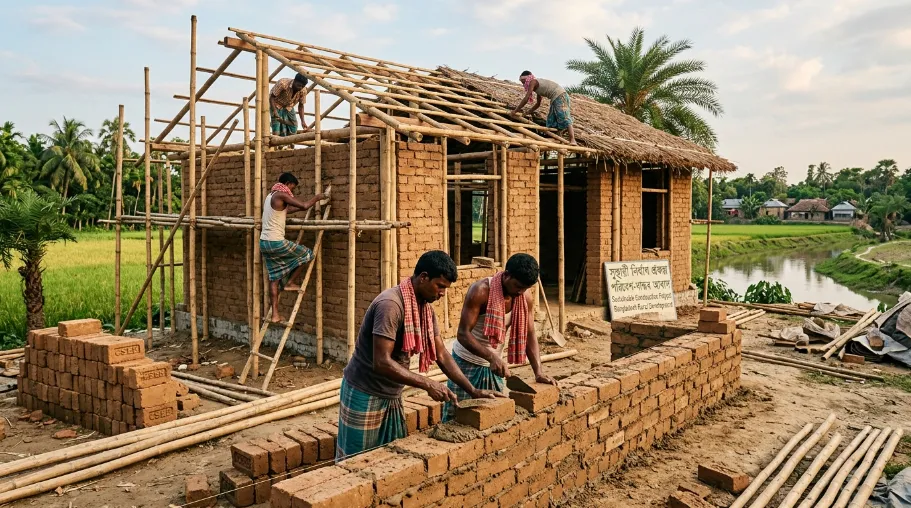
At Nusaiba Construction & Technology, we treat sustainable construction as a practical project decision rather than simply a “green” label. We consider sustainability during the planning stage and compare construction options based on cost, local availability, durability, installation requirements, maintenance, energy use, water use, and long-term performance.
How We Assess Sustainable Construction Options
Before recommending a sustainable construction measure, we generally consider five factors:
1. Initial cost: What will the material or system cost to purchase and install?
2. Local availability: Can suitable materials, equipment, and skilled workers be sourced locally?
3. Durability: How well is the solution expected to perform under Bangladesh's climate and site conditions?
4. Maintenance: What maintenance will be required during the building's operating life?
5. Measurable performance: Can changes in energy, water, material use, or waste be measured after implementation?
We also compare sustainable options with conventional alternatives instead of assuming that a product is environmentally better simply because it is marketed as “green.”
For example, when evaluating a material, we consider its sourcing, manufacturing process, transportation distance, expected service life, maintenance requirements, and end-of-life options. This helps us make sustainability decisions based on practical project requirements rather than marketing claims.
What We Learned From Project Monitoring
At Nusaiba Construction & Technology, we consider sustainability part of practical project management. During construction, relevant project teams can monitor material quantities, water consumption, construction waste, storage practices, and site-level resource use.
One practical lesson we have learned is that sustainability does not always require expensive technology. Better quantity estimation, proper material storage, efficient cutting plans, reuse of suitable materials, natural ventilation, and improved site planning can also reduce avoidable resource use.
We therefore prefer measurable project information over unsupported claims. Where project data is available, performance can be assessed using utility bills, meter readings, material records, invoices, waste records, and maintenance information.
We do not present estimated savings as measured project results. This distinction is important because actual performance can vary according to building type, occupancy, weather, equipment, construction quality, and operating practices.
Future Trends in Sustainable Construction
Green building certification is growing in Bangladesh as part of broader sustainable development in construction. This includes local versions inspired by LEED. The U.S. Green Building Council launched LEED in 1998.
Now, more developers in Dhaka and Chattogram are adopting it, alongside alternatives like IFC's EDGE certification for emerging markets. Meanwhile, prefabricated and modular construction is also on the rise as one of the most practical sustainable construction solutions available today.
It reduces on-site waste and shortens build times. Both support sustainability goals championed by networks like C40 Cities. In addition, climate-resilient design is becoming more common. This includes flood-adapted foundations and elevated ground floors, especially in flood-prone districts.
Common Mistakes to Avoid
Treating sustainability as an afterthought instead of part of the initial design.
Choosing materials based on cost alone without checking durability or local climate suitability.
Skipping proper waste management planning, which leads to unnecessary landfill contribution.
Ignoring passive cooling design and relying entirely on artificial systems.
Underestimating the value of working with architects who understand climate-resilient construction.
Expert Tips for Sustainable Construction in Bangladesh
Start during design: Consider orientation, shading, ventilation, drainage, water management, and material selection before construction begins.
Compare total cost: Do not judge a sustainable option only by its purchase price. Consider installation, energy use, maintenance, durability, and replacement costs.
Verify material claims: Ask suppliers for product specifications, manufacturing information, recycled-content details, expected service life, and supporting environmental documentation where available.
Consider local conditions: Select materials and systems according to Bangladesh's heat, humidity, rainfall, flooding risk, soil conditions, and local availability.
Measure performance: Where possible, record electricity, water, material, and waste data before and after implementing a sustainability measure.
Avoid one-size-fits-all solutions: A strategy suitable for a flood-prone site may not be necessary or appropriate for every building.
How We Verify Our Construction Information
At Nusaiba Construction & Technology, we distinguish between verified project information, professional recommendations, and illustrative examples.
When reporting measured project performance, we prefer supporting records such as utility bills, meter readings, material records, invoices, waste records, and maintenance documentation. If verified project data is unavailable, we clearly identify figures as examples or estimates rather than presenting them as actual results.
For technical, regulatory, energy, climate, and building-related information, we prioritize recognized sources such as government agencies, international organizations, technical standards, and documented industry research.
This approach helps us provide construction information that is practical, transparent, and relevant to Bangladesh.
Conclusion
Sustainable construction is more than a trend. It’s a smarter way to build in Bangladesh. From flood resilience and heat reduction to lower energy, water, and maintenance costs, the right decisions start at the design stage.
Whether you’re building a home, commercial space, or large development, Nusaiba Construction & Technology provides practical solutions through sustainable design, construction management, material planning, and water-efficient construction.
Build smarter today. Build stronger for tomorrow.
FAQs About Sustainable Construction Practices in Bangladesh
What are sustainable construction practices?
Sustainable construction practices are building methods that reduce environmental impact while using energy, water, materials, and land efficiently. They include energy-efficient design, sustainable materials, renewable energy, water conservation, waste reduction, natural ventilation, and climate-resilient construction.
Why are sustainable construction practices important in Bangladesh?
Sustainable construction practices are important in Bangladesh because buildings face challenges such as heavy rainfall, flooding, extreme heat, rising energy demand, and resource pressure. Energy-efficient design, proper drainage, water management, durable materials, and climate-responsive construction can improve building performance and resilience.
How can sustainable construction reduce building costs?
Sustainable construction can reduce long-term building costs by improving energy and water efficiency, reducing material waste, and lowering maintenance requirements. However, some solutions may require higher upfront investment, so total lifecycle cost should be compared rather than focusing only on the initial purchase price.
How does sustainable construction help with flooding in Bangladesh?
Sustainable construction can reduce flood-related risks through elevated floors, suitable foundations, effective drainage, permeable surfaces, rainwater management, and moisture-resistant materials. The right approach depends on local flood risk, soil conditions, drainage capacity, and site characteristics.
Are sustainable building materials more expensive in Bangladesh?
Not always. The cost of sustainable building materials depends on availability, transportation, quality, installation, durability, and project scale. Some materials may cost more initially but provide lower maintenance or operating costs over their service life. Material choices should therefore be evaluated based on both upfront and lifecycle costs.
Can existing buildings become more sustainable?
Yes. Existing buildings can become more sustainable through upgrades such as efficient lighting, improved ventilation, efficient cooling systems, water-saving fixtures, solar energy, insulation, and better shading. A building-performance assessment can help identify which improvements provide the greatest value for the available budget.
Is LEED certification available for buildings in Bangladesh?
Yes. Buildings in Bangladesh can pursue LEED certification through the U.S. Green Building Council's certification system. LEED evaluates areas including energy efficiency, water efficiency, materials, indoor environmental quality, and sustainable site development. Certification requirements vary by project type and rating system.
What is the difference between green construction and sustainable construction?
Green construction mainly focuses on reducing a building's environmental impact through energy efficiency, water conservation, sustainable materials, and waste reduction. Sustainable construction takes a broader lifecycle approach that also considers durability, economic performance, resource efficiency, social factors, and climate resilience.
.webp&w=256&q=75)