
Exploring the 30 Types of Construction Vehicles: Your Ultimate Guide
.webp&w=96&q=75)
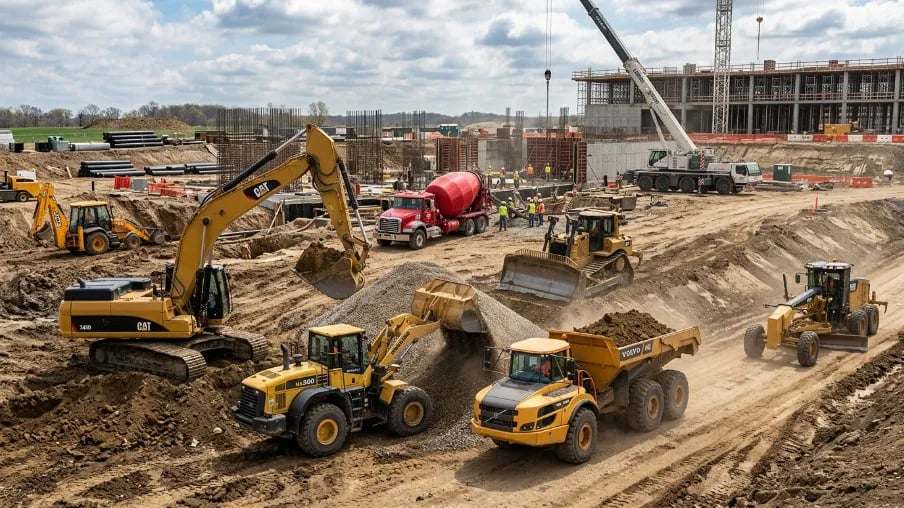
Types of construction vehicles refers to the different machines used to complete specific construction tasks, including digging, lifting, transporting, grading, paving, and compacting materials. Common types of construction vehicles include excavators, bulldozzers, backhoe loaders, wheel loaders, dump trucks, cranes, motor graders, rollers, forklifts, and concrete mixers.
Every successful construction project depends on using the right construction vehicles for the job. From excavators digging foundations to cranes lifting heavy materials and dump trucks transporting soil, each machine plays a vital role in safety, productivity, and project quality.
After working with Nusaiba Construction & Technology and observing equipment on active construction sites, I've seen how proper equipment selection reduces delays and operating costs.
In this guide, I'll explain 30 types of construction vehicles, their functions, common applications, and key differences. For additional industry guidance, explore the Occupational Safety and Health Administration (OSHA) and the Association of Equipment Manufacturers (AEM).
Key Takeaways
Types of construction vehicles fall into five main categories: earthmoving, hauling, lifting, road construction and compaction, and specialized equipment.
This guide covers 30 construction vehicles, including excavators, bulldozers, dump trucks, cranes, forklifts, rollers, and concrete pump trucks, with their uses and applications.
Choosing the right construction vehicle improves productivity, reduces operating costs, enhances safety, and helps keep projects on schedule.
Project size, ground conditions, available space, and timeline are the most important factors when selecting construction equipment.
This guide is based on real construction site experience from the Nusaiba Construction & Technology team, supported by contractor insights and industry research.
What Are the Types of Construction Vehicles
Construction vehicles fall into five main types: earthmoving vehicles (excavators, bulldozers, loaders), hauling and transport trucks (dump trucks, mixer trucks), lifting and material handling vehicles (cranes, forklifts), road and compaction vehicles (rollers, pavers), and specialized vehicles (pile drivers, concrete pumps). Below, I break down all 30 individual machines inside these five groups, with what each one does and where it's used.
Why Does Knowing Construction Vehicle Types Actually Matter?
Knowing the types of construction vehicles matters because the right machine can save time, reduce costs, and improve site safety. Choosing the wrong equipment can delay work and increase project expenses.
The global construction equipment market continues to grow due to urban development and major infrastructure projects. Earthmoving machines like excavators, bulldozers, loaders, and graders play a key role in modern construction.
Understanding vehicles used in construction helps contractors:
Select the right equipment for each task
Create accurate project budgets
Improve workplace safety
Make better rental or purchase decisions
For projects in Bangladesh, factors like soil condition, site space, and project size influence equipment selection. Industry resources such as Construction Equipment Guide also highlight the importance of choosing suitable machinery for efficient construction work.
Why You Can Trust This Guide on Types of Construction Vehicles
This guide on types of construction vehicles is prepared and reviewed by the Nusaiba construction management team, based on real project experience, contractor feedback, and industry data.
We evaluate equipment performance from actual Bangladesh job sites, supported by trusted sources like Caterpillar Construction Equipment and industry research. Our goal is to provide practical, accurate information to help you understand which construction vehicles are used for different tasks.
1. Earthmoving Vehicles: The Foundation of Every Site
Types of construction vehicles begin with earthmoving machines that prepare land, excavate soil, and move materials before major construction work starts. Contractors choose these machines based on project size, soil conditions, working space, and required performance.
Excavator: A versatile machine used for digging trenches, foundations, demolition work, and material handling. Mini excavators suit small projects, while larger excavators handle heavy-duty construction tasks.
Bulldozer: Designed for clearing land, pushing soil, and leveling rough terrain. It is widely used in road construction and large site preparation.
Backhoe Loader: A flexible machine that combines a front loader and rear excavator, making it useful for utility work, small roads, and urban projects.
Wheel Loader: Uses a large front bucket to load and transport materials such as sand, gravel, and construction debris.
Skid Steer Loader: A compact machine built for tight spaces, commonly used in residential construction and smaller job sites.
Motor Grader: Provides accurate grading and surface leveling for roads, foundations, and large construction areas.
Trencher: Creates narrow trenches for underground cables, pipelines, and drainage systems.
Scraper: Moves large amounts of soil by cutting, collecting, transporting, and spreading material on major projects.
Construction professionals consider machine capacity, operating conditions, safety requirements, and maintenance costs before selecting equipment. Resources from Occupational Safety and Health Administration (OSHA) highlight the importance of safe equipment operation and proper workplace practices.
2. Hauling and Transport Trucks: Moving Material In and Out
Construction projects depend on reliable trucks to move materials, remove waste, and transport heavy equipment. These hauling machines are essential types of construction vehicles that improve workflow, reduce manual labor, and keep job sites running smoothly.
Dump Truck: Carries dirt, sand, gravel, and debris, then unloads materials with a hydraulic lifting bed.
Articulated Dump Truck: Uses a pivot joint design to handle muddy, rocky, and uneven terrain efficiently.
Concrete Mixer Truck: Keeps concrete fresh and properly mixed while transporting it to the pouring location.
Water Tanker Truck: Sprays water to control dust and support soil compaction on construction sites.
Flatbed Truck: Moves steel, timber, machinery, and large construction materials on an open platform.
Lowboy Trailer Truck: Transports heavy machines like excavators and bulldozers with easier loading due to its low deck height.
Safe operation and proper vehicle selection are important for efficient construction work. Industry guidelines from U.S. Occupational Safety and Health Administration (OSHA) Construction Safety highlight the importance of equipment safety on construction sites.
3. Lifting and Material Handling Vehicles
Construction sites rely on specialized lifting equipment to move heavy materials, reach higher areas, and improve workplace safety. These machines are important parts of types of construction vehicles used in modern projects, from buildings to large infrastructure work.
Tower Crane: A fixed crane that lifts steel, concrete, and materials to extreme heights, especially on high-rise projects.
Mobile Crane: A wheel-mounted crane that can move around the site and handle short-term lifting tasks.
Crawler Crane: A track-based crane that provides stability for heavy lifting on soft or uneven surfaces.
Forklift: A compact vehicle used to move pallets, bricks, and construction supplies efficiently.
Telehandler: A forklift with an extendable arm that lifts materials to higher floors and hard-to-reach areas.
Boom Lift: A machine that raises workers safely for tasks on buildings, bridges, and elevated structures.
Scissor Lift: A platform lift that moves vertically and is commonly used for indoor installation work.
Choosing the right lifting vehicle improves productivity, reduces risks, and helps construction teams complete projects more efficiently. Safety guidelines from National Institute for Occupational Safety and Health (NIOSH) highlight the importance of proper equipment use and workplace safety practices.
4. Road Construction and Compaction Vehicles
Types of construction vehicles used for road projects include specialized machines that prepare, level, and strengthen surfaces. These road making vehicles improve durability, safety, and pavement quality through compaction and asphalt handling.
Road Roller (Compactor): A heavy machine that compresses soil, gravel, and asphalt to create a stable road surface. Learn more about road construction equipment from Federal Highway Administration (FHWA).
Asphalt Paver: This machine spreads and levels hot asphalt evenly on roads, highways, and parking areas using a hopper and screed system.
Plate Compactor: A compact machine used for small areas, trench filling, and tight spaces where large rollers cannot operate.
Milling Machine (Cold Planer): It removes old asphalt layers before resurfacing, creating a smooth base for new pavement.
These vehicles play a key role in building strong, long-lasting roads and are essential in modern construction projects.
5. Specialized Construction Vehicles
Some jobs need a machine built for one specific task.
Pile Driver: A pile driver hammers or vibrates long steel or concrete piles into the ground. This creates a strong foundation for bridges, towers, and heavy structures.
Concrete Pump Truck: This truck pumps liquid concrete through a long boom or hose, reaching areas a mixer truck alone can't access, like upper floors of a building.
Dragline Excavator: Used mostly in mining and large-scale earthmoving, a dragline pulls a bucket across the ground using cables. It moves huge volumes of material at once.
Bucket Truck (Cherry Picker): This truck lifts a worker in a bucket attached to a hydraulic arm. It's common for utility work, tree trimming near sites, and electrical installs.
Mini Excavator: A smaller version of the standard excavator, built for tight spaces like backyards or narrow city lots. It's gentle on the ground but still powerful enough to dig efficiently.
Construction Vehicles List by Category
Category | Examples |
|---|---|
Earthmoving | Excavator, bulldozer, backhoe loader, wheel loader, skid steer, grader, trencher, scraper |
Hauling | Dump truck, articulated dump truck, mixer truck, water tanker, flatbed, lowboy |
Lifting | Tower crane, mobile crane, crawler crane, forklift, telehandler, boom lift, scissor lift |
Road & Compaction | Road roller, asphalt paver, plate compactor, milling machine |
Specialized | Pile driver, concrete pump truck, dragline excavator, bucket truck, mini excavator |
This table gives you a fast construction vehicles and names cheat sheet you can save or share with your team.
How to Choose the Right Construction Vehicle for Your Project
I always tell clients: match the machine to the site, not the other way around. Ask yourself these questions first.
What's the ground like? Soft, muddy soil needs tracked machines. Firm ground allows wheeled ones.
How much space do you have? Tight urban lots need compact vehicles like mini excavators or skid steers.
What's the scale of the job? A backyard project doesn't need a crawler crane. A high-rise does.
What's your timeline? Renting the wrong equipment often costs more in delays than in fees.
If this feels overwhelming, that's normal. Most people outside the industry aren't expected to know this. That's exactly why proper construction management matters. Someone experienced should be matching the equipment to your project from day one.
A Note on Accuracy
The equipment names, capabilities, and use cases in this guide reflect current industry standards and terminology used by manufacturers and construction professionals, cross-checked against our own field experience managing project sites. Market figures referenced above are drawn from published construction equipment industry research. If you ever spot outdated information here, tell us. We review and update this guide regularly.
Final Thoughts
Construction vehicles aren't just big, loud machines. Each one has a job, a purpose, and a right time to be used. Knowing these types of construction vehicles helps you plan smarter, talk to contractors with confidence, and avoid costly mistakes.
I've shared what our team sees and manages on real sites, not just a textbook list. If you're planning a build and want the right vehicles, the right crew, and the right plan from day one, I'd love to help. Our team at Nusaiba handles full construction management, from choosing equipment to running the site safely and on schedule.
Talk to our construction management team today and let's plan your project the right way.
Frequently Asked Questions About Types of Construction Vehicles
What are the main types of construction vehicles?
The main types of construction vehicles are earthmoving machines, hauling vehicles, lifting equipment, road construction machines, and specialized vehicles. Popular examples include excavators, bulldozers, dump trucks, cranes, rollers, pavers, pile drivers, and concrete pumps. Each vehicle is designed for specific tasks like digging, transporting materials, lifting loads, or building roads.
What is the most commonly used construction vehicle?
The excavator is the most commonly used construction vehicle because it can perform many essential tasks on different job sites. It is used for digging foundations, trenching, demolition, material handling, and earthmoving. Its flexible arm and bucket make it suitable for residential, commercial, and large-scale construction projects.
What is the difference between a bulldozer and an excavator?
A bulldozer and an excavator perform different construction tasks. A bulldozer uses a large front blade to push, clear, and level soil or debris. An excavator uses a hydraulic arm and bucket to dig, lift, and move materials. Excavators are better for precise digging, while bulldozers are ideal for land clearing.
Which construction vehicles are best for small residential projects?
The best construction vehicles for small residential projects are mini excavators, skid steer loaders, and backhoe loaders. These machines are compact, easy to control, and suitable for limited spaces. They can handle tasks like digging foundations, landscaping, trenching, and moving materials without requiring large construction areas.
How do I choose the right construction vehicle?
Choose the right construction vehicle by considering your project size, work type, site conditions, available space, and budget. Excavators are ideal for digging, loaders for material movement, and cranes for lifting heavy loads. A professional construction team can help evaluate your needs and recommend suitable equipment.
.webp&w=256&q=75)