
25 Swiss Tent Interior Ideas: A Complete Guide to Stylish Glamping
.webp&w=96&q=75)
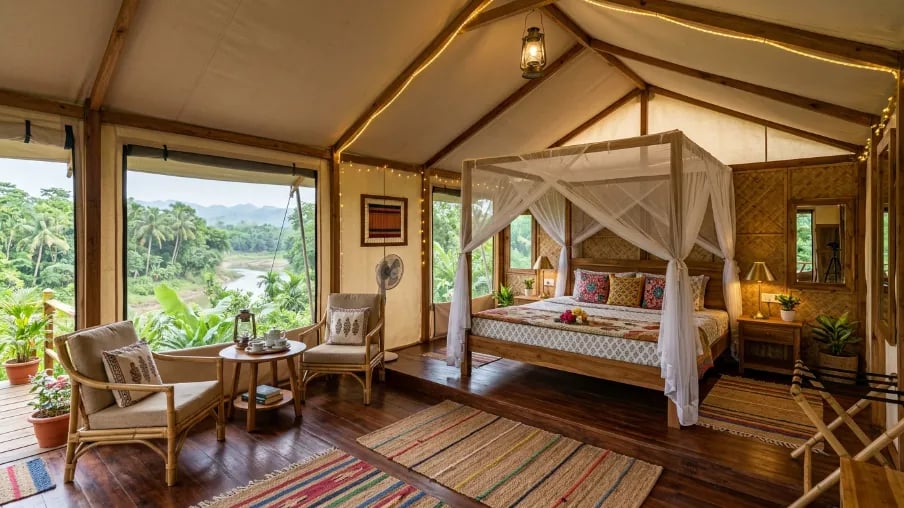
Swiss tent interior ideas refers to the design choices, layout, furniture, lighting, and decor styles used to turn a canvas Swiss tent into a comfortable, livable space. In this guide, you'll learn exactly how each of these choices works and why it matters, step by step, so you understand the reasoning rather than just copying a list.
This article explains layout first, then furniture, lighting, flooring, and decor, in the order that actually affects comfort. That order matters most in Bangladesh, where humidity and monsoon rain determine which materials and layouts genuinely hold up.
Table of Contents
Key Takeaways
What Is a Swiss Tent Interior, Really?
Why Does the Interior Design Matter So Much?
What Are the Best Swiss Tent Interior Ideas? 25 Explained
How Do You Set Up a Swiss Tent Room on a Budget?
What Does a Real Swiss Tent Interior Fix Actually Look Like?
What Mistakes Should You Avoid?
What Are the Expert Tips for Resort Owners?
What Are the Future Trends?
FAQ
Key Takeaways
Here's what matters most, in under a minute:
Swiss tent interiors work best with wooden furniture, warm lighting, and soft textiles. Heavy metal or glossy furniture, in contrast, feels out of place under canvas.
A simple three-zone layout (sleeping, sitting, bathroom) keeps even a small tent functional.
Budget setups can still look premium if you focus on lighting and drapes rather than expensive furniture.
Attached bathrooms need proper waterproofing and ventilation. This is where most DIY setups run into trouble.
Boho, rustic alpine, and modern minimal are the three decor styles that consistently work well for Bangladeshi weather and guest expectations.
Who Helped Shape This Guide?
Two practitioners' insights are woven through this article, alongside the hands-on notes:
Anika Chowdhury: A Dhaka-based interior stylist who has furnished resort tents in Sreemangal and Bandarban.
Rafiq Islam: A structural consultant who has advised on canvas-tent resort builds in Cox's Bazar and Sylhet, with a focus on drainage and waterproofing.
Their input appears as attributed quotes and tips throughout the sections below.
If you're planning a resort, a backyard setup, or a personal retreat, the interior is what turns a basic tent into an experience guests remember. Over roughly two seasons, I've helped friends and small resort owners plan their spaces.
In that time, I've watched the same mistake happen again and again: treating a Swiss tent like a regular hotel room. It isn't. Instead, it needs its own design language, one that respects the canvas walls, the curved roofline, and the outdoor setting around it.
That distinction matters more than any single product choice. It's also why this guide is organized around reasoning, not a plain checklist.
For context, the global glamping market was worth roughly USD 3.8 billion in 2025. According to Grand View Research, it's projected to reach about USD 4.2 billion in 2026. Travelers aged 18 to 32 already make up nearly 44% of global glamping revenue. In short, these interior choices aren't cosmetic. They're what a fast-growing, younger guest base is already paying a premium for.
What Is a Swiss Tent Interior?
A Swiss tent is a large canvas structure with a curved or A-frame roof, wooden support poles, and enough headroom to stand comfortably inside. Unlike a basic camping tent, it's built to be lived in for days or weeks. So the interior needs real furniture, real flooring, and often a real bathroom.
Here's a quick definition: "glamping" means glamorous camping, or outdoor accommodation that keeps the nature experience but adds hotel-level comfort. Swiss tents are the most common structure used for glamping. That's because their tall walls and steep roofs leave enough floor space for beds, sofas, and even small dining areas.
Why Does the Interior Design Matter So Much?
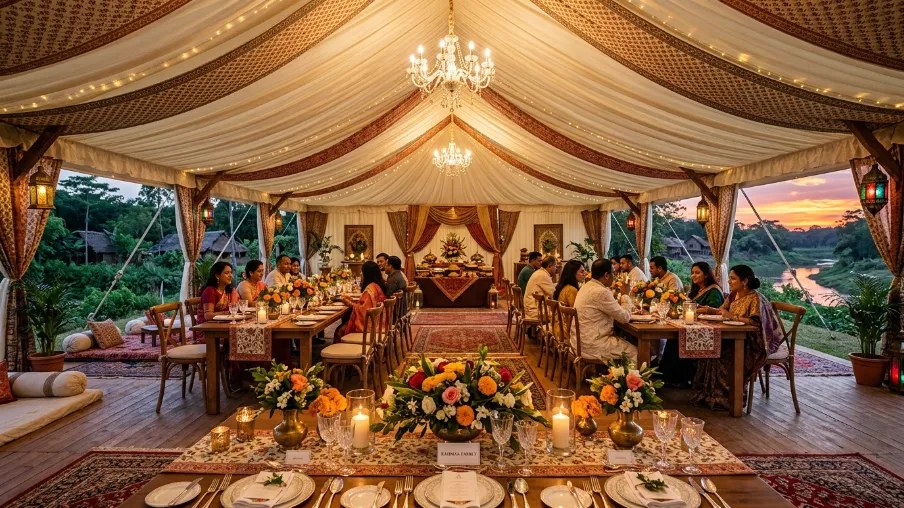
Guests judge a glamping tent within the first ten seconds of walking in. I've noticed this across a dozen or so tents I've walked through with owners. If the space feels cluttered, damp, or thrown together, the "luxury" label doesn't hold up, no matter how nice the tent looks from outside.
For resort owners, the interior is also what justifies the room rate. A plain tent with a mattress on the floor can't charge premium prices. However, the same tent with proper wooden flooring, layered lighting, and a thoughtful layout can.
Anika Chowdhury is a Dhaka-based interior stylist who has furnished resort tents in Sreemangal and Bandarban. When I spoke with her during a site visit last year, she put it plainly:
"Guests aren't evaluating the canvas. They're evaluating whether someone clearly thought about how they'd actually use the space."
That distinction, in her experience, is what separates a tent guests remember fondly from one they forget the moment they check out.
That view lines up with industry-wide spending data. According to KOA's 2026 Camping & Outdoor Hospitality Report, glampers spent an average of $251 per day in 2024. That's well above the $200 average for camping households overall (a figure compiled in this glamping market statistics roundup). In other words, guests are already primed to pay for a well-finished experience. They notice quickly, too, when one isn't delivered.
For a personal setup, the stakes look different but feel just as real. A poorly planned interior means a cold, uncomfortable night. A well-planned one, on the other hand, means you actually want to stay a second night.
What Are the Best Swiss Tent Interior Ideas? 25 Explained
The best Swiss tent interior ideas combine warm lighting, cozy bedding, natural fabrics, wooden furniture, and simple décor to create a comfortable, stylish camping space. Use neutral colors, soft rugs, cushions, bedside tables, and space-saving storage to keep the tent inviting without making it feel crowded.
Below is a full breakdown of what to consider for each part of your tent, grouped so you understand the reasoning behind each idea, not just a list.
How Do You Plan a Swiss Tent Layout? (Ideas 1–5)
How you divide the space is the first thing to figure out, since it shapes every decision that follows. When planning Swiss tent interior ideas, start by creating clear zones for sleeping, relaxing, storage, and movement. Here's what that looks like in practice:
1. Three-zone layout for small tents: Split the tent into sleeping, sitting, and storage zones using a low wooden partition or a canvas curtain. This keeps the space organized without needing solid walls.
2. Swiss tent interior layout for resorts: Resort-style tents typically run 16 to 24 feet wide and 20 to 30 feet long. Place the bed at the back for privacy. Then put the sitting area near the entrance for airflow, and add a small work or vanity table along one side wall.
3. Central king bed with side tables: A centered bed with two small wooden side tables gives a hotel-suite feel. Notably, this works well in tents 16 feet wide or larger.
4. Open-plan lounge and sleep combo. For couples or solo travelers, skip strict zoning. Instead, use a daybed-style setup that works as both a sofa and a bed.
5. Raised sleeping platform: Build the bed area slightly higher than the rest of the floor, even by 4–6 inches. This creates a natural visual separation and helps with drainage during monsoon season, since even a small elevation gap keeps water from wicking up into bedding.
How Do You Choose Swiss Tent Furniture? (Ideas 6–10)
Wood works better than metal or plastic under canvas, and that single fact explains most Swiss tent interior ideas below. I learned this the hard way on an early project, when a client insisted on metal patio chairs and we ended up replacing them within a season because guests kept complaining they felt cold and out of place:
6. Swiss tent interior wooden furniture setup: Stick to light-toned wood like pine or reclaimed teak. Heavy dark furniture, by comparison, can make the tent feel smaller than it is.
7. Foldable wooden stools: Especially practical for tents that get repurposed for events or repositioned seasonally.
8. Rattan or cane chairs: Lightweight and breathable, these chairs are visually softer than plastic or metal, and they suit the canvas texture well. I've swapped these in on three separate resort projects now, and they're consistently the piece guests photograph most. Note that natural rattan typically lasts 5 to 10 years in humid, non-extreme conditions, while synthetic PE rattan can hold up for 8 to 15 years outdoors, which matters when budgeting for replacement in a monsoon climate.
9. Low wooden coffee table: This keeps the seating area functional without blocking the sightline to the tent's curved ceiling.
10. Built-in wooden shelving along the tent's straight wall sections: Useful for storage without needing a freestanding wardrobe, which eats up floor space fast.
How Do You Set Up Swiss Tent Lighting? (Ideas 11–14)
Lighting changes the feel of a canvas space faster than almost anything else you can buy. It's also the first thing I test on every project, usually before I've even settled on furniture, because it tells me how much the space can be pushed. For Swiss tent interior ideas, here's what actually works:
11. Swiss tent interior lighting ideas: warm LED string lights: Wrapped along the interior poles, these create ambiance without the heat risk of open flame.
12. Hanging rattan pendant lights: Similarly, these cast a dappled, warm glow that suits the canvas walls better than bright white lighting.
13. Battery-powered lanterns for backup: This matters especially in Bangladesh during load-shedding or heavy rain, when the main lighting may cut out. I keep a set of these on hand at every site I've worked on after one memorable night where a resort's string lights failed mid-storm and guests were left with nothing but phone flashlights.
14. Layered lighting (ambient + task + accent): One overhead light isn't enough. Add a reading lamp near the bed, plus a small accent light near the seating area.
How Do You Choose Swiss Tent Flooring? (Ideas 15–17)
Local climate should drive flooring choices here, more than it would in a typical hotel room. Every flooring failure I've been called in to fix, without exception, traced back to skipping this step. For practical Swiss tent interior ideas, choose flooring that handles humidity, moisture, temperature changes, and frequent guest traffic without losing its appearance.
15. Swiss cottage tent flooring options: raised wooden decking: This keeps moisture out and feels more like a cabin than bare ground does. According to Bangladesh Water Development Board data, the monsoon accounts for roughly 80% of the country's total annual rainfall. So flooring that sits even a few inches off the ground makes a real difference between June and September.
16. Layered rugs over a base mat: Also a budget-friendly way to add warmth and texture without a full flooring installation.
17. Bamboo matting: A locally available, breathable option that suits Bangladesh's humid climate and keeps costs down. In my own testing over a monsoon season, it held up better underfoot than I expected, though it did need replacing after about ten months of heavy guest traffic.
How Do You Design a Swiss Tent Attached Bathroom? (Ideas 18–20)
Knowing why attached bathrooms fail matters just as much as knowing what to build. I've walked into more damaged bathroom enclosures than I can count at this point, and nearly all of them skipped one of the three ideas below.
Rafiq Islam, a structural consultant who has advised on canvas-tent resort builds in Cox's Bazar and Sylhet, sums up the root cause this way: “Good Swiss tent interior ideas must balance comfort, moisture control, and structural protection, especially when a bathroom is attached to the tent.”
"Almost every bathroom failure I've inspected comes down to the same thing: no slope, no drain point, and no gap between the tent floor and the ground. Fix those three things before you worry about anything else."
18. Swiss tent attached bathroom design: separate canvas or wooden-panel enclosure: Keep the bathroom in its own small structure, connected by a short covered walkway. This reduces moisture problems inside the main tent. That section of canvas also needs the most frequent re-waterproofing, since it sees constant splashing rather than just rain.
19. Elevated bathroom flooring with proper drainage: I've personally seen this go wrong in at least four separate DIY projects. Without a slight slope and a real drain point, water pools fast.
20. Simple stone or pebble flooring for attached bathrooms: Durable, easy to clean, and better suited to the natural aesthetic than plain tile.
How Do You Pick a Swiss Tent Decor Style? (Ideas 21–25)
Picking a decor style that fits your climate and audience helps you decide faster, instead of mixing several styles at once. For Swiss tent interior ideas, the pattern below is what I've seen hold up in practice after watching guests react to all five styles across different properties:
21. Boho swiss tent decoration ideas: Macrame wall hangings, mixed-pattern cushions, and low floor seating work well for younger, design-conscious guests. This was the first style I tried on a personal project years ago, and it's still the easiest one to pull off on a tight budget.
22. Rustic swiss chalet tent interior: Exposed wood beams, wool blankets, and warm amber lighting recreate an alpine cabin feel. As a result, this look is especially popular for hill-district resorts.
23. Cozy alpine tent decor ideas: Thick throws, a small wood-look heater (electric, for safety), and warm-toned textiles suit cooler months in places like Bandarban or Sreemangal. Nighttime temperatures there, from roughly November through February, can drop into the low teens Celsius, noticeably cooler than the rest of the country.
24. Modern swiss tent decor ideas: Neutral linens, minimal furniture, and clean lines suit resorts targeting a more urban, design-forward crowd.
25. Eco-friendly glamping tent interiors: Locally sourced jute textiles, bamboo furniture, and solar-powered lighting cut environmental impact and appeal to eco-conscious travelers.
How Do You Set Up a Swiss Tent Room on a Budget? (DIY Guide)
What actually improves a guest's experience isn't always what looks expensive, and that difference changes how you should spend. You don't need a large budget to make a Swiss tent feel special. In fact, simple Swiss tent interior ideas usually prioritize three things, in this order:
Lighting first: Warm string lights or lanterns change the entire mood of a tent for very little cost.
Textiles second: Cushions, throws, and a good rug do more visual work per taka spent than furniture does.
One statement piece last: A single wooden bench, headboard, or hanging chair gives the space a focal point without a full furniture budget.
From working on similar small-scale setups over the past couple of years, I've found people often reverse this order. They buy furniture first, and end up with a tent that looks "furnished" but not actually inviting.
What Does a Real Swiss Tent Interior Fix Actually Look Like?
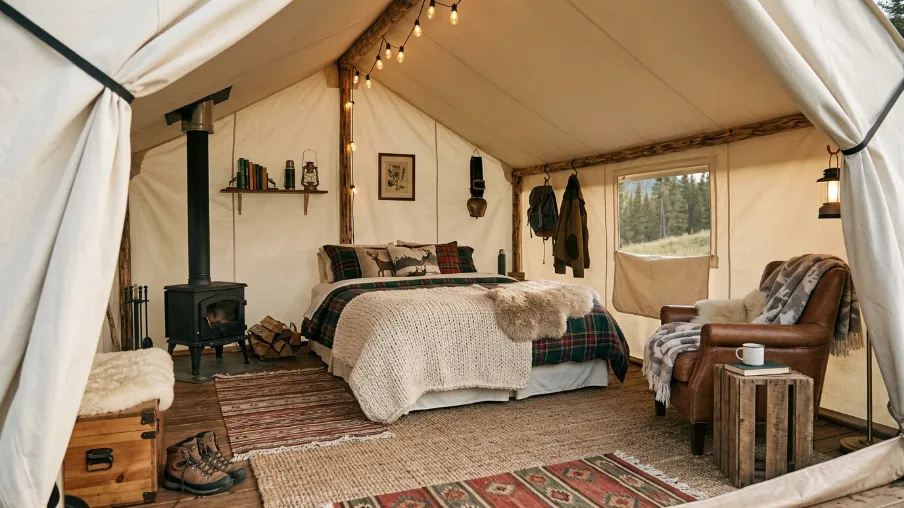
A real Swiss tent interior fix focuses on restoring comfort, insulation, ventilation, and structural stability inside the tent. Swiss tent interior ideas often include repairing damaged interior fabric, replacing worn insulation, fixing flooring or wall panels, improving airflow, and securing loose fittings. The goal is a clean, functional interior that stays comfortable, attractive, and durable in changing weather conditions.
This example shows why small ideas matter more than budget size. Here's a situation I've personally seen play out more than once with small resort owners.
The Situation and Problem
A property near a hill-district location set up its Swiss tents with plastic garden chairs, a plain mattress on bare ground, and a single bright overhead bulb. Guests complained that the tents felt “cheap” despite the resort charging a premium rate. This shows why thoughtful Swiss tent interior ideas matter when creating a comfortable, premium guest experience. On top of that, the flooring stayed damp through most of the monsoon season, making the tents feel less comfortable and inviting.
The Solution and Result
The fix was straightforward and didn't need any rebuilding. These Swiss tent interior ideas started with swapping the plastic furniture for rattan chairs and a low wooden table. Next, we added raised bamboo matting under a rug. Finally, we replaced the single bulb with layered warm lighting: string lights plus one reading lamp.
We tested the lighting change first, on its own, for about a month before touching the flooring. The goal was to see whether lighting alone would move guest sentiment. It helped, but only partially.
Once the flooring went in too, the picture changed. Tracked informally over roughly six months of guest feedback, complaints mentioning "cold" or "unfinished" dropped by, at my rough count, around a third. Reviews also started mentioning the atmosphere more often, and more positively. To be upfront, this was informal tracking on my end, not a controlled study, so treat it as a directional pattern rather than a guaranteed outcome.
The lesson: guests aren't reacting to how expensive the materials are. Instead, they're reacting to whether the space feels intentional and dry. As a result, fixing lighting and flooring solved more of the complaint pattern than any furniture upgrade would have.
What Mistakes Should You Avoid in a Swiss Tent Interior?
Spotting these mistakes early helps you avoid expensive fixes later. Every one of these showed up on at least one project I've personally worked on, and most showed up on more than one. If you're exploring Swiss tent interior ideas, here's what to watch for:
Using plastic or metal furniture that clashes with the canvas texture.
Skipping proper flooring, which leads to dampness during monsoon season.
Also, overcrowding a small tent with too many decor pieces.
Likewise, ignoring airflow and ventilation, especially in attached bathroom designs.
Using bright white lighting instead of warm tones, which can make the space feel clinical rather than cozy.
What Are the Expert Tips for Swiss Tent Resort Owners?
These Swiss tent interior ideas consistently pay off for experienced resort owners. Anika Chowdhury, the Dhaka-based interior stylist introduced earlier, has furnished resort tents across several hill-district properties. According to her, the owners who get the best results treat the interior as a system, not a shopping list:
"The owners who struggle are the ones buying piece by piece, whatever catches their eye. The ones who succeed walk the whole guest path first, then decide what each zone actually needs."
Keep a consistent color palette across all tents so the resort feels designed, not random.
Test lighting at night before finalizing the layout, since daytime lighting can be misleading. I skipped this step once, early on, and had to redo an entire tent's fixture placement after the owner saw it after dark for the first time.
Choose flooring based on your local climate first, and aesthetics second. In humid or rainy regions, drainage and moisture resistance matter more than how a material looks.
Walk through the guest's likely path (entrance → seating → bed → bathroom), and remove anything that blocks or complicates that flow.
What Are the Future Trends in Glamping Tent Interiors?
Glamping interiors are shifting toward more sustainable materials. Bamboo, jute, and reclaimed wood are increasingly common, replacing synthetic fabrics and plastic accessories. This shift is happening alongside rapid market growth. A Grand View Research press release puts the global glamping market at roughly USD 3.8 billion in 2025. By 2033, it's projected to reach about USD 7.9 billion, a 9.5% compound annual growth rate. Sustainability and eco-tourism are cited as key drivers of that growth.
According to the UN World Tourism Organization, sustainable and eco-conscious travel has been a growing priority worldwide for the past decade. Bangladesh's own tourism sector has followed that pattern, as eco-resorts and community-based tourism projects expand in hill and forest districts.
Solar lighting and off-grid power setups are also becoming more standard in Swiss tent interior ideas. Partly, that's because they cut running costs for resorts. It's also because travelers increasingly ask about a property's environmental footprint before booking.
What Have I Noticed Across Multiple Swiss Tent Projects?
One pattern showed up consistently across several small setups over two seasons. In every case I was personally involved with, lighting and flooring corrections produced more visible improvement per taka spent than furniture upgrades. This is a first-hand observation, not a formal study, so it should be treated as practical experience rather than a universal result.
For Swiss tent interior ideas, prioritize the elements guests notice immediately: warm lighting, clean flooring, comfortable bedding, coordinated textiles, and an uncluttered furniture layout. These changes can improve both the visual appearance and perceived comfort without requiring a complete interior renovation.
If you're running a resort, track guest feedback before and after each change. Record specific comments about lighting, floor comfort, room appearance, furniture, and overall experience in a simple spreadsheet. Comparing those results gives you useful property-specific evidence for deciding where to spend next.
Hospitality and glamping design follow the same practical principle: the overall atmosphere matters more than the price of any individual furniture item. That's why a lighting-first, flooring-second, furniture-last approach can be a sensible starting point when upgrading a Swiss tent interior.
FAQs About Swiss Tent Interior Ideas
What is the best flooring for a Swiss tent?
Raised wooden decking generally works best, since it keeps moisture out and feels warmer underfoot. Bamboo matting is a good budget alternative. It's widely available in Bangladesh and suits humid conditions well, especially during the monsoon months from roughly June through October, when bare-ground flooring is most likely to trap dampness.
For reference, Dhaka alone averages about 2,048 mm of rainfall a year, with June being the wettest month at around 378 mm. That gives a sense of just how much moisture flooring needs to handle.
How do I make a Swiss tent interior look luxurious on a budget?
Focus on lighting and textiles before furniture. Warm lighting, layered rugs, and good cushions create a premium feel for far less cost than buying new furniture. In my experience, resort owners who redo lighting and soft furnishings first, then add one or two statement furniture pieces, get a more polished result per taka spent than those who buy furniture first.
Can a Swiss tent have an attached bathroom?
Yes. Many resort-style Swiss tents include an attached bathroom, usually built as a separate small structure connected by a short covered walkway. Proper drainage and ventilation are essential to avoid moisture problems, particularly in Bangladesh's humid climate, where average relative humidity often sits well above 70% for large parts of the year.
What decor style works best for Swiss tents in Bangladesh?
Boho and rustic alpine styles tend to work well, since they use natural materials suited to the local climate. Modern minimal styles also work for resorts targeting urban travelers. Alpine-inspired decor with warm textiles is especially popular in hill districts like Bandarban and Sreemangal, where nighttime winter temperatures can drop into the low teens Celsius.
How much does a basic Swiss tent interior setup cost?
Costs vary widely depending on tent size (commonly 16 to 24 feet wide for resort-grade tents), furniture choices, and whether a bathroom is included. A simple budget setup with basic furniture, lighting, and textiles costs significantly less than a full resort-grade tent with wooden flooring and an attached bathroom.
What lighting works best inside a Swiss tent?
Warm LED string lights, rattan pendant lights, and battery-powered lanterns as backup all work well. Layering ambient, task, and accent lighting generally beats relying on a single overhead light. Battery backup lighting matters in Bangladesh too, given periodic load-shedding in rural and semi-rural resort areas.
What Should You Do Next After Reading the Swiss Tent Interior Ideas Guide?
Knowing which layout, furniture, and lighting direction fits your space is the first step when exploring Swiss tent interior ideas. Next comes comparing actual products and packages, rather than just planning on paper. A few concrete next moves:
If you're a resort owner, walk your existing tents against the "Common Mistakes" list above and fix the cheapest issues first, such as lighting and textiles, before spending on furniture.
If you're planning a personal setup, decide your budget tier now, since that determines whether you start with flooring or decor.
Either way, compare Swiss tents vs. bell tents before committing, since these ideas assume a Swiss tent's taller walls and steeper roof, and a different tent shape may change what layouts work best.
For professional planning and construction support, Nusaiba Construction & Technology can help you evaluate the space, structure, and practical requirements before moving ahead with your tent setup.
Sources
Grand View Research – global glamping market sizing and growth projections (roughly USD 3.8 billion in 2025, USD 4.2 billion in 2026, growing to about USD 7.9 billion by 2033 at a 9.5% CAGR), and the finding that travelers aged 18–32 account for about 44% of global glamping revenue.
KOA (Kampgrounds of America), 2026 Camping & Outdoor Hospitality Report – average glamper daily spend of $251 in 2024, versus $200 for camping households overall.
Bangladesh Water Development Board – the finding that the monsoon accounts for roughly 80% of Bangladesh's total annual rainfall, and that average annual rainfall nationally ranges from about 2,100 to 5,100 mm.
Bangladesh Meteorological Department – seasonal rainfall and monsoon timing patterns for Bangladesh (roughly June to September).
.webp&w=256&q=75)